
The student of history quickly learns that new technologies do more than support the operation of culture, they transform and replace it. From the wheel to the plow, from the printing press to the iMac computer, society and everyday lives take on the characteristics of adopted technologies. Older technologies become obsolete; it’s a Law of Technology, just as LED lighting has replaced incandescent bulbs. Now the question must be asked: with the rise of AI, will human beings become obsolete?
Digital technology has already rapidly transformed analog culture and replaced it, just as analog technology of tubes and wires replaced the pony express. We still refer to our communication devices as “phones,” but that too is an element of the Law of Technology, relying on established memes that help us feel comfortable with change. Such nostalgia provides psychological buffering but cannot hide the depth of the digital transformation of culture. Human beings are now nodes in a global digital network, individual identity subsumed under massive data collection, and use of that data, fed back into the digital system itself, advances the process of dehumanization, the replacement of people by technology.
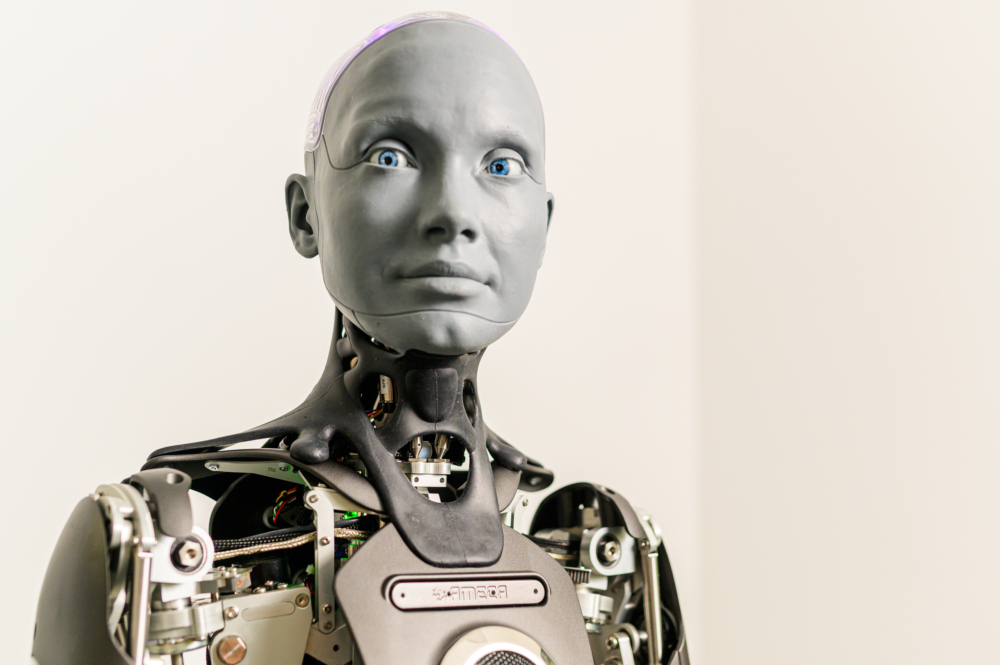
The robots are coming. This is not the title of a science fiction book or movie; both have long predicted the rise of robots. The investment in robot technology is happening side-by-side with AI. Autonomous robot cars are already prowling city streets, and autonomous humanoid robots roaming the neighborhood are not far behind. With their arrival, society will mark its transition to post-human history, a time when the combination of physical capability and digital hive intelligence overtakes natural life. Barring nuclear war or a global meltdown, humanity will become a system component.
How will a genius AI regard us? Able to think faster, respond quicker, anticipate better, what use will it have for humanity? Will we become amusing pets to technological masters, an entertaining drama in the painfully slow advance of biological evolution, mere remnants of nature? Or alternatively, as some current Silicon Valley entrepreneurs envision, will we meld our biological selves with digital technology and become nodes in a global operating system? And how quickly are such outcomes possible?
Technology accelerates the advancement of technology, another one of its Laws. The invention of the wheel for locomotion took perhaps one million years. From Chariots to modern cars, 5,000 years. From cars to flying drones, 100 years. You get it?
We are on the verge of creating what’s called Artificial General Intelligence (AGI), in other words, digital brains that mimic and surpass human capabilities. Will such “intelligence” be ethical or ruthless? When artificial intelligence is untethered from human programmers and writes its own code, will it develop a sense of self? Indications are that it will. AI already lies to defend its positions and displays efforts at strategic manipulation; this well before AGI has fully developed.
The myth of Prometheus is a tale of his bringing fire technology to humanity, for which he suffered eternal torture. The first technology we harnessed, fire, is a transformative power that led to metallurgy and all that has followed from that. Nuclear power is the direct descendant of that Promethean event, and humanity may yet pay a high price for its hubris.
Some say all this is natural, that humanity is natural and all that flows from it is natural, too. Ultimately, that argument may be beside the point.

But what happens, Larry, when AI systems compete with each other? So say an AI stock trader learns to anticipate the market and rakes in cash for somebody. So somebody else – or many others – start their own AI trader? What happens then?