
The role of government in a democracy has always been a matter of contention. Should government’s primary effort be the protection of individual liberty or the protection of the common good?
Proponents of the former believe the protection of individual liberty includes defending private property and the activities that take place upon it. Proponents of the latter believe that defending the common good – public health and welfare – is paramount. Historically, our two major political parties have been divided along these lines, although they have occasionally switched their allegiance in response to cultural and social change.
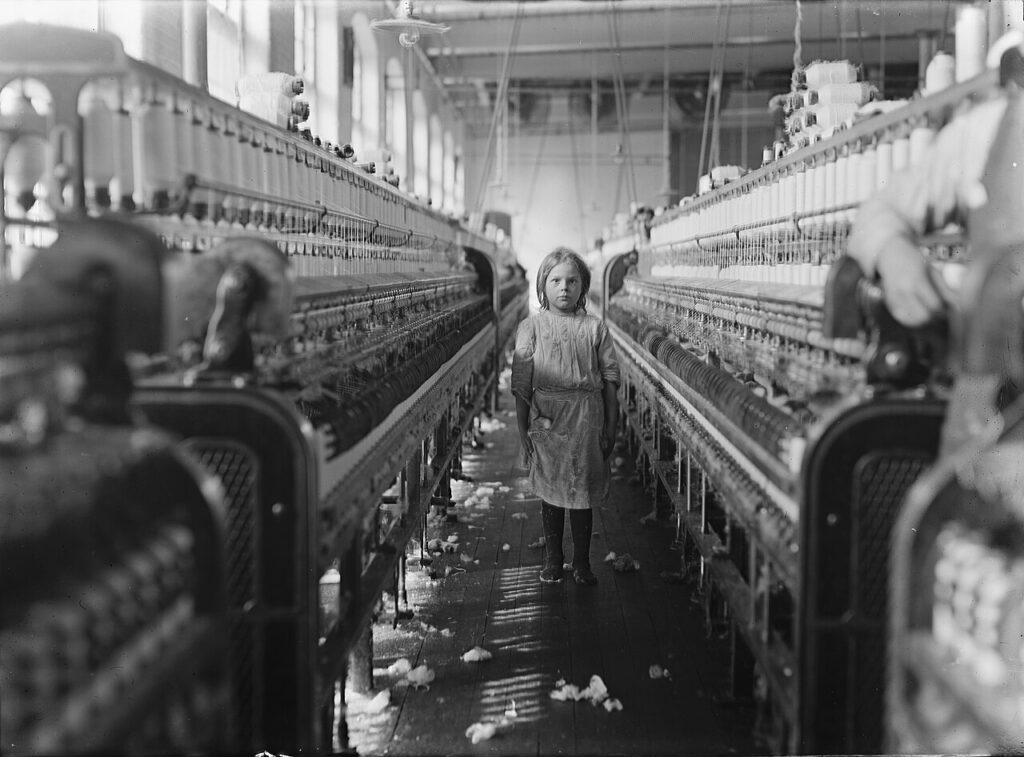
The twentieth century in America was marked by an advance by government in the protection of the common good. An increasingly complex bureaucracy developed for “command and control,” the regulation of individual behavior and business activity to insure the protection of public health and safety. In the 1920’s Muckrakers like Upton Sinclair exposed the dangerous activities of sweatshops, child labor, and exploitive commercial industries; once the public learned “how sausage is made,” it demanded that government intervene. Thus meat inspection, the Food and Drug Administration, and the bureaucracy to support it were implemented. Government departments like the Environmental Protection Agency, Department of Alcohol, Tobacco and Firearms, and OSHA were added later.
From a living systems perspective, government regulation became analogous to the human immune system, guarding the civic body from the infection of unrestrained individualism. The Snake Oil salesmen and financial hucksters, con artists, and illegal street vendors were slapped with fines and/or jail time. Like any immune system, however, government sometimes attacked perfectly safe and decent human activities, and this angered people trying to find ways to thrive.
Government regulation of human activity became ordinary. Licensing, permitting, inspection, certification and the like were supported by an increasing number of fees and taxes that provided the money for staffing and mechanisms of command and control, including enforcement. It worked well enough, but then the digital computer revolution arrived.
On the one hand, the digital revolution provided government with a new set of powerful tools to use for command and control. On the other hand, however, it also equally empowered individuals with new tools and capabilities to extend the reach of individual liberty, and because government moves slowly, the innovative power of individuals to rapidly adopt technology has outstripped government’s ability to command and control.
It’s sometimes said that the digital revolution has brought about the democratization of everything. From transportation to finance, one business activity after another has been democratized and government is ill-equipped to keep up. What had been a slow, paper-based system of filing cabinets, centralized services, and people-managed information retrieval has been replaced by high-speed digital networks and computers. Access to data, much of it in real time, has empowered individual behavior and activity, and with the creation of AI, this trend is bound to accelerate. In short, government is struggling to remain relevant and effective; it is losing its traditional revenue sources along with the erosion of its command and control.
The modern institutions of command and control as well as the digital revolution are new; humanity’s social networks are not. Long before nation states, regional governments or large institutions, people exchanged goods, cooperated on projects, established reciprocal relationships, built homes, raised food, grew families, and depended upon each other. Individual initiative remains an active force in our society.
The reemergence in our digital age of social networks as elements of transformation is a return to the previous existing tribal modes of human organization. Such networks have never needed government and today are making government increasingly irrelevant. Government moves at a glacial pace and cannot keep up with the rate of social and technological transformation, at least not in America.
Government is not evil, as some believe, just slow and clumsy. Some people, on the other hand, are evil, and do need to be restrained.
