Archive for June, 2010

For the sake of a great shave

Thursday, June 24th, 2010

Last year American men spent over a third of a billion dollars on shaving cream. Until recently, I numbered myself among them. I have nothing against shaving cream per se; however, it does consume a vast amount of environmentally wasteful packaging materials and is supported by a massive amount of multi-media advertising dollars. In this it is not unique.

A well-shaved man, we are told, is more attractive to women. We are not exactly told this with words; rather we witness the well-shaved man in the soft caress of a beautiful woman and come to our own conclusion. That conclusion is that if we are well-shaved, many women will want to have sex with us. We are men, so we believe it.

A more technological sales approach hawks shaving cream as a nearly magical substance that will protect our faces from cuts and scrapes. The same companies that sell shaving cream also sell razors, but they’d just as soon we ignore that. The razors, now up to five blades and counting, are billed as being so excellent that cuts and scrapes don’t happen, which begs the question: why then do we need special shaving cream to protect us? We are men, so we don’t think about it.

I recently watched a commercial for an electric razor billed as far superior to a blade razor. An electric shave so close, they stated, that it rivaled what professionals consider the very closest shave of all: a barber shave with a straight razor. Now a straight razor is very sharp, but it is a single blade. That being the case, why are five blades better? Well, the five blades are disposable and over time account for far more profit than the cost of a straight razor. It’s all about making money, but we are men, so who cares if the whole advertising thing is stupid.

I was using some sort of exotic blue gel that oozed from a pressurized can and magically turned to white lather as I spread it on my face. It smelled manly, whatever that is, and as I shaved with my three-blade razor (only three – I am such a barbarian!) the lather would scrape off to reveal bare skin. As I shaved over the same spot from a different direction, there would be no lather and sometimes I would knick myself. No matter, I am a man; do I not bleed?

Then one day I ran out of shaving gel, and decided to use ordinary soap. I’ve taken lots of little soaps from fine hotels over the years, so I unwrapped a fresh bar and lathered it up between my hands in hot water. I spread the lather on my face and neck; it was sort of thin and slippery, not at all like the magical blue gel packaged product I had been using. I brought the razor to my cheek and drew it downwards to my chin. Lo and behold, it put the shaving gel to shame. Lubrication eased the razor across my face, no matter what direction. A thin, slippery coating of soap seemed to remain even after the razor had passed! It was the best shave I had ever had.

Call me an idiot for 50 years of wasting money. I am, after all, a man.

The perverted aspirations of barbarians run rampant

Wednesday, June 16th, 2010

The U.S. Supreme Court has decided that the distribution of films or videos depicting actual animal cruelty is a protected form of free speech. The case at issue was prompted in part by a video showing a sexy model wearing pointy high heeled shoes walking on live kittens and stabbing them with her heels.

The court found the video repulsive, but voted 8-1 (Justice Alito dissenting) to allow such videos, saying the law preventing their sale was overly broad. In a free society, their argument goes, it is better to suffer the degradation of repulsive material than to risk limiting it and having to make subjective judgments as to what is acceptable and what is not. This notion of subjective judgment is located in opposition to the objective absolute of what constitutes a right. Absolute right is declared an objective standard, and such right trumps all other legal argument.

What’s lost in the adoption of right as an objective standard is the complexity of nuanced circumstances and the benefit of deep exploration of issues from a moral, societal and interpersonal perspective. Such an exploration is unquestionably difficult and complex, and thus the history of jurisprudence over the past 50 years has shown a swing towards decisions based upon absolute rights, an approach that has relieved the courts of dealing with complexity. Why discuss the effect of degrading material on children, adults or society as a whole when the entire matter can be set aside in favor of determining absolute right? Justice now requires the application of law as an absolute standard leaving judges with little room to adjust sentences or decisions based on subjective considerations. Shakespeare’s famous observation no longer applies; today the quality of mercy is strained.

If anything, this inclination towards the absolute supremacy of rights has grown stronger as the decades have passed. Highly complex issues, such as gun sales and ownership, abortion, and animal cruelty are resolved as a matter of right. Effects on society are no longer a primary issue; decisions revolve around rights.

To what level must degradation fall before we cry foul? On TV’s “Caught on Camera” we are witness to surveillance cameras documenting kitchen staff spitting on plates of food to be served to customers, and far worse. This voyeuristic activity glorifies barbaric behavior for entertainment; big money is to be made by appealing to the very worst in people.

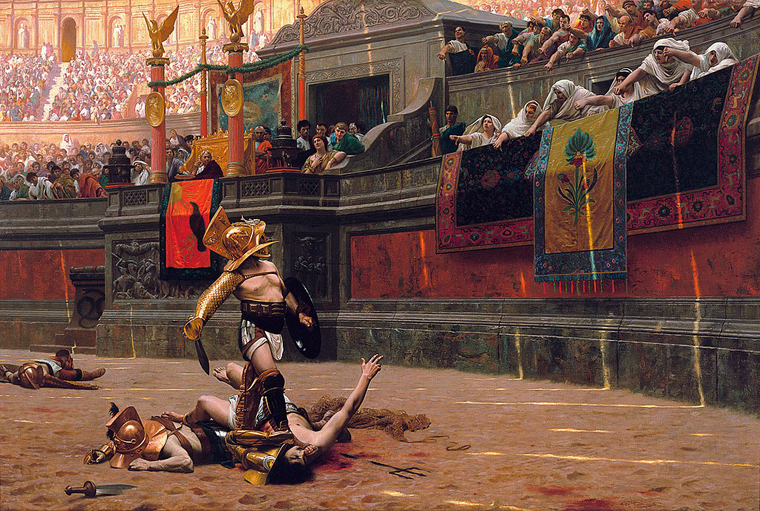
The ancient Roman masses were entertained by grisly death in the coliseum. This “bread and circus” was a distraction from the absolute imposition of the empire and the elimination of the Roman republic. Such appeals to our dark side – anger, fear, lust, hatred, blame and jealousy – is a tried and true tactic employed by those wishing to consolidate wealth and power. Absolute standards of law and fixed sentences meted out to the poor are unevenly applied to the wealthy. Herein is revealed the hypocrisy of justice based on rights alone. Money trumps everything.

Society degrades when decency, kindness, and compassion do not endure. When free speech includes an absolute right to make money by inflicting pain and suffering on the powerless and distributing it through video to others, our aspiration for freedom becomes perverted, declines to its lowest common denominator, and all of us, tortured kitten by tortured kitten, slowly descend to the level of barbarians.

A universe of WIMPS and MACHOS

Thursday, June 10th, 2010
Visible matter, the objects we can see and the sources of energy that emit radio waves, comprise but 5% of all the matter in the universe. There is so little visible matter, in fact, that astrophysicists explain that the gravity that holds galaxies together is not that of visible matter, but is instead gravity produced by what they now call dark matter.
Dark matter is matter we cannot see, the composition of which is at present mostly unknown. Some dark matter is not comprised of the protons, electrons, neutrons and other particles we have become accustomed to; it is something else yet again. It exhibits gravity and therefore must have mass, but beyond that we know nothing.
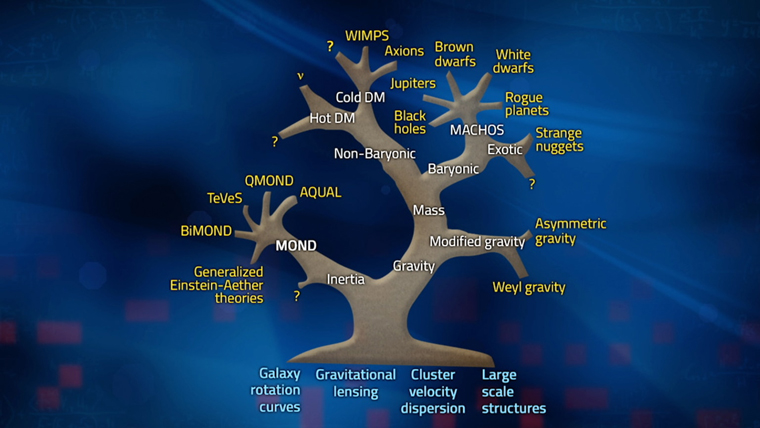
WIMPS, or Weakly Interacting Massive Particles, is dark matter we cannot see, and are suspected to be some type of high mass particle matter, a form of “cold” dark matter emitting no energy of any kind; no heat, no light, and no measurable signature we can record. Forming part of a massive invisible matrix or scaffolding into which ordinary matter is irrevocably infused, its presence is betrayed by its gravitational effect on visible matter.
MACHOS, or Massive Astrophysical Compact Halo Objects, are ordinary matter generally too dark to see, such as very faint stars, white dwarf stars, or planets within a galaxy. Given this character, it is currently impossible to determine what percentage of the universe’s matter MACHOS represent.
Calculations indicate that MACHOS and WIMPS together account for at least 23% of the matter in the universe; accordingly, its gravity effects are great. Even though dark matter is poorly understood at present, it has nonetheless become a powerful tool in gathering information about the universe and its history. This tool is called gravitational galactic lensing, and it was predicted by Albert Einstein around 1911.
I cannot possibly cover Einstein’s discoveries in a 550 word essay, but gravitational lensing was a by-product of his prediction that like a glass lens, the gravity of massive celestial structures would bend and magnify the visible light of objects at a distance, even many light years in the distance. He did not envision the Hubble Space Telescope or other sophisticated computerized imaging systems; he thought his theory would never be verified through direct observation. He was wrong.
Today, galactic gravitational lensing is providing us with information about celestial objects  nearly 13 billion light years away. MACHOS and WIMPS, dark matter, play a role in this because their mass within and surrounding clusters of galaxies generates substantial gravitational effects on the surrounding space, and intensifies the lensing effect. In other words, though we cannot see most dark matter, we can use it to see visible matter light sources beyond it. We can even somewhat determine size, shape and  chemical components.
If one day we discover that a species of beetle had developed television, or if a colony of ants invented the radio, we would rightly be astonished. We would frankly, consider it a miracle. Human beings are in evolutionary terms a recent species inhabiting a little planet in a backwater solar system within an average galaxy, one among uncountable billions. Yet here we are, using super-sensitive instruments to view galaxies 13 billion light years away using galactic lensing predicted by a remarkable genius nearly 100 years ago. Talk about astonishing!

Visible matter, the objects we can see and the sources of energy that emit radio waves, comprise but 5% of all the matter in the universe. There is so little visible matter, in fact, that astrophysicists explain that the gravity that holds galaxies together is not that of visible matter, but is instead gravity produced by what they now call dark matter.

Dark matter is matter we cannot see, the composition of which is at present mostly unknown. Some dark matter is not comprised of the protons, electrons, neutrons and other particles we have become accustomed to; it is something else yet again. It exhibits gravity and therefore must have mass, but beyond that we know nothing.

WIMPS, or Weakly Interacting Massive Particles, are dark matter we cannot see, and are suspected to be some type of high mass particle matter, a form of “cold” dark matter emitting no energy of any kind; no heat, no light, and no measurable signature we can record. Forming part of a massive invisible matrix or scaffolding into which ordinary matter is irrevocably infused, its presence is betrayed by its gravitational effect on visible matter.

MACHOS, or Massive Astrophysical Compact Halo Objects, are ordinary matter generally too dark to see, such as very faint stars, white dwarf stars, or planets within a galaxy. Given this character, it is currently impossible to determine what percentage of the universe’s matter MACHOS represent.

Calculations indicate that MACHOS and WIMPS together account for at least 23% of the matter in the universe; accordingly, its gravity effects are great. Even though dark matter is poorly understood at present, it has nonetheless become a powerful tool in gathering information about the universe and its history. This tool is called gravitational galactic lensing, and it was predicted by Albert Einstein around 1911.

I cannot possibly cover Einstein’s discoveries in a 550 word essay, but gravitational lensing was a by-product of his prediction that like a glass lens, the gravity of massive celestial structures would bend and magnify the visible light of objects at a distance, even many light years in the distance. He did not envision the Hubble Space Telescope or other sophisticated computerized imaging systems; he thought his theory would never be verified through direct observation. He was wrong.

Today, galactic gravitational lensing is providing us with information about celestial objects  nearly 13 billion light years away. MACHOS and WIMPS, dark matter, play a role in this because their mass within and surrounding clusters of galaxies generates substantial gravitational effects on the surrounding space, and intensifies the lensing effect. In other words, though we cannot see most dark matter, we can use it to see visible matter light sources beyond it. We can even somewhat determine size, shape and  chemical components.

If one day we discover that a species of beetle had developed television, or if a colony of ants invented the radio, we would rightly be astonished. We would frankly, consider it a miracle. Human beings are in evolutionary terms a recent species inhabiting a little planet in a backwater solar system within an average galaxy, one among uncountable billions. Yet here we are, using super-sensitive instruments to view galaxies 13 billion light years away using galactic lensing predicted by a remarkable genius nearly 100 years ago. Talk about astonishing!

What I meant to say

Thursday, June 3rd, 2010

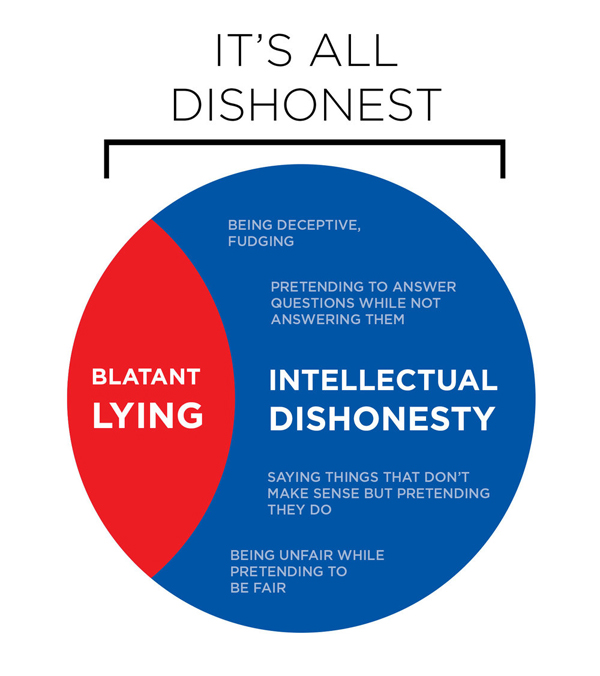
Now that we are in the midst of an election year, our political foibles are on great display. Not a week goes by that the lies or deceptions of one candidate or another hit the airwaves, and we voters are subjected to yet another round of “what I meant to say.”

I know what the pressure of a campaign can bring; I ran for office four times, losing the first and winning the subsequent three times. Either standing at a front door or on stage alongside other candidates, using words that resonate with others and create a favorable impression is simply part of the campaign process. On the other hand, a lack of honesty or outright pandering never succeeds terribly well. As Bob Dylan wrote: “To live outside the law you must be honest.” And this goes for politics as well.

Politics is “outside the law” insofar as those in political office actually make the law. Thus the statements one makes as candidate, often in print or in advertising – not to mention being quoted in the paper – can come back to haunt you. If during a campaign a candidate is proven to be demonstrably dishonest it often leads to defeat.

Whether statements about military service, current occupation, voting record, sexual orientation or fidelity in marriage, we’ve witnessed one candidate after another get hoisted on their own petard. Who can forget Presidential candidate Gary Hart’s challenge to the press to prove his infidelity to his wife and then get photographed cavorting with another woman aboard a yacht named “Monkey Business”? Lately we’ve been exposed to the spectacle of a Connecticut Attorney General dishonestly claiming he served in Vietnam, only to find him telling voters “what I meant to say.” The wife of a prominent California politician running for County Supervisor claimed in her campaign literature to be a “deputy district attorney.” We now know she is simply an attorney acting as Executive Director of an organization working for the District Attorney’s office.

Good leadership demands the truth, an authentic and genuine capacity for honesty. Despite the pressures of campaigning, an indication of dishonesty during a campaign is a red flag to voters about later conduct. I’m not talking about being honest about liking spinach or red ties, but when it comes to matters of personal history or policy positions, the truth matters. Lacking being true, failures of justness are not far behind, and if not just, then leaders but seek their own personal fortunes and society suffers.

One’s truth cannot be separated from one’s view, and sometimes this makes for an awkward situation. A libertarian might object to civil rights legislation, for example, and be tempted to shade stated opinions to suit the election. Or a liberal might take a tough stand on sending criminals to jail even though believing rehabilitation might serve society better. A conservative could object to logging after gauging the opinions of voters in the district. Switching parties simply for political gain is sleazy. I believe citizens will respect honesty more than opinions shaded to please.

In an era of “spin doctors” and highly paid campaign consultants, our capacity to discern the honesty of politicians must revert to “the gut,” meaning how we feel about someone. As a people drawn to goodness, our political guidance must not come solely from the mouth, but from the heart.