Archive for May, 2010

Gender Blowback: Part Two

Thursday, May 27th, 2010

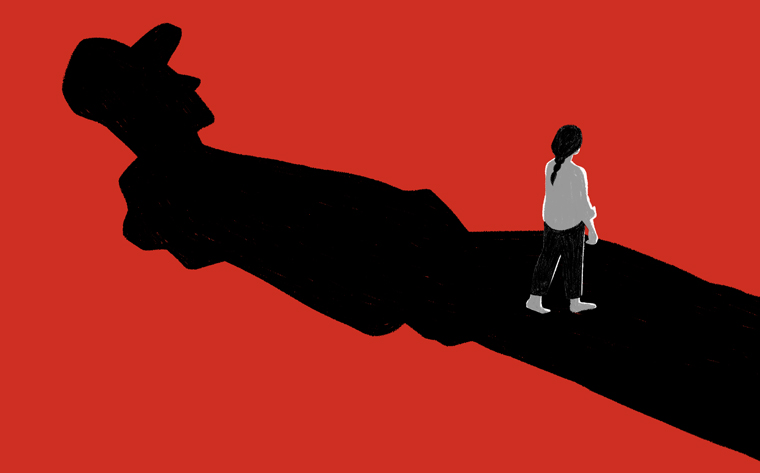
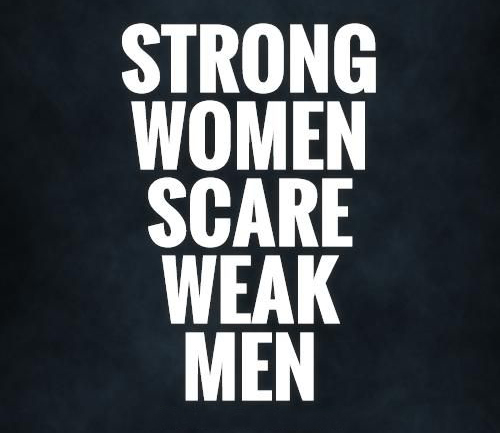
I ended last week’s column with a question: “What is it about the feminine that so frightens patriarchy?” In this column I will provide some possible answers. To summarize the hypothesis: persistent patriarchal silencing and domination of the feminine is the product of fear. Fear is not limited to men, of course, but the transformation of fear into aggression seems to be highly activated in men.

Male fear arises both from our biological inheritance and the psycho-physical effects of cultural and social frameworks. In another words, the fear behind patriarchal suppression of the feminine is most likely a result of both nature and nurture.

On the side of nature, we can place matters biological and genetic. These would include a range of factors, including physical and emotional responses of the autonomic nervous system, genetic and epigenetic predispositions, and neurological development. Physical and emotional responses include hormonal glandular secretions such as testosterone and adrenaline, linked respectively to sexuality/aggression and responses of fight or flight triggered within the brain’s amygdala. Genetic and epigenetic predispositions pertain to factors of instinct, inherited physical characteristics, epigenetics and the effects of stress found in strong emotions that effect gene expression. Finally, neurological development includes elements of body/brain mapping, sexual orientation, and intellectual capacity. These natural factors constitute a powerful and organic developmental ground of male behavior. Accordingly, male aggression directed at women may be attributable in part to a primitive hard-wired fear of impregnation of a preferred mate by other males, thereby threatening the genetic succession of offspring.

On the side of nurture we find the influence of our cultural beliefs and narratives, styles of childrearing, the effects of social organization and peer pressure, and the imposition of economic and power-based hierarchies as drivers of behavior. During the reign of Roman Emperors, for example, adulterers were punished by being thrown into deep water after being sewn into a bag along with a monkey, a rooster, an asp and a dog. The interpenetration of “nature and nurture” is codified in patriarchal society in the form of strict laws and rigid dogma; competition and aggression are elevated above cooperation and empathy. This self-reinforcing organizational system serves to preserve established patriarchal hierarchy within power relationships. Thus world-wide patriarchal systems have forced the silencing of women for thousands of years. In many cultures, such silencing is punishment-based and nearly absolute, in others it is expressed with more subtlety.

As noted in my previous column, and in the research of psychologist/author Carol Gilligan, those who are silenced often repress the memory of the act of silencing, and take on the voice of the oppressor instead. Even within male society, patriarchy reveals this imperative through male political figures who make self-righteous statements in opposition to gay rights legislation while simultaneously hiding their own homosexuality. Thus we see that fear of “feminization” of any type inclines patriarchy to revile any effort to undermine its hegemonic “manhood.”

The two forces of nature and nurture have over time produced a highly intractable patriarchy prepared to strenuously defend itself. Given the violence, predatory behavior, competition and fighting over possessions and territory it embodies, determining its precise cause and effect is important, but nearly impossible; nature cannot be separated from nurture. However, it is abundantly clear that the future of humanity rests in coming to grips with a pattern that is now many thousands of years old.

Gender Blowback: Fear of feminine

Thursday, May 20th, 2010

Over the past 100 years gender equality in the western world has improved dramatically. This is not to say that complete parity exists between the sexes. There are still significant economic differences (women are paid less than men for comparable work), discrimination issues (sexism in the workplace and military), domestic lopsidedness (women do the lion’s share of housework and child rearing in addition to often working full time outside of the home), and cultural attitudes (men are given more latitude in sexual behavior than women). But in comparison to 100 years ago, equity between the sexes in the west is better. Overall, these changes may be viewed as symptomatic of the west’s continuing shift to liberal democracy.

As the overall influence of the western world has spread through media and technology to the non-western world, the impact of gender equality has spread also. For a while this resulted in the emulation of liberal western values in non-western countries. For example, during the regime of Saddam Hussein in Iraq (a brutal and iron-fisted dictator) women were granted a degree of gender equality rarely seen today in the Middle East. Over a twenty-five year period, women entered the professional class as doctors, university professors and other high-level positions. The same was true in Iran during the Shah (another terrible dictator, to be sure). These changes corresponded chronologically to the women’s rights movements in the west.

But it was reported recently that Malaysia condemned four women to public caning for the crime of adultery, the first time this punishment has been used in modern Malaysia. Caning is essentially whipping using a stick instead of bound and braided animal hide, a painful and humiliating punishment. Throughout the non-western world, we see a resurgence of cultural fundamentalism that relegates women to the status of second or third-class citizens. As such, this is an explicit demonstration of patriarchy, the imposition of undemocratic forms of male-patterned dominance and aggression directed against women and the disenfranchised through harsh laws and brute force.

Intersecting cultural forces often produce friction. In the case of gender and sexuality, the advocacy of democratic equal rights by liberals has stimulated correspondingly harsh conservative cultural forces in America. A black President, gay rights advocates and powerful liberal women such as Speaker of the House of Representatives Nancy Pelosi have provoked intense “blow-back,” a systemic patriarchal reaction prompting political movements that support a correspondingly rigid set of rules, laws and attitudes.

Blow-back reveals the deeply embedded persistence of patriarchy as a world-wide cultural phenomenon. Here in the west, where we like to think we embody modern democratic ideals, patriarchal imperatives of domination are aggressively supported by men and women alike; hence potential presidential candidate Sarah Palin uses violence-laden imagery of rifle-sight cross-hairs on her Facebook page to target liberal politicians. Psychologist and author Carol Gilligan observes that within patriarchy the oppressed survive psychologically by silencing their own authentic voice and adopting the mantle and methods of the oppressor.

Despite the image of “real” men as powerful (and the same can said of nations), the harshness of patriarchy reveals deep fear of the feminine and loss of “manhood.” No other explanation explains the persistent historical and world-wide patterns of subjugation, dominance, discrimination, and gender inequality.

This begs the question: what is it about the feminine that so frightens patriarchy?

The power of the pile

Thursday, May 13th, 2010

I have an orderly mind but a disorderly desk. In this, I think, I am not alone. There are those, to be sure, whose desks are neat and tidy, pens and pencils standing upright in a cup like good little soldiers, perhaps an in-box holding one or two pieces of paper. This, however, is not my desk. My desk has piles.

The pile system of information management is the easiest – and in its way the most elegant – system ever developed. Sure, files and file folders are handy, but they require gobs of time. For the devoted, there are little labels that can be applied to the folder tabs, color-coded for quick visual categorization; there are various types of files themselves, some with expanding bottoms for particularly hefty records; and of course, there is the writing of information on the tabs themselves, where good penmanship counts!

The power of the pile, on the other hand, is its simplicity. Virtually every scrap of paper that ends up on my desk makes it way onto the pile. Hour by hour, day by day the pile grows. Stacked with notes, reports, printed receipts, printed emails, and junk mail, when it begins to obscure the bottom edge of my desktop LCD screen I go through it and throw most of it away. Time, it seems, is the great destroyer of information’s value, and lucky for us that’s true, or we’d all be hoarders.

When I need to find something I know just where it is. Everything I need is in the pile, and it will take me just a moment or two to find it please hold on…ah ha! There it is, just where I left it. In the pile!

Some say my pile is chaos, but I strongly disagree. Chaos is the random arrival of physical scraps of information, not my storage of it. This information arrives constantly from various widely disbursed locations and myriad sources known and unknown. The power of the pile overcomes this information entropy and things come to rest and find stability. My pile actually manifests order arising out of chaos!

Others see complete disorder. I see a reflection of pure mind. Our minds are not file cabinets despite whatever claptrap you have been led to believe. Our minds are an infinite information scrap pile containing the entire universe. All and everything we receive is added to mind’s pile, ready for retrieval. Does it take a moment, sometimes, to locate information? Of course it does – that’s the way piles are meant to work! Recent information is near the top and easy to find. Less recent – but nonetheless vital information – can be located at deeper levels. It’s there; we can find it. This may take a moment – practice patience.

It’s always interesting how much of my desk pile is worth keeping: under 5%! As I periodically make my way down the stack, scrap after scrap is tossed into the recycling bin. It pays to be ruthless when working with a pile; I’ve thrown away some very fine doodles!

Now I will admit, from time to time, I’ve been too ruthless and felt regret at losing a phone number or little notation. But overall, my pile works just fine. Perhaps this column will end up in yours.

Fully surrendering to love

Thursday, May 6th, 2010
When a culture places the ideals of freedom and independence at the pinnacle of personal and societal attainment, any act of surrender is problematic. When independence is elevated to a virtue, surrender is diminished to a fault. The conflation of identity with freedom frequently binds self image to a type of selfishness generated by the fear of loss of freedom. This fear then supports the development of a vast array of ego-protecting psychological and emotional defenses, many of which result in negative behavior and estrangement from others.
Often, what we rely upon for emotional safety is a trap. Attached to the seeming security of our internal constructs, surrender feels dangerous and risky and thus we remain snared by our own powerful self-delusions of safety. Even the loneliness of isolation can feel emotionally safer than the risk of letting go, particularly the risk of fully surrendering to love.
Defining love – long the work of poets, novelists, and playwrights – is not easy. By all accounts there are myriad ways to love others and to be loved. But in general I think love can be divided into two basic types, selfish and selfless love.
Selfish love requires little surrender; its nature is inwardly directed and its value measured by degrees of feeling loved. Selfish love always demands love in return and thus selfish love is offered conditionally. When love is not received in kind, selfish love stimulates feelings of hurt and anger. Entitlement arises and so does aggression. This self-centered behavior generates fear and suspicion in others and then the trap is fully sprung. Ironically, the love desired is driven away.
Selfless love is the love of great surrender, its nature outwardly directed and its value beyond measure. Selfless love makes no demand for love in return, and is thus offered unconditionally. If love is not received in kind, selfless love generates loving feelings nonetheless. Anger, hurt, and aggression do not arise because selfless love is not entitled. It is self-generated and replenished while radiating continuous warmth upon others.
Like the fictional Charles Foster Kane in Orson Welles’ classic film Citizen Kane, many crave love, but love on their terms only. Such selfish love inevitably breeds estranged rejection leading to bitterness and sorrow. Alternatively, the emotional letting go that selfless love requires is often too much to ask; complete surrender is not something most of us find easy. To the selfish, selfless love can feel impersonal and detached because its nature is not particular. Like sunlight, it shines on all equally. Those in search of selfish love would best avoid expecting it from the selfless.
I find that I experience a mix of both selfish and selfless love. My interaction with others is by turns simple and complex, easy and difficult. My ego defenses are easily triggered, and my habitual and ingrained fears of loss of freedom keep arising, despite my best intentions. Occupying the middle ground between self-protection and full surrender is challenging, akin to finding the sweet spot between being a total jerk and a saint.
By observing how I work with my own experience of selfish and selfless love, I am also becoming intimately familiar with how feelings of fear and surrender change over time. For herein lies a basic truth; observation itself changes everything, including love.

When a culture places the ideals of freedom and independence at the pinnacle of personal and societal attainment, any act of surrender is problematic. When independence is elevated to a virtue, surrender is diminished to a fault. The conflation of identity with freedom frequently binds self image to a type of selfishness generated by the fear of loss of freedom. This fear then supports the development of a vast array of ego-protecting psychological and emotional defenses, many of which result in negative behavior and estrangement from others.

Often, what we rely upon for emotional safety is a trap. Attached to the seeming security of our internal constructs, surrender feels dangerous and risky and thus we remain snared by our own powerful self-delusions of safety. Even the loneliness of isolation can feel emotionally safer than the risk of letting go, particularly the risk of fully surrendering to love.

Defining love – long the work of poets, novelists, and playwrights – is not easy. By all accounts there are myriad ways to love others and to be loved. But in general I think love can be divided into two basic types, selfish and selfless love.

Selfish love requires little surrender; its nature is inwardly directed and its value measured by degrees of feeling loved. Selfish love always demands love in return and thus selfish love is offered conditionally. When love is not received in kind, selfish love stimulates feelings of hurt and anger. Entitlement arises and so does aggression. This self-centered behavior generates fear and suspicion in others and then the trap is fully sprung. Ironically, the love desired is driven away.

Selfless love is the love of great surrender, its nature outwardly directed and its value beyond measure. Selfless love makes no demand for love in return, and is thus offered unconditionally. If love is not received in kind, selfless love generates loving feelings nonetheless. Anger, hurt, and aggression do not arise because selfless love is not entitled. It is self-generated and replenished while radiating continuous warmth upon others.

Like the fictional Charles Foster Kane in Orson Welles’ classic film Citizen Kane, many crave love, but love on their terms only. Such selfish love inevitably breeds estranged rejection leading to bitterness and sorrow. Alternatively, the emotional letting go that selfless love requires is often too much to ask; complete surrender is not something most of us find easy. To the selfish, selfless love can feel impersonal and detached because its nature is not particular. Like sunlight, it shines on all equally. Those in search of selfish love would best avoid expecting it from the selfless.

I find that I experience a mix of both selfish and selfless love. My interaction with others is by turns simple and complex, easy and difficult. My ego defenses are easily triggered, and my habitual and ingrained fears of loss of freedom keep arising, despite my best intentions. Occupying the middle ground between self-protection and full surrender is challenging, akin to finding the sweet spot between being a total jerk and a saint.

By observing how I work with my own experience of selfish and selfless love, I am also becoming intimately familiar with how feelings of fear and surrender change over time. For herein lies a basic truth; observation itself changes everything, including love.