Archive for March, 2010

The whole in part

Thursday, March 25th, 2010
Separating an object into component parts and then ascribing that object’s existence to the coming together of those parts is reflected in the way most of us conceptualize the world. We call this reductionism, and from one perspective it is correct. For example, taking an automobile as object, we typically view its various components as the parts necessary for the automobile’s existence. If the wheels are missing, the auto won’t be able function as an auto, and in a certain sense is no longer an automobile; if it can’t move, we call it junk.
Although an auto can be disassembled piece by piece into parts, if even one single part is missing the remaining parts do not add up to a complete auto. If the auto is incomplete, we might even say that each individual part then is junk because it is the whole that allows each part to fulfill its function.
Using this metaphor, what emerges is an intriguing situation in which each part is functionally absent without the presence of the whole, a reversal of our usual view. Rather than the parts powering the whole, it is the whole which bestows power to each part. If wholeness is lacking, the parts themselves have no actual power, only potential power.
Seeing our world from the perspective of wholeness can feel quite strange, as if the reality of parts is an illusion. In one sense, it is, for the world is at once complete and always whole, all “parts” participating equally in a unified simultaneous spontaneous expression. Our inclination to identify parts, discriminate, divide, find difference, and make judgment is the product of ordinary mind, and ordinary mind is notoriously subject to confusion. By relying on our habitual frames of reference, we repeatedly fail to see the wholeness of totality, and this then leads to further confusion.
Similar confusion pervades the understanding of cause and effect. Once again, our tendency is to see outcomes (effects) as the result of the coming together of separate parts (causes), and we readily find ways to support that conclusion. However, from the perspective of totality, effect generates its cause. This is more difficult to see; although cause is simultaneous with effect, this reality is not always immediately apparent. For example, only once the mortgage crisis suddenly became visible did the reasons for it become obvious. Thus we can say the event generated the cause, for if the crisis event had not arisen, the cause would have remained invisible. Seeing things in this way – events generating causes – is not of our usual way of understanding.
Is there a practical application of these principles in everyday life? In totality we observe the complete inter-penetration and mutual interdependence of whole and part, cause and effect; they are inseparable, simultaneous, spontaneous and continuously self-generating. Resting in this complete and inclusive quality of wholeness opens up the possibility for us to let go of our habitual labeling and blaming in favor of a more grateful and generous experience of becoming.
We are simultaneously part and whole, interconnected to all other parts and the whole. We are both cause and effect, inextricably woven into the fabric of all events. This, Buddhist nun and author Pema Chodren says, is “the wisdom of no escape.” I say, relax and enjoy the show.

Separating an object into component parts and then ascribing that object’s existence to the coming together of those parts is reflected in the way most of us conceptualize the world. We call this reductionism, and from one perspective it is correct. For example, taking an automobile as object, we typically view its various components as the parts necessary for the automobile’s existence. If the wheels are missing, the auto won’t be able function as an auto, and in a certain sense is no longer an automobile; if it can’t move, we call it junk.

Although an auto can be disassembled piece by piece into parts, if even one single part is missing the remaining parts do not add up to a complete auto. If the auto is incomplete, we might even say that each individual part then is junk because it is the whole that allows each part to fulfill its function.

Using this metaphor, what emerges is an intriguing situation in which each part is functionally absent without the presence of the whole, a reversal of our usual view. Rather than the parts powering the whole, it is the whole which bestows power to each part. If wholeness is lacking, the parts themselves have no actual power, only potential power.

Seeing our world from the perspective of wholeness can feel quite strange, as if the reality of parts is an illusion. In one sense, it is, for the world is at once complete and always whole, all “parts” participating equally in a unified simultaneous spontaneous expression. Our inclination to identify parts, discriminate, divide, find difference, and make judgment is the product of ordinary mind, and ordinary mind is notoriously subject to confusion. By relying on our habitual frames of reference, we repeatedly fail to see the wholeness of totality, and this then leads to further confusion.

Similar confusion pervades the understanding of cause and effect. Once again, our tendency is to see outcomes (effects) as the result of the coming together of separate parts (causes), and we readily find ways to support that conclusion. However, from the perspective of totality, effect generates its cause. This is more difficult to see; although cause is simultaneous with effect, this reality is not always immediately apparent. For example, only once the mortgage crisis suddenly became visible did the reasons for it become obvious. Thus we can say the event generated the cause, for if the crisis event had not arisen, the cause would have remained invisible. Seeing things in this way – events generating causes – is not of our usual way of understanding.

Is there a practical application of these principles in everyday life? In totality we observe the complete inter-penetration and mutual interdependence of whole and part, cause and effect; they are inseparable, simultaneous, spontaneous and continuously self-generating. Resting in this complete and inclusive quality of wholeness opens up the possibility for us to let go of our habitual labeling and blaming in favor of a more grateful and generous experience of becoming.

We are simultaneously part and whole, interconnected to all other parts and the whole. We are both cause and effect, inextricably woven into the fabric of all events. This, Buddhist nun and author Pema Chodren says, is “the wisdom of no escape.” I say, relax and enjoy the show.

Don’t bank on it

Thursday, March 18th, 2010
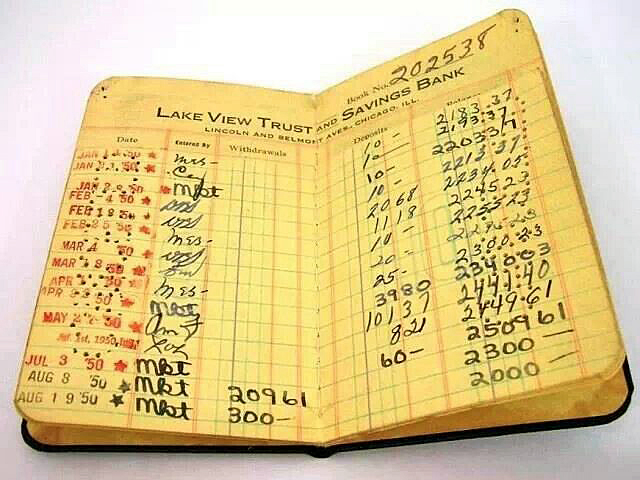
I never expected to feel upset about banks. Growing up, I was taught that banks were places where you put your money into a “savings account” and over time it would accumulate. The bank paid something called “interest” which added more money to the savings account. Mostly, I liked the little green bank book that was date stamped and recorded deposits. It had my name on it and it was my very own little green savings account book.
Little green bank books are long gone, and my childhood innocence about banks is gone along with them. In some unpleasant ways that seem to defy the understanding of most ordinary people, banks have undergone a radical transformation. No longer the safe and reliable institutions of my youth, today’s banks are full-fledged casino players, using depositor money to bet on the stock market and gamble on all sorts of exotic “security instruments.” Moreover, as their activities have expanded, so have their wealth; today’s mega-banks are now deemed too big to fail; meaning they can’t be allowed to go under or the whole economy sinks with them.
Keep in mind that after the stock market crash of 1929 and the creation of the FDIC in 1933, individual bank deposits have been insured by the U.S. Government. This meant that even if a bank was mismanaged, depositor savings were safe and the banks were relieved of that ultimate responsibility should they fail.
There’s talk about the rise of “socialism” these days, but U.S. Government guarantees are exactly that: the use of government money to protect individuals. Personally, it makes all the sense in the world to me. Few single individuals have the requisite financial analysis skills required to evaluate whether or not a bank is well run. The FDIC guarantee is a simple method of insuring people’s confidence that their money is safe and will not be lost if a bank is mismanaged. However, when banks use depositor funds for complicated risky investments, FDIC guarantees encourage them to be imprudent in their investing.
After banks were barred from trading in securities or other brokerage activities under regulations of the Glass-Steagall Act of 1933, they enjoyed a nice solid niche in the American economic landscape. They were boring but predictable. When the regulations of the 1930s were dropped in 1999 during the Clinton administration, FDIC guarantees became a hedge fund against reckless bank investing. When these unsafe bets failed, it was us taxpayers, of course, who had to bail out the banks to the tune of 700 billion dollars.
The big banks have America by the throat and are not about to let go now. Our federal government is weak-willed and massive campaign contributions to legislators by the banking industry have compromised legislator ethics and have made congress next to useless when it comes to protecting ordinary citizens. Not shamed by the current financial fiasco, the big banks continue to pay billions in bonuses to executives, secure in the knowledge that our government will do little or nothing to stop it. The greed that fed the recent economic collapse continues unabated, and the seeds for the next collapse are already planted. We are being robbed by the very institutions created to protect our wealth.
My little green bankbook, a childhood fairy tale, is now a great American tragedy.

I never expected to feel upset about banks. Growing up, I was taught that banks were places where you put your money into a “savings account” and over time it would accumulate. The bank paid something called “interest” which added more money to the savings account. Mostly, I liked the little green bank book that was date stamped and recorded deposits. It had my name on it and it was my very own little green savings account book.

Little green bank books are long gone, and my childhood innocence about banks is gone along with them. In some unpleasant ways that seem to defy the understanding of most ordinary people, banks have undergone a radical transformation. No longer the safe and reliable institutions of my youth, today’s banks are full-fledged casino players, using depositor money to bet on the stock market and gamble on all sorts of exotic “security instruments.” Moreover, as their activities have expanded, so have their wealth; today’s mega-banks are now deemed too big to fail; meaning they can’t be allowed to go under or the whole economy sinks with them.

Keep in mind that after the stock market crash of 1929 and the creation of the FDIC in 1933, individual bank deposits have been insured by the U.S. Government. This meant that even if a bank was mismanaged, depositor savings were safe and the banks were relieved of that ultimate responsibility should they fail.

There’s talk about the rise of “socialism” these days, but U.S. Government guarantees are exactly that: the use of government money to protect individuals. Personally, it makes all the sense in the world to me. Few single individuals have the requisite financial analysis skills required to evaluate whether or not a bank is well run. The FDIC guarantee is a simple method of insuring people’s confidence that their money is safe and will not be lost if a bank is mismanaged. However, when banks use depositor funds for complicated risky investments, FDIC guarantees encourage them to be imprudent in their investing.

After banks were barred from trading in securities or other brokerage activities under regulations of the Glass-Steagall Act of 1933, they enjoyed a nice solid niche in the American economic landscape. They were boring but predictable. When the regulations of the 1930s were dropped in 1999 during the Clinton administration, FDIC guarantees became a hedge fund against reckless bank investing. When these unsafe bets failed, it was us taxpayers, of course, who had to bail out the banks to the tune of 700 billion dollars.

The big banks have America by the throat and are not about to let go now. Our federal government is weak-willed and massive campaign contributions to legislators by the banking industry have compromised legislator ethics and have made congress next to useless when it comes to protecting ordinary citizens. Not shamed by the current financial fiasco, the big banks continue to pay billions in bonuses to executives, secure in the knowledge that our government will do little or nothing to stop it. The greed that fed the recent economic collapse continues unabated, and the seeds for the next collapse are already planted. We are being robbed by the very institutions created to protect our wealth.

My little green bankbook, a childhood fairy tale, is now a great American tragedy.

15 milliseconds of fame

Sunday, March 14th, 2010
Andy Warhol famously predicted that everyone would have their “15 minutes of fame.” With today’s technology, it’s more like “15 milliseconds of fame,” but it’s fame, nonetheless. Being famous, simultaneously curse and blessing, is something most of us imagine but precious few of us achieve.
The Latin fama, meaning “talk, rumor or report,” the basis of our word “fame,” was derived from the Sanskrit base bha, “to speak, tell or say,” the same root used in various ancient languages associated with the voice or sound. As ancient language differentiated, in some dialects the “bh” sound changed to a “ph” sound and eventually led to both “fame” and “fate.” Perhaps some are simply destined to be admired by others. One fact is undeniable; our gossipy tongues have been wagging about others for a very long time. In Roman mythology the goddess Fama was the personification of rumor, a version of the older Greek goddess Ossa or Pheme (there’s that “ph” again). Ossa, it was told, was a messenger of Zeus, who apparently enjoyed spreading rumors. Who knew tabloids are the voice of god?
The most famous among us become “celebrities,” which as a word began with the Old French celebrité meaning “solemn rite or ceremony” and which was itself derived from the Latin celibritatem and celeber, “multitude” and “populous,” respectively. Thus it is that celebrities are honored with Academy Awards and Golden Globes and when in their dotage are paid to endorse adult Pampers and Metamucil.
We call our most famous and acclaimed celebrities “stars,” which is a relatively recent designation circa 1824 meaning to “perform the lead part” in a play or drama. One is tempted to associate “star” with the word “stare” for this is certainly a prime activity of our star-fixed preoccupation. “Stare” comes to us through its Old English roots starian, “to look fixedly at” which itself flowed from the Pre-Germanic language star, “be rigid.” All these words reflect an ancient Proto-Indo-European base root, ster, meaning “strong, stiff or rigid.” For some inexplicable reason, Brad Pitt comes to mind. But whatever our physical reaction to stars, the word itself is unquestionably related to the celestial stars (Sanskrit, tãrã), the sparkling awesome beauty of the heavens.
Today we are all atwitter about being famous, literally, and going beyond Warhol’s keen observation one must ask why? The internet (blah, blah, blah) has bestowed a public voice to millions, and we’ve all become town criers. To be sure, some voices rise above the others in an unpredictable and often surprising way, but for the most part, claim to fame rests upon thin ice. Grandiose answers to “How many friends do you have on Facebook?” and “How many people follow your Tweets?” are not, ultimately, a substitute for substance. Perhaps the pursuit of fame is to simply confirm our own existence.
Certainly fame is not all it’s cracked up to be. Tiger Woods, perhaps the most famous sports hero of modern times, has come crashing down unhandsomely, now more renown (from Old French renomer, “to make famous”) for the prodigious power of his putz (from the Yiddish, pots, “penis”) than his putter. Before him lay strewn the darkened reputations of other burned out stars whose careers went super nova before becoming asterisks (* from aster, Greek for star) in footnoted Hollywood history.

Andy Warhol famously predicted that everyone would have their “15 minutes of fame.” With today’s technology, it’s more like “15 milliseconds of fame,” but it’s fame, nonetheless. Being famous, simultaneously curse and blessing, is something most of us imagine but precious few of us achieve.

The Latin fama, meaning “talk, rumor or report,” the basis of our word “fame,” was derived from the Sanskrit base bha, “to speak, tell or say,” the same root used in various ancient languages associated with the voice or sound. As ancient language differentiated, in some dialects the “bh” sound changed to a “ph” sound and eventually led to both “fame” and “fate.” Perhaps some are simply destined to be admired by others. One fact is undeniable; our gossipy tongues have been wagging about others for a very long time. In Roman mythology the goddess Fama was the personification of rumor, a version of the older Greek goddess Ossa or Pheme (there’s that “ph” again). Ossa, it was told, was a messenger of Zeus, who apparently enjoyed spreading rumors. Who knew tabloids are the voice of god?

The most famous among us become “celebrities,” which as a word began with the Old French celebrité meaning “solemn rite or ceremony” and which was itself derived from the Latin celibritatem and celeber, “multitude” and “populous,” respectively. Thus it is that celebrities are honored with Academy Awards and Golden Globes and when in their dotage are paid to endorse adult Pampers and Metamucil.

We call our most famous and acclaimed celebrities “stars,” which is a relatively recent designation circa 1824 meaning to “perform the lead part” in a play or drama. One is tempted to associate “star” with the word “stare” for this is certainly a prime activity of our star-fixed preoccupation. “Stare” comes to us through its Old English roots starian, “to look fixedly at” which itself flowed from the Pre-Germanic language star, “be rigid.” All these words reflect an ancient Proto-Indo-European base root, ster, meaning “strong, stiff or rigid.” For some inexplicable reason, Brad Pitt comes to mind. But whatever our physical reaction to stars, the word itself is unquestionably related to the celestial stars (Sanskrit, tãrã), the sparkling awesome beauty of the heavens.

Today we are all atwitter about being famous, literally, and going beyond Warhol’s keen observation one must ask why? The internet (blah, blah, blah) has bestowed a public voice to millions, and we’ve all become town criers. To be sure, some voices rise above the others in an unpredictable and often surprising way, but for the most part, claim to fame rests upon thin ice. Grandiose answers to “How many friends do you have on Facebook?” and “How many people follow your Tweets?” are not, ultimately, a substitute for substance. Perhaps the pursuit of fame is to simply confirm our own existence.

Certainly fame is not all it’s cracked up to be. Tiger Woods, perhaps the most famous sports hero of modern times, has come crashing down unhandsomely, now more renown (from Old French renomer, “to make famous”) for the prodigious power of his putz (from the Yiddish, pots, “penis”) than his putter. Before him lay strewn the darkened reputations of other burned out stars whose careers went super nova before becoming asterisks (* from aster, Greek for star) in footnoted celebrity history.

Reprinted from TheIsCollection

About my old man

Thursday, March 11th, 2010
My old man, he’s a corker, always ready with the comeback line. Take the time we were at the airport; he’s in a wheel chair being pushed by a hyper-active airport employee and I’m power-walking alongside while lugging my Eddie Bauer bag from the gate to the curb.
“Wow,” he says, “this is some long walk! I can’t believe it.” Me, I’m huffing, puffing and breaking into a sweat while he rides in the lap of luxury. “Hey,” I shout over the amplified announcements, “I’m the one who’s walking! What are you complaining about?” “Just keep up,” he nods in my direction.
What’s to tell a 90-year old guy from Brooklyn? He’s been scrappy so long it’s too late to for him to change now. Like we check in at the gate and they announce American flight 16 to JFK’s been canceled, stuck in Salt Lake City due to lousy weather. “What’s going on?” he barks at me, “What’s taking so long?” “Flight’s canceled, Dad, they’re trying to find us another flight.” I turn to the clerk behind the counter and raise my eyebrows, a gesture profound and direct in its communication. She smiles at me, quickly nodding, and goes back to furiously typing away on her keyboard.
“Do they need my passport?” he yells from his wheelchair. Hard of hearing, he figures everyone else can’t hear either. “She’s doing the best she can,” I respond. “Relax, you’ll live longer.” “Who told you that, Shakespeare?” he barked, suddenly hearing me clear as a bell over the crowd. I looked over and caught his eye, glinting. We end up booked on Delta, in two first class seats, yet. Amazing what a little patience and a 90-year old in a wheel chair can do.
Security requires him to get out of his chair and remove his shoes, a brown pair of loafers he bought 40 years ago. He calls them his “flying boots,” and for some reason has worn them exclusively on airplanes. He used to be in the freight forwarding business, and once was one of the airlines’ biggest customers. “Used be served caviar on TWA,” he tells me for at least the 15th time. “Once had a whole bowl of Beluga just for me.” He’s grinning with the memory of being king of the skies. “Well, no caviar today old fellow,” I respond, “but you might get some ice cream.” “Beluga?” he asks.
He perks up at the flight attendant, whom he calls “stewardess.” She’s got an English accent and leans in real close as she talks to him. “Champagne?” she asks, smiling demurely. Despite his macular degeneration and two hearing aids he can see and hear well enough to note she’s attractive, and he gazes directly into her blue eyes. He’s always liked an English accent. “What else do you have to offer?” he smiles suggestively. Her smile broadens, amused at the attention of this mischievous little old guy. I sink lower in my seat.
After dropping him in New York I hop a plane to the Rockies for a weekend meditation retreat. When I get home I call to see how he’s doing. “Rumor has it you’ve transcended ego,” he says. “That’s marvelous, what can I say? You must be very proud!”
Like I say, my old man’s a corker.

My old man, he’s a corker, always ready with the comeback line. Take the time we were at the airport; he’s in a wheel chair being pushed by a hyper-active airport employee and I’m power-walking alongside while lugging my Eddie Bauer bag from the gate to the curb.

“Wow,” he says, “this is some long walk! I can’t believe it.” Me, I’m huffing, puffing and breaking into a sweat while he rides in the lap of luxury. “Hey,” I shout over the amplified announcements, “I’m the one who’s walking! What are you complaining about?” “Just keep up,” he nods in my direction.

What’s to tell a 90-year old guy from Brooklyn? He’s been scrappy so long it’s too late to for him to change now. Like we check in at the gate and they announce American flight 16 to JFK’s been canceled, stuck in Salt Lake City due to lousy weather. “What’s going on?” he barks at me, “What’s taking so long?” “Flight’s canceled, Dad, they’re trying to find us another flight.” I turn to the clerk behind the counter and raise my eyebrows, a gesture profound and direct in its communication. She smiles at me, quickly nodding, and goes back to furiously typing away on her keyboard.

“Do they need my passport?” he yells from his wheelchair. Hard of hearing, he figures everyone else can’t hear either. “She’s doing the best she can,” I respond. “Relax, you’ll live longer.” “Who told you that, Shakespeare?” he barked, suddenly hearing me clear as a bell over the crowd. I looked over and caught his eye, glinting. We end up booked on Delta, in two first class seats, yet. Amazing what a little patience and a 90-year old in a wheel chair can do.

Security requires him to get out of his chair and remove his shoes, a brown pair of loafers he bought 40 years ago. He calls them his “flying boots,” and for some reason has worn them exclusively on airplanes. He used to be in the freight forwarding business, and once was one of the airlines’ biggest customers. “Used be served caviar on TWA,” he tells me for at least the 15th time. “Once had a whole bowl of Beluga just for me.” He’s grinning with the memory of being king of the skies. “Well, no caviar today old fellow,” I respond, “but you might get some ice cream.” “Beluga?” he asks.

He perks up at the flight attendant, whom he calls “stewardess.” She’s got an English accent and leans in real close as she talks to him. “Champagne?” she asks, smiling demurely. Despite his macular degeneration and two hearing aids he can see and hear well enough to note she’s attractive, and he gazes directly into her blue eyes. He’s always liked an English accent. “What else do you have to offer?” he smiles suggestively. Her smile broadens, amused at the attention of this mischievous little old guy. I sink lower in my seat.

After dropping him in New York I hop a plane to the Rockies for a weekend meditation retreat. When I get home I call to see how he’s doing. “Rumor has it you’ve transcended ego,” he says. “That’s marvelous, what can I say? You must be very proud!”

Like I say, my old man’s a corker.

A guide to difficult times

Thursday, March 4th, 2010
We tend to classify events into those that are good and those that are bad, the reference point being our own well-being. When things happen that we don’t like, when the world seems terribly unfair, we wonder why bad things happen to good people, good people like us. In the midst of terrible hardship such as earthquake, flood, serious illness or the death of a loved one, it’s often challenging to make sense of things.
There are those who believe in fate: what occurs is predestined and unavoidable. While this view offers the comfort of surrendering to external forces greater than ourselves, if we’re lazy-minded` it robs us of our will and provides a handy self-justifying excuse for everything we and others do. The good and bad of the world remain beyond our personal responsibility. Considering ourselves in God’s hands is not unlike belief in fate. God’s will is unfathomable and beyond understanding. Ah, well.
Others believe in cause and effect: what happens is the consequence of other things that happen. Seeing things in this way provides us the opportunity to participate in outcomes with confidence and playfulness, but also tends to promote the simplistic belief that we can fully control events. The good and bad actions of other people and natural forces, however, are simultaneous with our own, making reality an infinitely complex web of probabilities.
Yet another view is that each moment is completely fresh: the world is recreated anew in each and every moment. This view offers the powerful experience of letting go – seeing what has happened as totally gone, what may happen next as fantasy and the present moment as all we have to work with. Paradoxically, the present moment is ungraspable. While liberating, taken to extremes this view can lead to wildly hedonistic behavior if responsibility is discarded and intention becomes purely self-centered.
A totalistic perspective accommodates all and everything: good and bad are simply two sides of the same coin, as are birth and death. The arising of each and every moment simultaneously engenders its own demise and this is the basic nature of the unfolding spontaneity of life, an immutably impermanent moment-to-moment continuity of change. If confused, this view can veer towards nihilism, the certainty that nothing actually matters and that there is no right or wrong.
When great misfortune strikes and the world tilts on its axis, philosophy takes a back seat to actual experience and each of us must cope in our own particular way. We do not live a philosophy, we live a life, and whatever our views may be at any one point or another, highly dramatic events can always reach beyond the limits of conceptual belief. It’s at life’s most terrible moments that we come face to face with being human, plain and simple: grief, shock, a broken heart.
Yet difficult times may potentially lead us to deeper truth and understanding. Such moments have great power, and it’s possible to harness their energy to transformative wisdom. Jungian analyst Florida Scott-Maxwell, a writer whose most important work was written while she was in her mid-80s, expressed this brilliantly: “Life does not accommodate you;” she said, “it shatters you. Every seed destroys its container, or else there would be no fruition.”

We tend to classify events into those that are good and those that are bad, the reference point being our own well-being. When things happen that we don’t like, when the world seems terribly unfair, we wonder why bad things happen to good people, good people like us. In the midst of terrible hardship such as earthquake, flood, serious illness or the death of a loved one, it’s often challenging to make sense of things.

There are those who believe in fate: what occurs is predestined and unavoidable. While this view offers the comfort of surrendering to external forces greater than ourselves, if we’re lazy-minded it robs us of our will and provides a handy self-justifying excuse for everything we and others do. The good and bad of the world remain beyond our personal responsibility. Considering ourselves in God’s hands is not unlike belief in fate. God’s will is unfathomable and beyond understanding. Ah, well.

Others believe in cause and effect: what happens is the consequence of other things that happen. Seeing things in this way provides us the opportunity to participate in outcomes with confidence and playfulness, but also tends to promote the simplistic belief that we can fully control events. The good and bad actions of other people and natural forces, however, are simultaneous with our own, making reality an infinitely complex web of probabilities.

Yet another view is that each moment is completely fresh: the world is recreated anew in each and every moment. This view offers the powerful experience of letting go – seeing what has happened as totally gone, what may happen next as fantasy and the present moment as all we have to work with. Paradoxically, the present moment is ungraspable. While liberating, taken to extremes this view can lead to wildly hedonistic behavior if responsibility is discarded and intention becomes purely self-centered.

A totalistic perspective accommodates all and everything: good and bad are simply two sides of the same coin, as are birth and death. The arising of each and every moment simultaneously engenders its own demise and this is the basic nature of the unfolding spontaneity of life, an immutably impermanent moment-to-moment continuity of change. If confused, this view can veer towards nihilism, the certainty that nothing actually matters and that there is no right or wrong.

When great misfortune strikes and the world tilts on its axis, philosophy takes a back seat to actual experience and each of us must cope in our own particular way. We do not live a philosophy, we live a life, and whatever our views may be at any one point or another, highly dramatic events can always reach beyond the limits of conceptual belief. It’s at life’s most terrible moments that we come face to face with being human, plain and simple: grief, shock, a broken heart.

Yet difficult times may potentially lead us to deeper truth and understanding. Such moments contain great power, and it’s possible to transmute their energy to transformative wisdom. Jungian analyst Florida Scott-Maxwell, a writer whose most important work was written while she was in her mid-80s, expressed this brilliantly: “Life does not accommodate you;” she said, “it shatters you. Every seed destroys its container, or else there would be no fruition.”