Archive for October, 2009

Profiling…just for the fun of it?

Saturday, October 31st, 2009

Profiling has been a hot topic lately, and the arrest of Harvard Professor Gates certainly stimulated a fresh round of examination of the topic. The issue is not whether or not people quickly form opinions of others; it is abundantly clear that “sizing up” others is something people do quite instinctively. That such evaluation is colored by social and cultural tendencies, stereotyping, bigotry, prejudice, favoritism, sexual attraction or repulsion, paranoia, anxiety, media-fed scare tactics, political or sexual orientation, fetishes, or any other of the myriad ways in which human beings relate to each other is not the issue either. The issue is profiling by law enforcement.

Equality under the law is one of the basic tenets of American justice. Matters of race, creed, color or national origin are supposed to be irrelevant. Accordingly, matters of clothing type, hair style, body odor, eye color, body size, vocal accent, use of grammar, penmanship and essentially all other law-abiding ways of being, from the standpoint of law enforcement, should also be irrelevant. In other words, the very aspects by which we identify ourselves by certain characteristics, styles or manners, and the ways in which we identify other by the same means have no role in law enforcement, in theory.

However, law enforcement is largely a matter of people to people interaction. This is changing as technology continues its relentless expansion; iris scanning, full body x-rays, metal detectors, video camera street monitoring, high resolution spy satellites, and camera-equipped missile-carrying drones notable examples of change. But technology not-withstanding, police officers are people – not machines – and therefore they make quick judgments about others. Given their frequent contact with criminals, it is also not surprising that officers may develop an unfortunate predisposition to view others as suspicious or possibly criminal.

Forty years ago at the age of 22, I had adopted the style and dress of many other young denizens of San Francisco. My hair was long, I wore beads, my wardrobe included bell-bottomed pants, and I tooled-round in a hand-painted VW Bus. In short, I looked like a hippie. However, my daughter had just been born, I had just opened a graphic design business in a building at Second and Market and so I identified myself first as a husband, father and businessman.

I was driving along Church Street one Tuesday morning when I was pulled over for no obvious reason by two of San Francisco’s finest. I had a license and a valid registration, insurance and no outstanding tickets. The VW bus was funky (I’d bought it for $600 from a fellow who’d driven it cross-country from Philadelphia; if you lifted the floor mat you could see the road!) but it ran well. In any event, one officer walked up to my window, and giving me a dirty look, asked for my license and registration.

“Where you going, Hippie?” he asked in a none-to-pleasant manner. “I’m just headed,” I replied cheerily, “to my office.” He blinked repeatedly, said nothing and then sneered. “Your office. What do you mean your office?” he demanded sarcastically. He could not, it seemed, imagine that someone fitting my particular description could work in an office. I did my best to explain; looking disgusted, he brusquely tossed back my papers and walked away shaking his head, muttering.
I’d been profiled.

Rebuilding a truly prosperous society

Friday, October 23rd, 2009

Nobody can argue that this economic recession has not been painful; jobs have been lost, homes foreclosed, pensions and retirements diminished or eliminated. People are suffering and this despite the fact that most have worked hard and lived honest, decent lives. Over ten percent of Americans now regularly take antidepressants, over 27 million people.

Conventional financial commentators and experts all seem to be focused on consumer spending, and its role in stimulating the economy. Their view is that the recession won’t end until consumers begin doing just that, namely consuming. Accordingly, auto, manufacturing orders, and consumer product sales dominate their statistical analysis, and these reports are then made part of the Wall Street public relations program, stimulating stock price increases and inducing investors to reenter the Stock Exchange gambling casino and plunk down their bets.

All this would be fine, were it not a grand delusion. Tying prosperity to notions of profit and loss is a foolish simplification, but our conventional economic system continues to promulgate the view that this is the only way to measure success. That financial “experts” and politicians ceaselessly hawk this position does not make it true, or particularly useful. If the success of human culture was simply the by-product of profit, we would have become extinct long ago.

True prosperity is found in more enduring and less materialistic values. It begins with the earth itself, which belongs to no one despite nationalistic claims to the contrary. All prosperity springs from our relationship with earth; its air, water, plants, minerals, animals, bacteria and so forth are the literal ground of our existence.

Prosperity is also revealed in the good fortune of being human. At best, each of us has the ability to decide our actions, make choices about what and how we eat, what kind of work to do, ways to manage our body, hygiene and health, and other matters of personal preference.

Society itself embodies prosperity; the ability to cooperate and develop collective aspirations, to create a compassionate community reflecting our understanding that none of us are truly alone and that what affects others effects ourselves, and to be able to join together to overcome adversity and disaster – all this is richness.

The wealth of our natural prosperity belongs to everyone, cannot be created by another. Such wealth is something we have inherited, not earned ourselves. Nonetheless, we can squander it, and do so easily. We waste time on idle pursuits and worthless objects. We pollute the earth and lack appreciation of its natural richness. We harden our hearts to others out of fear and greed.

When we lose sight of true prosperity, we become easily frightened and attach ourselves to fantasies that others are to be blamed or looked upon as saviors. We exhibit poverty mentality and become psychological victims. We withdraw or become aggressive. In such an atmosphere the hucksters take hold of our emotions and we are tossed around like fallen leaves in a November breeze.

Solving our economic problem will not be accomplished by returning to unrestrained, thoughtless consumption of things we can do without. Despite the opinions of financial experts, who cynically view the public as simple-minded children, the experience of the past year has awakened many to the folly of their past behaviors and set them on a new course; having learned a lesson the hard way, they will never turn back.

Row Your Boat

Friday, October 16th, 2009

Perhaps it really is true that everything we need to know we learned by first grade. The songs we sang as children, “Row Your Boat” for example, actually contained surprising wisdom. It’s a rather simple four-line song, easily dismissed:

Row, row, row your boat,
Gently down the stream.
Merrily, merrily, merrily, merrily,
Life is but a dream!

But take a few moments to look below the surface. Within its direct injunctive language, a concise teaching about the view and practice of living well in the world is presented.

Let’s start with “Row, row, row.” This instruction points to the fact that little in life is accomplished without concerted effort and mastery, as opposed to sloth, laziness and an inflated sense of self-entitlement.

“Your boat,” is next. Notice: it’s not the “other guy’s” boat. Accordingly the song advocates taking responsibility for the guidance and conduct of our own life, our own “boat.” A boat is a vessel, not unlike the vessel of body and mind. It is what each of us employs to make our journey, that which supports and carries us through life.

Then, “Gently down the stream.” The word “gently” is crucial here; we are not advised to row “aggressively down the stream.” This line is about not competing, to move instead in accord with events, conditions and, of course, other boats. Moreover, we travel “down the stream” not up the stream. We best ride working with the flow, not constantly fighting against it. With gentleness, we can carefully dip our oars in life’s currents and navigate smoothly around obstacles, understanding that we are coursing in the inexorable one-way stream of time.

“Merrily, merrily, merrily, merrily,” – this direct instruction is repeated four times, so its importance about joyousness is great. Being human and alive is a gift, a rare and precious opportunity that we have been given. We can enjoy the warmth of the sun, the refreshing coolness of spring water, the closeness and embrace of others, our creativity, our laughter, our love. And we are all in it together – find ourselves “in the same boat.” This is our destiny; we are being encouraged to celebrate and enjoy the good fortune of being.

“Life is but a dream.” Herein the profound mystery of existence is presented. “Life is” informs us that what we experience has meaning, enough so that we give it a name. Life is a thing we each can remember; it seems solid, tangible and real. The phrase “but a dream” presents the other side of the mystery, suggests that life is not solid and tangible despite our ongoing experience of it. It points to the non-substantiality of self: that our solid-seeming memories and ideas are like dreams, shadows of thought without dimension, substance or location that will fade away and disappear, like each of us, in time.

“Row Your Boat” is indeed powerful instruction, a deep wisdom teaching humbly disguised in the form of a simple ditty. We do not sing to our children, “Shove, shove, shove your boat, aggressively up the stream. Grumpily, grumpily, grumpily, grumpily, life is but a drag!”

Alas, in growing older, many of us have forgotten the very fine instruction “Row Your Boat” reveals about working gently and joyously with the world. Gratefully, it’s never too late to remember.

Attention K-Mart shoppers

Saturday, October 10th, 2009

During a recent trip to visit our granddaughter I needed to buy a swim suit so that we could go for a dip in the pool at our motel. I was stunned to discover that my swim suit cost me only $5.98 at K-Mart.

I’ve never shopped at K-Mart before; call me naïve or perhaps just loyal. I buy my clothes right here in town and figure that supporting local business is more important than saving a buck or two. But really, the prices at K-Mart were so low that I’m still in shock.

Of course, low prices come with their own price. The average salary at K-Mart is only $403 a week, or about $21,000 a year. Only certain workers qualify for benefits, and even employee discounts have been eliminated. In short, super cheap prices at the likes of K-Mart may be good for folks with lower incomes, but the success of such big-box stores means lower incomes for more workers.

With the erosion of the union movement, labor’s ability to place pressure on management to keep wages high enough for families to stay ahead has been eliminated. Big box stores’ consumer products are manufactured overseas at rock-bottom cost, people are employed and paid domestically as close to the minimum wage as possible, and prices for goods are set so low that smaller independent retailers cannot compete. The sum effect of these trends is the creation of a desperate underclass; people who in the past could support a family are now filing for bankruptcy in record numbers. At the same time, America’s largest corporations enjoy the lowest income tax rates since Dwight Eisenhower was President in1959, and America’s billionaire club (371 in 2008) grows richer and bigger each year.

On July 24, 2009 the national minimum wage was raised to a whopping $7.25 per hour ($253 for a 35-hour week). On almost the same day, Bank of America, Goldman Sachs and other Wall Street financial companies announced that despite taxpayer bailouts, they awarded bonuses to their employees of over eighteen-and-one-half billion dollars!

As incomes at the upper end balloon, the ranks of the unemployed grow and the number of lower-income wage earners increases. In what has been described as an “hour-glass” economy, what used to be a growing middle class is now a shrunken, shriveled shell of its former self. The net effect of our trickle-down economic policies is that income inequality is at an all time high.

All this notwithstanding, it’s politics as usual in Washington D.C., where a congress largely made up of wealthy white men (how dare Supreme Court nominee Sonya Sotomayor question the judgment of white men!) and a Senate almost entirely comprised of millionaire lawyers, bickers and pontificates about what’s good for America. Relying on ill-founded fantasies of reigniting the consumer credit frenzy of the last two decades, our economic planning ignores reality: the engine of the U.S. economy, the middle class, has been torn asunder.

During the past six months, Wall Street’s upward momentum has been built upon slowing job losses, not job growth. The media’s enthusiasm for this up-tick in the market masks the underlying illness in our economy and ignores the average wage earner’s despair of making any sustainable economic progress.

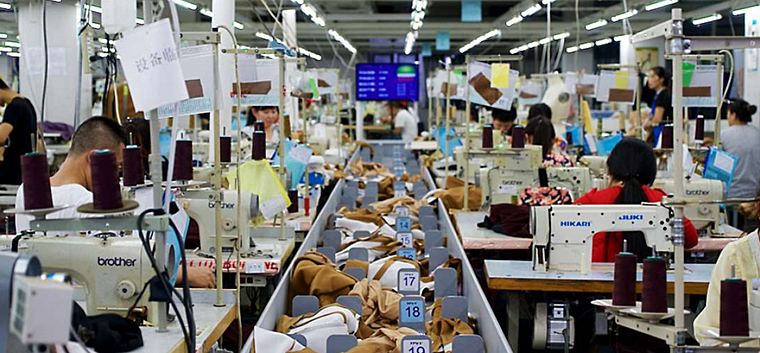
A Chinese-made swim suit for $5.98! Who would have imagined its true cost?

Looking back at the future

Friday, October 2nd, 2009

Each year terribly well-educated and insightful people make predictions about the future. In some cases they are right but mostly they are wrong. Rarely, however, do we go back in time to review just how accurate our prognosticators have been. We are so caught up in “worrying about tomorrow” examining yesterday’s predictions is too boring.

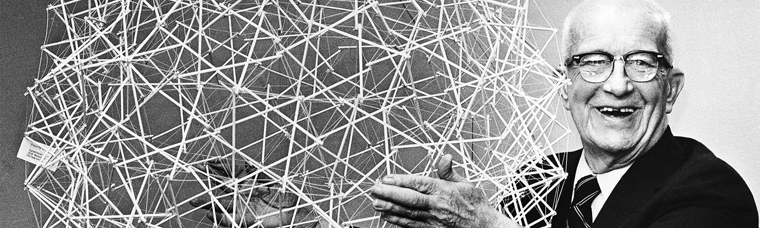
Forward-looking inclinations aside, I recently decided to reread R. Buckminster Fuller’s 1964 book “Utopia or Oblivion,” a compilation of his speeches and essays. For those of you who are not familiar with “Bucky” Fuller, he was one of the 20th century’s most innovative thinkers and inventors, famous for his invention of the geodesic dome. Fuller’s observations were bred of a determined lifetime effort towards developing a comprehensive view of the workings of the world, both natural and human-made.

In his book, Fuller’s thoughts and predictions, made as the first geosynchronous Telstar communication satellite system was placed in orbit, accurately anticipate the subsequent globalization of culture, technology and economics. While he did not specifically mention the Internet, he clearly saw that the computer-driven communications revolution would transform the world and obliterate many of the long-standing boundaries separating nations and peoples.

Fuller considered political systems all but irrelevant to the success of the human species. In fact, he viewed the existing world-wide political systems as obsolete, and actually standing in the way of progress. This is not to say that he was an anarchist – anything but – however his view was that unless our allegiance to a philosophy based upon “not enough to go around” and the political-military-war-making systems that go hand-in-hand with such thinking are cast aside, our chances of survival are low.

Based upon meticulous calculations and his documentation of the acceleration of technological advances, Fuller advocated that human-kind has the capacity to fully provide for all residents of “Spaceship Earth” if only we could recognize it. From food to shelter, communication to energy (using sunlight, wind and wave energy), education to transportation, Fuller felt that within 50 years, petty politics aside, advances in technology meant there would be “more than enough to go around.” World-wide humanity could fully enjoy the wealth of its metaphysical understanding and knowledge, and enter a new age unencumbered by fears of ignorance, poverty and starvation. Would global warming, I wonder, be the problem it is today had the world invested heavily in solar and alternative energy production as Bucky suggested 50 years ago?

Alas, despite his brilliance, Fuller greatly underestimated the enormous power of greed. His thinking failed to anticipate the ways in which the “haves” would continue to amass wealth and power at the expense of the “have-nots” and how fear-based “negative societal reflexing” would be actively propagated for decades.  While the world-wide web has indeed spread instantaneous networked communication across the globe, the voracious consumer-credit profit-driven world-economic system has overwhelmed the potential for free universal education, social enrichment, economic equity and clean renewable energy.

Fuller believed that “truth will set us free.” In this respect, he was naïve. Just as many in positions of power and influence continue to deny the reality of global warming due to human activity, so have we wasted 50 years stimulating ignorance, complacency and greed. As for making a choice between Utopia or Oblivion, sadly, we are almost out of time.