Archive for September, 2009

And what if stars are great celestial beings?

Friday, September 25th, 2009

The immensity of the universe is inconceivable. No matter how far we look, there is still more beyond. No matter what we see, there is far greater yet unseen. No matter how much we come to understand, there is ever more about which we no nothing.

The Mahayana Buddhist Flower Ornament (Avatamsaka) Sutra describes nothing less than the nature of the universe and our existence within it. In its voluminous 1,800 pages, the sutra exhausts the capabilities of language and demonstrates its inadequacy to fully describe reality. It expounds upon the miniscule and the infinitely huge; objects of no dimension and of multiple dimensions; galaxies and universes of all types and descriptions and indescribable aspects of the formless; qualities of time and space and the truth of no time and no space. Moreover, it elucidates a sacred interdependent matrix and the profound wisdom and practices that can be cultivated in harmony with the profound.

The accumulated wisdom of the Hubble space telescope program is no less voluminous and equally profound. In its twenty years of observation (hubblesite.org), Hubble has captured images that show the birth of stars, the remains of supernovas that exploded five billion years ago, evidence of black holes, vast galactic systems covering thousands of light years of space, and an infinite variety of shapes and forms. It has revealed the invisible scaffolding of dark matter, the unbounded power of dark energy accelerating the expansion of the universe, hints of the faster than light-speed interconnectedness of all phenomena, and unconditionally bestows this entire treasure to all humanity. 

The 2,000 year-old Flower Onament Sutra tells of placing entire galaxies on the tip of a hair without in any way disturbing time and space, and in its way, this is precisely what Hubble has done. By capturing images of the uncountable galaxies spread across timeless heaven, the telescope has reduced the inconceivable immensity of the universe to human scale. Upon seeing such images, one cannot help but reflect upon individual existence, itself an expression of the interaction of billions of trillions of infinitesimal manifestations of matter and energy. Each one of us, after all, is simply star stuff.

The Flower Ornament Sutra was compiled in stages over a 300-year period beginning around 100 AD. One must wonder how, without the aid of telescopes, astronomical equipment or advanced technology, ancients could so fully describe what Hubble has so graphically revealed. At times, passages within the sutra read like Hubble photo captions, as in the sutra’s description of the myriad shapes and forms of world-systems, now evidenced by Hubble’s 10-day deep-field exposure revealing tens of thousands of galaxies in “empty” space. At other points in the sutra, one finds the language of string-theory and its explanations of multiple hidden curled-up dimensions.

The ancients closely observed the sky, more so than the average person does today. Some ancient peoples thought the heavens were the inside surface of a closed sphere surrounding the earth, and that the stars were simply placed upon this surface. This was not an unreasonable explanation, and sufficed for many.

The Mahayana sutras expound a deeper view that goes far beyond seemingly simple explanations. Having explored the inner space of being and plumbed its inconceivability, the Buddhist understanding of outer space is not surprising. That Hubble’s observations have affirmed that understanding, however, is remarkable.

Chinese Czechers

Friday, September 18th, 2009

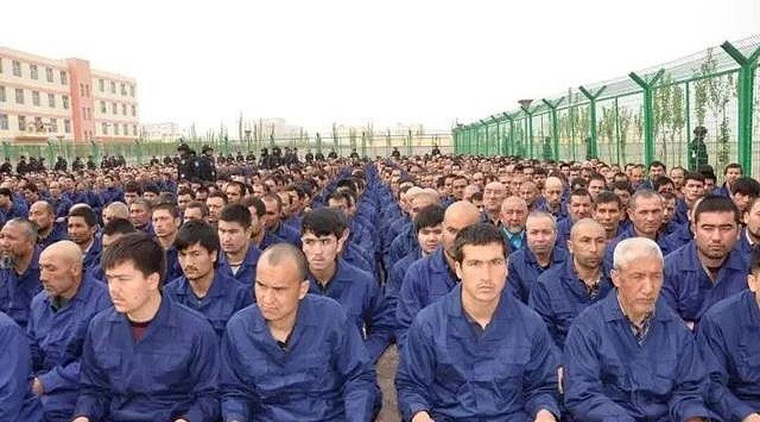
Last year it was the Autonomous Region of Tibet; this year it is the Xinjiang Uyghur Autonomous Region. China, it seems, is undergoing another round of its periodic socio-political upheavals.

Chinese history is not customarily taught in America, so many are unaware of the regular regime changes that have taken place in China during just the past 1,000 years. These changes were not only political, but broadly cultural and religious, and they affected uncountable millions of people in this densely populated part of Asia.

Most of us are familiar with the Communist take-over of China in 1949. This event is often viewed simply as the spread of Communism during the 20th Century, and too infrequently viewed from the perspective of 1,000 years of Chinese political maneuvering. The Communist period is but a brief blip in China’s long history, a dramatic but short interlude in an otherwise multi-millennial exploration of social organization. Accordingly, the relationship, role and responsibility of the individual to the state have undergone myriad revisions.

As is true in the West, China’s political system has been inextricably bound to religious institutions, or in the case of the Communists, anti-religious institutions. These institutions – whether Buddhist, Taoist, Confucian or atheist – garnered the allegiance of many millions of people and thereby exercised social and economic influence. Over the last 1,000 years, successive Chinese Dynasties and regimes overtly and covertly played politics with religion, aligning or disassociating itself from such institutions depending upon economic and military implications. Alternately promoted or suppressed, the leaders within China’s major religious faiths oscillated between being valued advisors to emperors or labeled “parasites” and disenfranchised outcasts. The Falun-Gong movement, embraced in 1992 by Chinese authorities was then accused in 1999 of “promoting theism and jeopardizing social stability;” the Communist party persecuted Falun-Gong members and its practices were banned.

An equally powerful vein within Chinese culture is its devotion to an organized Civil Service. Historically, the bureaucratic legions of state supported workers were part of a highly regulated society which included rigorous education and examinations for civic officials. While lending stability to the apparatus of government, this highly regimented mode of social organization continues to strongly resonate through Chinese culture, and can clearly be observed in the hegemonic control of the Communist Party in China today.

China’s absolute insistence that both Tibet and the Uyghur regions are historically part of China proper is based upon the various political, religious and economic alliances that were formed and dissolved during the past millennia. The Uyghur region in western China, for example, largely populated by Turkish Moslems, was once controlled by the Mongol Empire (1206-1368AD) as was China as a whole. It was under the protection of the Mongols that Tibet established its Lamaist governmental system; the first Dalai Lama was appointed by the Mongols. The point is that for varying lengths of time, vast areas of what we today call China were in fact wholly autonomous countries or under the control of various other Empires.

In Europe, the countries cobbled together by the English, French, Austro-Hungarian, Ottoman and other empires have fractured. The same is true for the former Soviet Union. As the information age extends, despite its great age and military efforts to the contrary, it is reasonable to expect that China will undergo a similar deconstruction in the years to come.

The Body of Metaphor

Saturday, September 12th, 2009

The typical view of the body is that it is a thing apart, something we “have” but not what we “are.” According to this view, when illness occurs “it” needs to be fixed, much as we fix a broken muffler or lawnmower. This common narrative reinforces a mind/body split, objectifying our body.

An alternative view is that we are fully integrated beings of body and mind. Aware mind considers, inquires and reaches conclusions. Body is also constantly aware, providing information and revealing truth. Discerning the meaning of body’s narrative is not always easy. The language of body can be subtle and obvious. Sharp pain, for example, tells us to stop whereas a sensation of warmth might mean many things. Ignoring the messages of body comes at the cost of illness and disease.

Because body speaks without words its narratives are often in the form of metaphor, more poetic than direct. Understanding what body is communicating requires accepting that such narratives are possible, of course, but once accepted a rich and nuanced story often can be found and provide a path back to health.

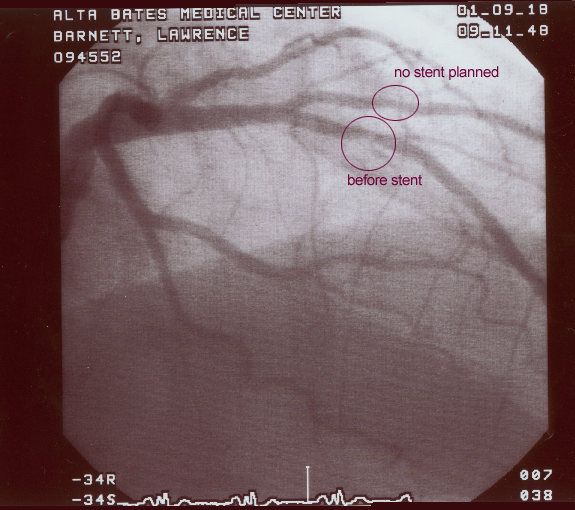
Ten years ago while in my early fifties, I was diagnosed with serious coronary artery disease. Atherosclerosis, what’s often called “hardening of the arteries” is generally a chronic, progressive disease, and untreated is a leading cause of early death. In my case, however, the diagnosis prompted me to also look for the deeper metaphoric meaning of my illness. It was not difficult to find, for I alone was the one who had spent years hardening my heart.

I could list the reasons why, but they don’t matter, really. What matters is that I’d done it to myself through forms of anger and aggression in a long-term misconstrued strategy of self-protection. If continued, the hardening would accelerate. My body was talking and I chose to listen; I had caused the problem, I could also reverse it. So it is that I began a set of practices to soften my heart, to recognize anger and aggression as they first arise and with gentleness, let them go. I don’t know if it’s working, but it feels right.

Sometimes life is a pain in the neck, literally. I don’t blame my neck; I think instead about what or who has been difficult for me, and the role of my own aggression. If my throat gets sore, I consider ways in which I feel emotionally sore. In short, when my body talks I pay attention and then search for the subtle meaning; it’s almost always there to find.

Lately my right wrist has been causing me pain. The common view is that I have strained a tendon or some such thing, but I suspect a deeper meaning. The Old English linguistic root of the word “wrist” is related to “wrest,” to forcefully take or twist. This is how suffering arises. Such wrist pain is body’s way of directly reminding me to be gentle, to stop grasping so hard with my mind and heart – not simply my hands.

Each of us is the best judge of what’s going on inside; self-deception overcome, we are in fact the only one who really knows the entire story. If we but pay attention, we’ll find that body is continuously providing a truthful poetic metaphor of self-illumination.

Someone’s in the kitchen I know

Friday, September 4th, 2009

My mother is a superb cook, an absolute natural in the kitchen with a talent for turning whatever is available into an elegant repast. She once visited me while I was young and penniless…all we had in the refrigerator were lemons, and I’ll be damned if she didn’t whip up the finest lemon sauce for a piece of chicken that I have ever had.

Growing up, dinner was a three-course affair for five. First the salad course, served in small wooden bowls from a much larger wooden bowl; we each used a proper salad fork. Next the main course and side dishes would be served. One night might be Chicken Cacciatore with egg noodles and broccoli; another might be lamb chops served with wild rice and Brussels sprouts; red snapper, ratatooie and spinach would also make an occasional appearance. Plates cleared, dessert followed; ice cream and cookies, or baked apple brown Betty…chocolate cake, perhaps. So it went night after night. Accordingly, I not only grew up, I grew out. I’m still trying to lose the weight I gained before turning 18.

I loved hanging around the kitchen with my mother. When I was ten, she replaced our stove with a six burner, two-oven WOLF restaurant range, sporting an enormous grill-top. It was on this behemoth that she worked her daily miracles, and it was at this stove I learned to cook. In those days pans were basic; either cast iron, copper, or enameled. Heavy is an understatement. Taking care of the pans properly was my first lesson: NEVER wash cast iron pans with soapy water, which removes the essential surface “seasoning.” When it came to her pans, my mother was as fierce as a tigress protecting her cubs.

I began by cooking eggs with cheddar cheese stirred over medium heat in a buttered enameled pan until just set, still moist and tender. I’d cook them for my brother and sister on Saturday morning. From there I graduated to omelets, which on a 15,000 BTU restaurant stove taught me to pay attention. Thus I learned the first law of the kitchen: do not divert your attention from something cooking on the stove. The smoky price for breaking this rule was an early morning, pre-coffee vociferous and high amplitude red-faced visit from my mother yelling, “What’s going on in here? Stand back!”

I learned by watching: how to sear short ribs before braising, when to stir food and when to leave it alone; how to properly use a knife and chop an onion; the right dusting of flour before frying a veal cutlet. I also learned about presentation: an appropriate portion and how to plate it. My mother was not precious about food, but attention to its aesthetics, like all that surrounded her, was an essential transmission.

Neither of my two daughters had interest in learning to cook when they were young. My wife has let me run the kitchen for 34 years. I was afraid there would be nobody to teach, but then my friend Stanley said he’d like to learn to cook. On Tuesday morning we play baseball catch and discuss the menu for lunch. He buys the food and I teach him to prepare it.

In a photo sitting on the kitchen counter, meanwhile, my mother smiles.