Archive for July, 2009

Increasing Gross Municipal Happiness

Monday, July 27th, 2009

According to Jigme Thinley, Prime Minister of Bhutan as quoted in the NY Times, the cause of today’s economic crisis is “Greed, insatiable human greed.” I can’t think of a shorter and more concise analysis of our current condition that says it better.

The Times article is about Bhutan’s efforts to determine policies and programs based upon happiness instead of simply G.N.P. economics (go to nytimes.com and search for Bhutan G.N.H.). Using a “well-being model” based upon “four pillars, nine domains and 72 indicators of happiness,” the government of Bhutan (now a constitutional democracy) seeks to use Gross National Happiness calculations (G.N.H.) as the guidepost for future societal development. A complex yet calculable mathematical formula has been developed through which policies, proposals and concepts can be evaluated. Accordingly, factors such as positive and negative emotions, trust and safety can be tracked and made part of the decision making process. Similarly, the positive and negative effects of more or less pollution, crime and illness can be taken into account.

If crime statistics, drug and alcohol use, high-school dropout rate, economic stability and lapses in health coverage are any indication, America’s G.N.H. is quite low. Unlike Bhutan, measuring happiness is not uppermost in our list of priorities. Despite consumption of 45% of the world’s resources, we American’s suffer from an epidemic of depression and substance abuse. Clearly, material wealth is a minor indicator or happiness, not primary.

We would benefit by exploring G.N.H., and determining in what ways we might adopt a similar tool to guide us into an uncertain future. The past is the best indicator of the future; if we allow economic indicators alone to guide our way forward, our G.N.H. will diminish, not increase.

Even in a small town like Sonoma, we would benefit from this more holistic view of priorities and decision-making. Our General Plan and Development Code are pretty good as far as they go, but they lack particular definitions and standards to weigh and measure the effects of proposals. The environmental impacts of large projects are considered, but with an eye towards mitigating negative effects, not eliminating them. We do not adequately evaluate the effects of noise, lighting, construction waste, or type of jobs created in evaluating project proposals. Even in cities that require more analysis than Sonoma requires, like the economic impact reports now required by the City of Petaluma, the emphasis remains on economics, not happiness.

Bhutan distributes a 72-page questionnaire to its citizens to help gather information about happiness (go to:http://www.grossnationalhappiness.com and click on survey). A similar, if shorter, questionnaire might be an excellent way for us to begin. Moreover, while there are cultural differences, Bhutan’s systematic methodology to calculate the effects on happiness of policies and proposals may be adaptable to our own community.

Many of us suffer from insatiable greed; it is our modern American disease. Less focused on quality, durability, sustainability and beauty than on convenience, surface appearance, low prices and disposability, we landfill many thousands of acres with our daily refuse. We try to find happiness in all the wrong places, seeking it in short-lived external objects and experiences instead of long-lasting internal values and virtues.

Sonoma is the birthplace of the State of California and I can’t think of anyplace better to begin America’s very own Happiness program.

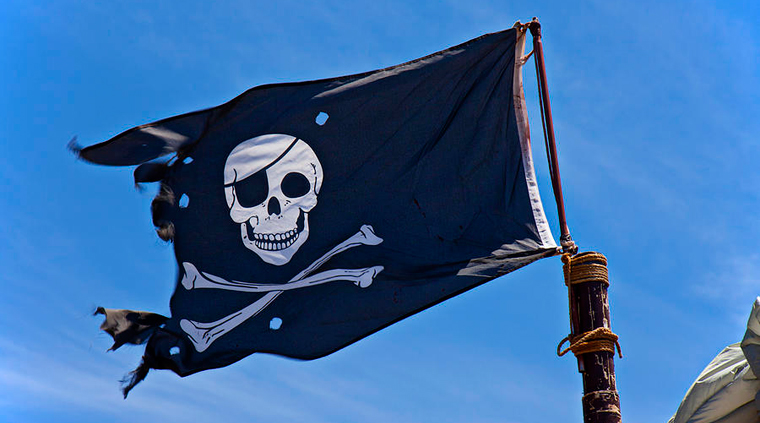
Pirates, Incorporated – The world’s first IPO

Friday, July 17th, 2009

The media’s attention has recently turned to pirates, those who steal from others and betray the customary conventions of territory and ownership. Populated with iconic Hollywood images of burly men with eye patches and peg legs, romantic characters and cruel villains like Blackbeard, the true history of piracy is far less colorful but more interesting.

When the oceans and the world were under intense exploration by ambitious sea-faring nations, those with superior technology and financial resources sought to dominate others. The combination of state-supported legal protection and investors’ private capital to fund exploration produced a robust ocean-going business of conquest and plunder. It was within this environment that in the year 1347 the first corporations were created. Chartered by government, these corporations were bestowed ever greater legal protection by the powers of the state, which through its chartering created the means for exploration and conquest and stood to gain a share of the profits. Over centuries, ships of differing flags of origin battled over territory, and vessels on the open seas were targets of opportunity by state-sanctioned pirates called “privateers.” Not surprisingly, such ocean warfare was a major driving force behind weaponry development, improved navigation, better mapping, and ship designs fueled by the need to outrace or escape marauding vessels.

At anchor, these armed vessels became floating fortresses and military bases, from which land expeditions would set forth for plunder and conquest. The ocean-going European powers mounted a brutal centuries-long period of dominance and subjugation of weaker peoples, all in the pursuit of wealth, shareholder profit and increased state power. Once established on land, these corporations formed regional offices, and became the likes of the British East India Company, which ruthlessly dominated commerce and trade in Africa and Asia for generations.

Warfare on land mirrored the pirate tactics used at sea, employing superior technology, weapons and transportation to conquer, dominate and expropriate from others through force. Whether natural resources, agricultural products, textiles, or slaves, as colonial partners the world’s early corporations greedily pirated the wealth of people all over the globe. I wish I could say things are entirely different today, but that would not be the truth.

The recent piracy off Somalia harkens back to an earlier age of ocean-based marauding. Because it is so blatant and old-fashioned, it’s easy to condemn. The land-based piracy of some modern corporations is more difficult to discern. For example, before its collapse Enron Corporation was using its ill-gotten millions to wrest control of public water supplies in third-world countries; this corporate piracy was floated upon a vast ocean of money provided by Wall Street financiers, whose recent multi-billion dollar plundering has triggered a world-wide financial melt-down.

Along with government charters and limited liability protection afforded multinationals, U.S. corporations have been granted all the constitutional rights and protections afforded the individual citizen. In this context, it’s worth remembering that modern corporate capitalism shares an unseemly history with state-supported corporate piracy, wherein weaker peoples, countries and economies were forcefully dominated and controlled by those with greater wealth.

There is no escaping this dark reality of the past, but revising and rewriting the laws governing today’s corporations may yet provide the opportunity to break a shameful pattern of massive economic and social piracy that makes old Blackbeard seem like a pussycat.

My Father My Self

Wednesday, July 15th, 2009

My father recently turned ninety. He’s had a rough couple of years, progressively losing much of his hearing and his eyesight. Neither entirely deaf nor blind, his deficiencies are nonetheless significant enough that he can no longer read and must wear hearing aids in both ears. His gait has slowed as arthritis takes its toll on his knees and a calcified aortic valve leaves him short of breath. His daily dose of medication has now reached eleven pills.

My father is a tough Brooklyn Boy, a natural scrapper who has faced, met and overcome major challenges in his life. He now faces his toughest challenge of all, watching who he has been disappear and fade away. The attributes that served him well are all but gone: wit and repartee, seductive boyish charm, a youthful manner and great stamina. His opponent is relentless, stealthy and determined; despite his wishes otherwise my father must eventually succumb, as will we all. He knows this, but in some strange fashion still feels that perhaps there is a chance he will just live on and on forever. Yet with each new movement towards decline, he is buffeted by his hope and fear, an exhausting emotional oscillation that leaves my father and everyone around him discouraged and depressed.

While he was recovering from a crisis last year I asked him how he’d imagined the last years of life; he answered that he had never thought about it. I’ll admit I was surprised, but then again I’ve watched him grow very old, something he never saw happen to his own father who died in his mid-sixties of a heart attack when my dad was but forty-five. Sitting with him recently, reading to him from his beloved New York Times, I found myself wondering how much like him I will be if I reach ninety. I can’t be sure, of course, but I think I won’t be as shocked by what it’s like as he seems to be.

I took the online AARP lifespan test the other day, a simple check-off survey about habits, current health, and mental attitude that predicts how long one will live. Despite type-2 diabetes (well controlled with diet and exercise) and heart disease (you gotta love Lipitor) the prediction was that I will live to ninety-four. Perhaps this estimate is based upon optimistic assumptions about health care in the future, and given that the fastest growing population segment in America is eighty-five and above, this prediction may well be true. But of course, that means that the decline my father has experienced in very old age will be mine to enjoy, also.

I’ve decided to implement an aging plan. I’m still young and healthy enough to develop talents I can use should I lose my sight in twenty or thirty years, for example. Learning to play the piano sounds good, as does memorizing books and poems to keep my brain sharp and working.

In this culture, alas, it’s not just aging from which we are likely to suffer, but increasing isolation and care at the hands of strangers instead of the warm embrace and familiar comfort of close friends. Being a member of a communal, closely-knit multi-aged community of shared interests, I’ve concluded, is thus the most important piece of the plan.

Swine flu over the cuckoo’s nest

Monday, July 6th, 2009

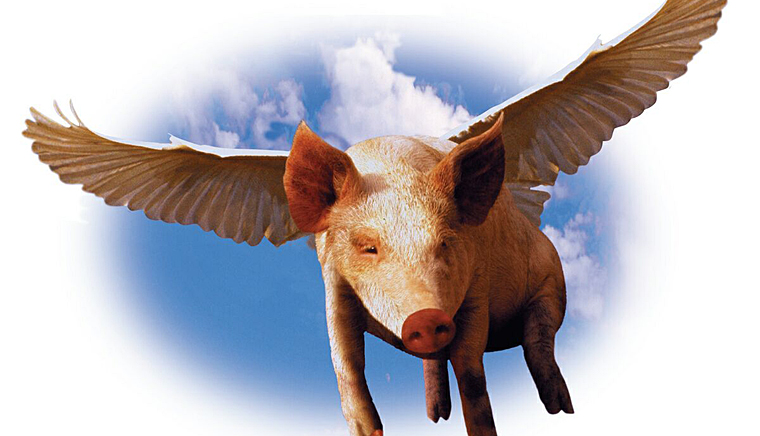
Something really big is about to happen when pigs sprout wings and fly – at least that’s what we’ve been told. The sudden world-wide pandemic of swine flu, in which a mix of pig and bird flu virus has spread to people and hitched a ride on the world’s fleet of AirBus jets and Boeing 757’s comes as close to flying pigs as we are likely to see.

The flu pandemic of 1918 killed 40 million people, 2% of the world’s population of the time. For many its arrival confirmed the hypothesis of Thomas Malthus (1766-1834), the British scholar who advanced the highly pessimistic theory that the size of the world’s population would be kept under control by the effects of disease, pestilence, famine and war. This idea maintained its currency until the latter part of the 20th century, when a combination of factors rendered Malthus’ ideas obsolete: antibiotics and the green revolution.

The green revolution, a combination of selective plant breeding and the widespread availability of man-made nitrogen fertilizers, supported the growth of earth’s human population from a level of 2 billion in the year 1900 to 6 billion in the year 2000. It is estimated that 2 billion of this increase was a direct result of increased food availability. Artificial fixed-nitrogen fertilizer (created by the Bosch-Haber process) was developed in Germany in support of its WWI munitions effort, but eventually, as documented in The Alchemy of Air by Thomas Hager, it transformed agriculture. Today, it is obesity not starvation that is increasing in the world. Ironically, world hunger is a by-product of poor transportation, corruption, greed and inadequate storage facilities, not food production.

An industrial agricultural model dominates world food production, both plant and animal. Manufactured pesticides, antibiotics and artificial fertilizers, as noted by author Michael Pollan in The Omnivore’s Dilemma, fuel this industrial model and create monocultures of both modified plant species and densely packed stockades and warehouses of livestock raised for human consumption. Such monoculture is a perfect “Petri-dish” environment, and creates favorable conditions for new plant and animal disease vectors wherein quickly-spreading drug-resistant viruses and bacteria mutate rapidly. If and when these disease organisms cross the species border to human beings, the risk of pandemic arises. This has been true of the Bird Flu in Asia and the dramatic rise of drug-resistant strains of tuberculosis.

Assuming the media hype is warranted, no vaccine is developed and the Swine Flu kills 2% of the human population, 120 million people will perish over the course of 12-24 months. This is a staggeringly high number and in human terms, unprecedented. As our own populations have become larger and more densely packed, human society has also become a monoculture of sorts, the perfect vector for new illnesses – physical, emotional and cultural.

In One flew over the Cuckoo’s Nest by Ken Kesey, the inmates of a mental institution are revealed as decent, sane and virtuous, while those running the institution (like nurse Cratchett) reveal their cruelty, insanity and lack of virtue. In some strange way, this topsy-turvy Cuckoo’s Nest arrangement is playing itself out in the way we humans have chosen to run the entire world, sacrificing health and decency for short-term profit and power. Swine Flu, I’m afraid, is just another symptom of how cuckoo we really have become.