Archive for April, 2009

This statement is false

Friday, April 24th, 2009

Much of the conflict in the world is about who knows the absolute truth. Attachment to a particular truth often leads to disagreement, bloodshed and violence perpetrated in the name of one truth or another. This is not a recent development; the history of human culture is replete with examples from every age and culture.

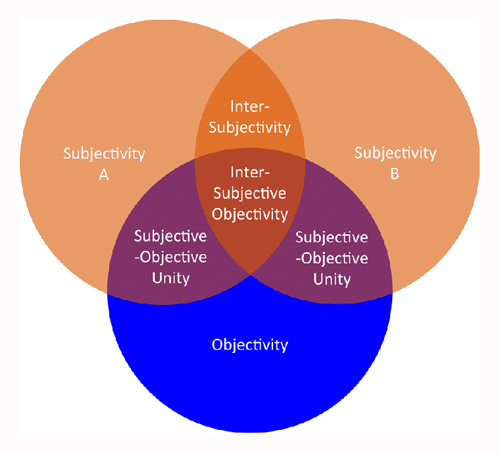
Now, one can make the case that there is no such thing as absolute, objective truth, which if true means that even this statement is false. Our notion of so-called “objective reality” actually is better described as “inter-subjectivity;” conformity and adherence to a set of commonly held presumptions which nonetheless are impossible to prove as absolutely true.

The inclination to share common belief allows us to communicate using language, establish monetary systems, set forth guidelines for social and legal behavior, and generally live our ordinary lives. When taken to the extreme of unmediated group-think whipped up by manipulative emotional narratives and fear mongering, our group behavior never ends particularly well and too often, people kill and get killed.

Absolute truth is impossible to prove because we must use our minds to prove it. Whatever we see and whatever we perceive is the product of cognition – observance of events followed by the process of reaching conclusions. Our cognition is not always accurate; the earth appears flat, but we now know that it is round. Our eyes, ears, nose and memory are notoriously easy to fool, which is why Hollywood’s magicians can earn a living. In short, what we view as true is accepted by us either because others have said it is true, or we have used our own perception and cognition to come to our own conclusions. In both cases, we cannot prove the truth of our beliefs without making use of our often unreliable cognitive process.

Even modern technological science, which likes to position itself as the standard-bearer of objective truth, must by necessity use tools that are utilized through cognition. Consciousness, a combination of our cognitive and perceptive abilities, even when combined with science, inserts a filtering frame of reference through which we can only see within the limits of mind.

This being the case, we rely heavily on inter-subjectivity. Those who do not share the popular inter-subjective truth are branded as either, (a) stupid, (b) heretical, (c) insane or (d) deluded. Their view of truth is marginalized, ignored or punished. Thus it is that Galileo’s ideas were banned and he was accused of heresy. Later, the inter-subjective truth came to match his view, and today those who believe that the sun rotates around the earth are considered stupid, etc.

If one accepts the impossibility of the assertion of absolute truth, it naturally leads to questions of how to live properly in the world. Neither nihilism, the view that nothing matters, nor eternalism, the view that what is true is found in an afterlife, seem to have provided an alternative to violence and aggression that arise as people defend their truth. Moral relativism provides no workable framework for a healthy society, either.

It may yet be possible to build a society without defending assertions of absolute truth, relying instead upon a simple lesson of human experience; that treating others kindly and with compassion increases happiness. After all the arguments and mayhem, perhaps this is truth enough.

A simple weekly column

Monday, April 20th, 2009

One of the challenges of writing a 550-word column for general consumption is finding the proper balance between simplicity and depth. The discipline of 550 words imposes a limitation not unlike that of an artist’s canvas, that is to say the overall dimensions of the finished work are defined and thereby limited in space. It is within such limitations, one may argue, that any creativity or talent is revealed.

A problem arises, however. When complex ideas are presented simply, one is criticized for taking shortcuts and being sloppy; when complex ideas are presented in full, one is criticized for writing too far over the heads of too many.

I subscribe to the notion that the mundane is the ladder to the transcendent; that subtle meaning resides within the simplicity of form and the profound can be perceived in the enumeration of phenomena. Thus simple is not always simple, nor is its explanation. Resorting to words always adds to complexity. What begins as a pure perceptual experience, such as seeing the color red, becomes far more complicated when that direct experience is described in words. In some cases, like describing sex, it’s nearly impossible to convey experience with language.

Bill Clinton is famous for answering a question with the statement, “It depends upon what the meaning of ‘is’ is.” As a lawyer he knew that the parsing of words establishes meaning, a matter of grammar, context, emphasis and etymological history. Yet as we all know, sometimes just one word says a mouthful.

My inclination to find complexity in the simple became obvious when I was a senior in high school. Asked to write a major English class term paper on a topic of my choice, I decided to explore the prominent use of excrement in the various writings of Jonathan Swift. Author of Gulliver’s Travels, A Modest Proposal, numerous essays and poetry, Irishman Swift was both a clergyman and author of acerbic wit and satirical bent. Luckily, my teacher Mrs. Breslow was an open-minded and creative thinker who agreed to let me pursue my highly unconventional topic. Ultimately, I not only cataloged multitudinous examples of Swift’s creative scatology, but seized the opportunity to psychoanalyze him as well. Just as Gulliver’s occult scientists at the Grand Academy of Lagado spent their days trying to convert dung into fine food, so did I wiseacre the subject into fine words and earned an A.

The early 20th century mystic, G.I. Gurdjieff, made much of what he called “wiseacres.” He proceeded to write a fabulous and often incomprehensible 1,500 page book entitled All and Everything, larded with numerous snippets of wisdom just to prove that he could out wiseacre the best of them. Moreover, he declared that his book should be read in full three times. Lo and behold, he was acclaimed as enlightened by a rising tide of sycophants looking for complex answers to simple questions.

My columns are intended to inform, entertain and stimulate; read them as lightly or as deeply as you choose. There is always the risk that I will begin to take myself too seriously, but please rest assured; I recently affixed a fresh roll of single-ply toilet paper to my desktop printer whereupon in swift measure, I print my latest column for appropriate use thereafter.

Reflections of a post-Darwinian

Wednesday, April 15th, 2009

I find myself in a bit of an emotional quandary. I am one of the tens of thousands of heart patients walking around with an electronic pacemaker-defibrillator implanted in his chest, yet I can’t help feeling somewhat uneasy about where we Post-Darwinian Men and Women are headed.
 
My conventional self, created by my “mind of separation,” effectively relegates the small computer monitoring and regulating my every heart beat to just an imbedded chunk of metal and not part of the “real” me. However, my subtler non-self “mind of unity” reveals that the line dividing me from technology has effectively all but dissolved.

The evolutionary shape of things to come is techno-biomedical: gene analysis, splicing and replication; stem cell creation and cloning from ordinary cells, nanobots so small as to be able to circulate freely within and between cellular structures; artificially created DNA; Mini Me and Mini You.

Some of these things are already happening, and all of them will be achieved within the next decade. The human laboratory will replace natural selection as the primary engine of mutation and change. Interestingly, as the human population continues to explode (are we the Kudzu of the animal kingdom?), the rate of natural mutation will continue to increase as well. Our rapidly multiplying billions are generating an ever accelerating number of new DNA combinations so we continue to naturally evolve. Looking ahead, though, the by-product of the combination of human-made and nature-made evolution is entirely unpredictable, and is likely to produce outcomes well beyond our expectations. As per usual, our science fiction points out where things are going. X-Men Comics may well be a fair depiction of the future.

While computer and electronic technology are micro-sizing rapidly, an even greater computing efficiency will be provided via techno-biology in the future. The computational and storage capacity of cellular memory makes the most advanced computer “chip” look like steam locomotive compared to a jet aircraft. Beyond that bio-technological frontier lies quantum computing using the ever-present underlying transformational wave structure of existence, an oscillation-based storage medium of almost infinite smallness. By then, our Post-Darwinian species will have morphed into something resembling nothing.

I have a hard time imagining what the world of our first grandchild, Isabelle, will look like when she is sixty years old. In my sixty years, we have moved from printed books to flat-screen computers, airplanes with propellers to rovers on Mars, grandfather’s dying of heart attacks at 62 to grandfathers kept alive by implanted defibrillators. Should Isabelle live to be ninety, the changes will be as dramatic as those experienced by my father, who has seen horse-drawn carriages used to carry messages morph into Skype and eMail.

Buckminster Fuller, the brilliant and prescient twentieth century futurist and inventor, constructed a time line to document the acceleration of technology, beginning with fire. He easily demonstrated that each new technological innovation hastens the development of the next. Yesterday, the robots began building the robots. Today, the robots are building us. Tomorrow, the robots will be us.

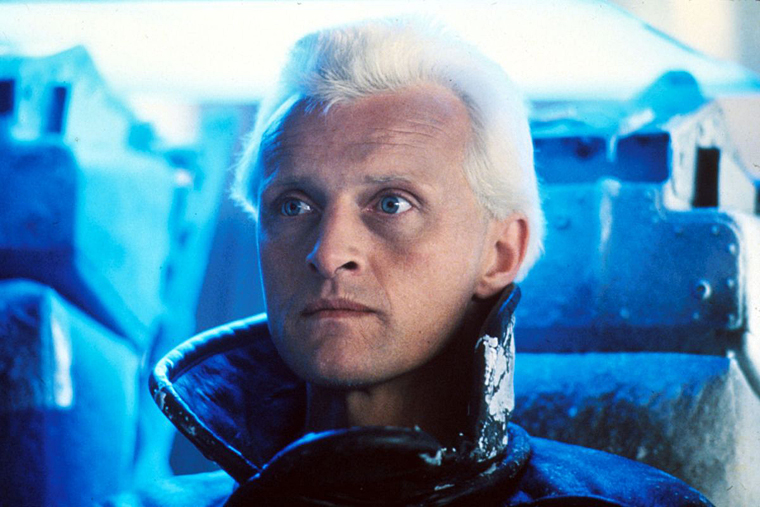
“More human than human, that’s our motto,” says Dr. Tyrell of the Tyrell Corporation, manufacturers of human replicas in the futuristic sci-fi movie Blade Runner. “More human than human.” I wonder what that means?

And this, dear reader, is when I begin to feel uneasy.

The economy of enough

Saturday, April 4th, 2009

As the financial collapse continues – home prices falling and more job losses announced every day – attention has focused on stimulating the economy. The injection of trillions of dollars by the government into the banking sector and virtually every other segment of the American economy has been viewed as the way to prime our economic pump and get the economy cranking again. But all this begs the question: what type of economy do we really want?

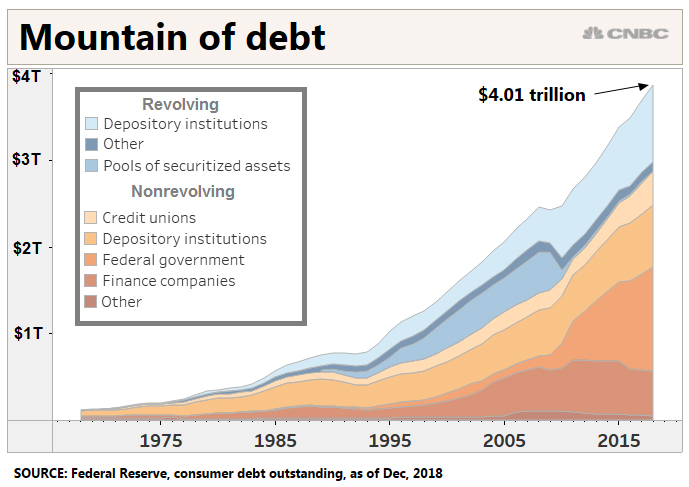
For many decades our economy has been based on growth, and all borrowing and lending is predicated upon the assumption of future growth; accordingly, businesses, government and individuals have amassed the largest debt in the history of the world. The savings rate is at an all time low while business failures, foreclosures and personal bankruptcies are moving towards an all time high. It’s the perfect economic storm.

The value of our currency floats against the currencies of other countries, which means that as confidence in the dollar declines, so does its value. Moreover, our dollar’s value is based upon our ability to repay our debt, which ironically is held by foreign countries who at present have invested in long-term American government securities. Thus, what props up the value of our dollar is simply the continued confidence in the value of our debt instruments, and that confidence may be flagging. If the European Union, for example, is more successful than the United States in stabilizing their economies, it may well be that the Euro becomes the safe haven for foreign investment instead of the US dollar.

Underlying all macroeconomics, however, are assumptions about the future. If consumption of goods and services does not resume, or resumes at a far lower level than it has been in the past, the forecasts about future income available to pay debt become meaningless. In a technical sense, the entire global economy will go bankrupt, unable to meet its debt obligations. None of us knows what such a world looks like or how it functions.

Perhaps this economic slowdown provides the moment to evaluate how a truly sustainable economic system functions, and to consider that the type of consumption that got us into this mess is most likely not the solution to solving it. Perhaps we need to examine the economy of enough.

When people were nomadic, enough meant what you could carry. When ancient fixed agricultural communities were developed, enough meant what you could store against an uncertain future. In today’s modern age of seemingly unlimited credit, wealth and resources, enough has lost its meaning. The feverish consumption of material resources has its analogy in our over-consumption of food, and we carry our financial debt as heavily as the extra pounds around our middles. As a nation we are suffering from a case of economic diabetes, our major financial organs are failing.

Though the media continues to hawk products and inducements to consume as if nothing has changed, we have been forced to consume less. As this continues, we may rediscover and renew the meaning of enough in our personal lives. As a world economy, however, it’s difficult to imagine what the economy of enough might mean. One thing is for certain; it wouldn’t look anything at all like what we’ve had for a very long time.