Archive for February, 2009

Yet another modest proposal

Friday, February 27th, 2009

Just as necessity is the mother of invention, so do desperate times demand imaginative solutions. Accordingly, it’s clear that the time has now come to introduce Kibble for People.

The economy is in a shambles, the unemployment rate is growing. Junk and fast food sales increase every year and people are fatter than ever. Diabetes and other obesity related illnesses are sapping America’s heath care dollars. Food, which used to be about nourishment and hunger satisfaction is now about money and fashion, spawning aisle after aisle of good looking packages filled with silly pasta shapes and colors, dozens of cereals that have more in common with candy than breakfast, and sodas and juices in odd combinations that sound good but taste awful. The solution is kibble for people.

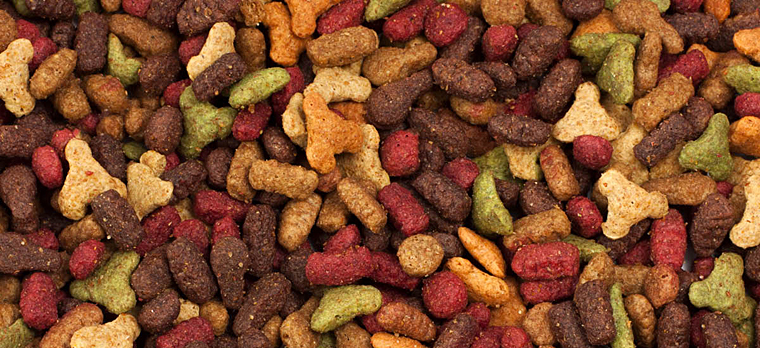
We feed kibble to cats and dogs, and they seem to like it. It contains all the necessary proteins, vitamins and minerals necessary for a long and healthy life, is inexpensive, easy to store, easy to use and can be served wet or dry. Its only drawback is that it’s boring, but cats and dogs don’t complain, do they?

It would be beneficial for our food to be boring. We are altogether too obsessed with food in all it forms; in fact we keep inventing new forms of food because we are so afraid of food boredom! Food is our favorite entertainment, but it’s killing us. Time was we needed less entertainment – working the land or making things with our hands took plenty of time – and food might have been a welcome break, but certainly not time-filling entertainment.

Kibble for people – what we’ll call People Chow – is the obvious answer to so many problems. Produced in only one flavor and only one shape, varied in formula based on nutritional needs alone, People Chow will be the simplest food; nothing about it will be entertaining. Sure, some obsessive people will pick and choose individual pieces of kibble, drawn to one over another based on some shape defect or slight color variation, but in time it will just be nibbled by the handful to satisfy hunger. Left in a bowl on the counter or next to the bed, kibble will be an all-day food; breakfast, lunch and dinner will fade away and disappear. Like cats, we’ll eat when we’re hungry, plain and simple.

This is such an obvious solution to America’s hunger problem I can’t believe it hasn’t happened yet. Friends, I’m not talking about Soylent Green; in my plan People Chow will not be made from dead people. We’d need a Department of Kibble in the White House to make sure it’s made well and honestly. We would not import Kibble from China, I hope. I want good-old American kibble made right here by good-old hard-working Americans!

Imagine never having to think about what to prepare for dinner and spending half of what you spend today on food. Imagine the time to be saved by eliminating mealtimes and shopping, cooking and dishes. No more television ads for pizza and burgers. Waistlines will shrink, doctor visits will be fewer and we will all live longer. With kibble complexions will greatly improve, our hair will be thicker and more lustrous, and we all will sleep as soundly as babes.

Creating our better self

Friday, February 20th, 2009

In mapping brain function, specific areas of the brain have been found to be primarily responsible for particular functions, such as hearing, seeing, feeling, motor coordination, reasoning and so on. Despite this clustering of functional areas, the brain is nonetheless capable of fully integrating input between varying brain locations and producing an uninterrupted and generally functional sense of self and reality. Neuroscientists estimate that the billions of neurons in the human brain establish hundreds of trillions of connections with each other.

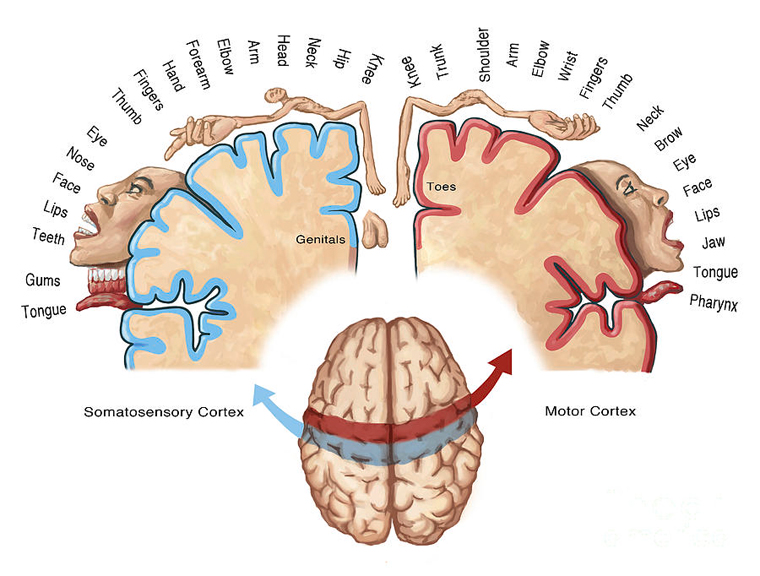
The periods of life during which many of these connections are created are in infancy and toddlerhood. I’ve watched this happening as our granddaughter Isabelle, now nine months old, has become intensely curious about everything within reach. She does not understand the world well, but she clearly senses that something is happening, and she wants to know about it. Her brain is furiously constructing what neuroscientists call brain/body maps, mental configurations of one’s body and the world around us.

Brain/body maps allow us to move and function properly in the world. Within our minds the postural arrangement and functioning of the body’s movements are replicated in a network of neural connections activated when we move and also when we are just anticipating movement. Just as various areas of the brain become activated when we dream, and readings taken of the brain reveal optical or hearing centers activated when we dream of sights and sounds, so when we are awake and anticipate or imagine movement, areas of the brain/body map are activated.

For example, in thinking about playing tennis – visualizing the swing of the racket and hitting the ball over the net – the centers of the brain responsible for those movements are activated in precisely the same way as when those movements are physically performed. Moreover, studies of brain/body maps shows that individuals can markedly improve their physical performance simply by visualizing a specific physical activity for regular periods over time. Remarkably, the degree of improvement closely matches that of those who engage in physical practice. This is as true in playing the piano as it is in tennis, golf or hitting a baseball. These findings have changed the nature of sports and musical training, as well as methods of rehabilitation for head trauma, physical injuries or stroke.

The implications of mental training for the development of new brain/body map connections are intriguing when considering other human behaviors. People engage in many activities that have a physical component, but also include emotional and sensate qualities. Material generosity, for example, involves attitude, emotional feelings, and the actual physical act of giving. If the mental activation of brain/body maps can improve playing the piano, can a similar activation improve generosity? Does the imaginary exercise of generosity – visualizing the transfer of an object of value to another person and forming feelings of openness and kindness towards others – actually lead to an improved capacity for giving?

The brain/body map is created over time, and our ability to adapt to changing conditions is a reflection of our ability to alter the brain/body maps within us. Studies prove that this ability lasts a lifetime, which means it is never too late to learn new things or change our ways of being. Practice it seems – be it physical or mental – does indeed make perfect.

UFOs and advanced civilization

Friday, February 13th, 2009

In comparison to ancient stone-age cultures, we consider our modern culture an advanced civilization. In actuality, all that has really advanced is technology and information; our silly and superstitious emotional selves have not changed a bit, as so amply evidenced by “Reality TV.” For the moment, though, let’s accept the definition of an advanced civilization as one which has developed and implemented increasingly sophisticated technologies.

In comparison to our modern culture, our conceptions of a more highly advanced civilization include imaginings of superior creatures from alien worlds like planet Krypton, with technologies that vastly outstrip our own. These imaginings include faster than light space craft and communications, multidimensional and temporal technology that allow time travel, evolutionary advances enabling ESP, thought transfer and mind control, the ability to manifest in many different physical forms and shapes, and other such extraordinary abilities.

Granted, our current understanding of the scientific physical laws of the universe may be yet be in their relative infancy, but nonetheless are the most advanced in human history. With our knowledge and technology we have plumbed the depths of atomic and quantum physics, engineered genetics, reduced computer memory to the tiniest molecular nano-scale, sent robotic satellites to the far reaches of the solar system, and created Silly Putty. These accomplishments make it easier for us to imagine the capabilities of civilizations more advanced than our own; after all, we believe in progress!

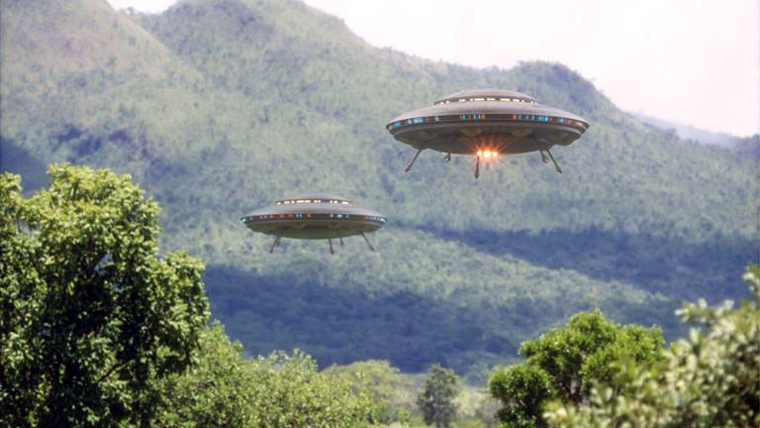
This begs the following question: If an advanced alien civilization wished to visit the inhabitants of planet earth, would they use a flying vehicle to do so? The star nearest to our solar system is over 4 light years away, the time it takes light traveling at 182,000 miles per second for four years: five trillion miles, plus. Attaining light speed using propulsion of any sort would take so long as to make the process prohibitively time-consuming, as would coming to a halt. If, perhaps, an advanced civilization had advanced to the point of teleportation, then no space craft would be needed, and that raises the question as to why they would need flying vehicles at all. And if no flying “saucers” are needed, why then do some people report they’ve seen them?

I actually like the idea of life on other planets. Within our modest galaxy of 100s of billions of stars there are certainly well over 100s of billions of planets, and many surely harbor forms of life. Assuming our dark fantasies about people filling alien bellies are wrong it would be truly fascinating to encounter life from another galaxy. But, again, the distances between stars are far too great for solid living creatures like us to physically travel. Based upon our understanding of physics, no physical object could survive flying through a black hole, and worm holes are pure conjecture at this point. All but three of the twenty-six dimensions currently contemplated by physicists are far too small for solid objects of any kind, and time travel poses unsolvable paradoxes, like what happens if you accidentally kill your own great-great-grandfather while visiting the past.

There certainly are strange lights and sounds in the sky for which we have no explanation. Reports of abductions and close encounters have not produced hard or convincing evidence. This leaves us with only our suspicions and fantasies, and they are as various as our fertile and vivid imaginations will allow.

The name is the rose

Saturday, February 7th, 2009

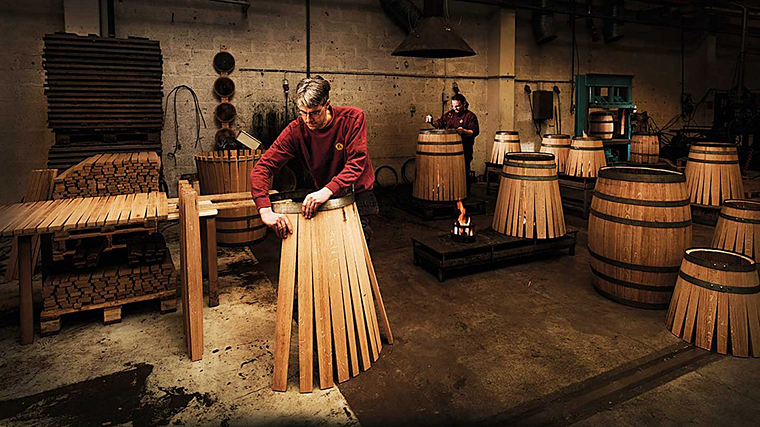
At one time people’s names were a reflection of their role within society and culture, not simply historical surnames passed on by tradition and birth. Accordingly, the Colliers were the makers of charcoal, the Coopers were the makers of barrels, the Smiths were the forgers of tools, Brewsters made beer, Chandlers made candles, Faulkners were falconers, Glaziers were glassmen, Masons were bricklayers, Sawyers ran saw mills, Wainwrights made wagons, Websters operated looms, and so on.

In ancient society, a male born in to a family of Smiths became a forger or blacksmith himself, as did his sons and their sons. One’s name was more than just what one was called, it was one’s calling, and while life’s options were limited by such a birth, society was assured of filling the essential roles required for its operation.

In modern society, names convey less information, and the disassociation of name and occupation is virtually complete. This is not to say that names and occupations don’t align themselves from time to time; I’m sure there is a Baker out there who makes bread for a living or a Wheeler who drives a truck. More often, though, I see a relationship between name and personality. For example, I know a Stern who’s tough, a shy Meek, and a Sweet who is just that.

A new twist on names has emerged with the internet, namely that of choosing screen or email names. I’ve seen many email names related to occupations, such as TireGuy, PastryMaid, Wordsmithy, Hackboy, and WindowWizard. Screen names vary on Blogs and postings, often reflecting attitudes or emotions, such as AngryDemo, Patience55, Holdingtight, WhoCares, and NvrMnd. After generations of inherited names, there is now an explosion of self-made names intended as statements of belief or allegiance.
 
I once knew a man who swore he could tell everything about people from the letters in their names. He assigned numbers to each letter, and after adding them up and dividing by the number of letters in each name, he would proceed to ascribe particular characteristics to a person. Obsessed, he would proceed to analyze each person upon being introduced. “Larry,” he’d say, “That’s 12 plus 1 plus 18 plus 18 plus 25…divided by 5 puts you on the cusp of 14 and 15!” He’d sound excited. Then his eyes would narrow, like he was peering inside my skin, and he’d whisper, “What’s your last name?”

We have but one legal name, but many of us have nick names; I’m Lawrence, but I’ve been Barney, Bean, Larry Narry, and Littlebear. For a short while, I was Fang, but that was when my adult canines grew in above my “baby” canines. My dentist pulled the babies out, and my new nickname went with them.

Things are given names so that others understand what we are saying. Names themselves, of course, are nothing more than arbitrary vocalizations meant to designate something that has no inherent name, therefore we assign it one. And we can go deeper still, because not only do things have no inherent names, but lacking the distinctions born of consciousness, things do not exist separately to name at all. Thus it is that names have power precisely because they are tokens for the unnamable source of being that we are.