Archive for December, 2008

Seeking happiness in objects of enjoyment

Sunday, December 28th, 2008

My step daughter asked me to perform the marriage ceremony at her recent wedding, and in preparation, I decided to buy a white linen suit. I ordered it online and paid $169; with a few alterations, it fit and looked great. I also decided that I wanted white footwear, and as the wedding day approached, I popped into Payless Shoe store.

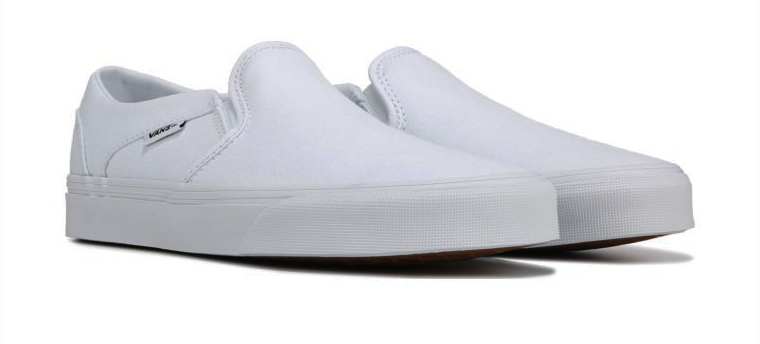
I ended up buying a pair of white slip-on sneakers for $16. Actually, they were women’s sneakers, what my wife called “espadrilles.” Whatever…they looked just like men’s slip-on sneakers to me, and I only bought them for that day. It turns out cheap women’s sneakers have no arches, so I bought a pair of arch support insoles for $15.95.

Between the suit, white socks and the sneakers, I looked heavenly enough, though my brother-in-law said I looked like Don Johnson from Miami Vice. The wedding was lovely, the ceremony went well, and my one-day Sonoma County Deputy Marriage Commissioner permit let me do what I was asked to do; I pronounced the happy couple “husband and wife.”

After the ceremony, I changed my clothes; white linen stains easily and the reception was still ahead of us. I put the suit, socks and sneakers in my car, safe and sound. Later on, a family member borrowed my car and when I retrieved the suit and sneakers a day or two later I discovered that someone had stepped all over the perfectly white sneakers. No longer white, they were covered with scuffs and dirt. I felt my gorge rise as I removed them from the car; something about their lost perfection twisted my gut.

“Hey, look,” I called out to my wife as I came inside, “Somebody (on your side of the family, I thought) stepped all over my new white sneakers.” Despite my awareness of their cheapness and the fact that I would most probably never wear them again, I felt violated. Betrayed. Angry. “They can be washed,” she said casually, and I realized that I was all alone in my indignation. My gentler, better self advised me to let it go, take a breath, move on. I sighed and put them on the floor of the closet.

A few days later, I noticed the sneakers sitting on top of the clothes dryer. My wife had thoughtfully put them in the wash. Unfortunately, the leather insoles had been washed with them and some color from the leather had leached into the white tops. Again, my gorge began to rise. I felt myself getting angry at my wife. What was it about these damn sneakers that had such a grip on me? When I bought them they meant little to me, a cheap costume accessory, and yet now for the second time I found myself suddenly upset about them.

 My ego is capable, in fact inclined, to appropriate anything and everything, including cheap white sneakers. Seeking its own perfection, it “possesses” objects, and assigns blame when things go “wrong,” which means change beyond its control. Thus it is the inevitable imperfections of ordinary life stimulate irritation. As usual, my suffering was simply the result of ego seeking happiness in its chosen object of enjoyment, a $16 pair of women’s white sneakers.
 
Ah, well. Enlightenment is cheap.

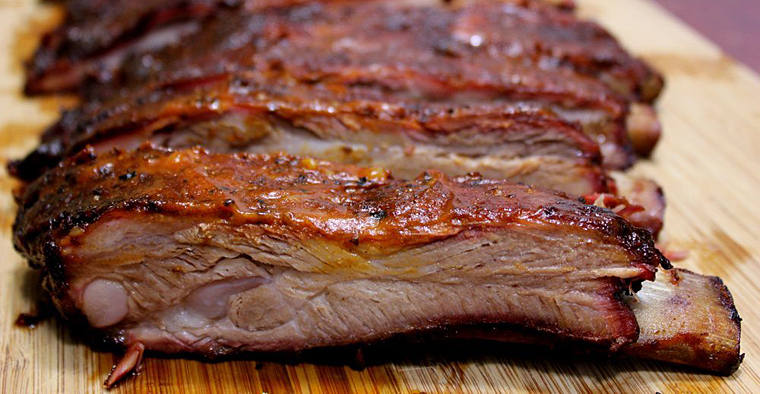
Pork spareribs in mourning sauce

Friday, December 19th, 2008

I used to love pork spareribs. Alas, I loved them too much. I have eaten my fill time and time again; I’ve probably eaten well more than my share.

I’ve never had to chase a pig, hold it down, kill it, butcher it and then clean up the mess. My meat eating has been a decidedly tidy affair, yet killing animals is not at all tidy. There is blood and guts and squeals and squirming, and I dare say that had killing animals been required of me, short of starvation I could not have done it. With meat displayed in neat and well-ordered rows, bloodless and without squeals, it’s easy to turn a blind eye to all that’s come before.

One year ago, I decided to give up eating meat. By meat I mean animals that walk on two or four legs – beef, chicken, pork, lamb, duck, and so on. I still eat fish and shellfish – shrimp, clams, salmon and other denizens of the deep that are caught wild and not farm-raised. I also eat the occasional egg, cheese or dairy product. Health, disapproval of the mistreatment of livestock, and discomfort with the taking of animal life for my own gustatory pleasure are at root of my decision.

There is a growing body of evidence concerning the detrimental effects of too much animal fat combined with a sedentary lifestyle. Yoga, walking and the occasional baseball catch aside, most of the hours of my day are spent seated before a computer. Spending the afternoon in chase of my next meal is not something that’s happening right now.

The antibiotics, additives, and unsanitary conditions in which most livestock is raised really turn me off. The idea of ingesting pharmaceuticals laced into the meat of animals slaughtered for my table squashes my anticipation and enjoyment quite thoroughly, as do one meat recall after another.

Small cages, forced feeding, filthy living conditions, growth accelerated by hormones, beef tallow fed to grass eating vegetarians; my sense of decency is too offended for enjoyment. Don’t get me wrong, I love the taste and texture of meat. I just can’t put it into my mouth and forget about how it got there.

There are perfectly suitable vegetarian substitutes for animal protein, and therefore I can’t justify the slaughter of animals simply for my own pleasure. Though I sometimes long for the fatty succulence of bacon, sausage, or a medium-rare burger, it is not something I need. I need protein, but I do not need animal protein; between Quinoa, chick peas, soy bean products, and other vegetable-based foods, I’m eating all I require, and learning new ways to cook besides. Not coincidently, I am losing weight. As a type-2 diabetic with coronary artery disease, weight loss and reduced body fat are essential to managing my metabolic disorder effectively. The choice is simple; lose fat or lose toes.

I’m not saying that everyone can or should be a vegetarian, but for me it feels right. I do think that food production in America is in crisis, and that we all should eat more vegetables. Honestly, the worst part about being vegetarian is not stopping at the butcher counter and enjoying a meaty conversation with my old friend Frank. In fact, I miss Frank a great deal more than pork.

Goin’ Nukular

Friday, December 12th, 2008

As America’s energy crisis has accelerated, the subject of nuclear power has reemerged. Three Mile Island and the Chernobyl nuclear power plant disaster have receded into history and an entire generation has no memory of these two near catastrophic events. Nuclear power plant construction is regaining support within both political parties. The use of nuclear power in Europe and other parts of the world is used as reassurance that this form of energy production is safe, reliable and non-polluting; this in spite of the toxicity of some of the most dangerous substances in the history of mankind.

Plutonium isotopes (the stuff of nuclear weapons), are a common by-product of nuclear power reactors, as are many other toxic radioactive isotopes. The half-life of plutonium-239 is 24,000 years, which means that in that amount of time, half of the radioactive plutonium concerned would remain. In another 24,000 years, half of that remaining amount would remain, and so forth. In other words, it takes over 200,000 years for plutonium-239 to become fully non-radioactive. Plutonium-242 has a half-life of 376,000 years.The toxicity of plutonium is enormous. If inhaled into the body, it remains in the lung, liver, bone and bone marrow tissue, where it generates cancerous mutations. Inhalation of as little as a few milligrams is inevitably fatal. Moreover, plutonium is a fissile material, which means it can be used to create a nuclear fission explosion. In the hands of people intent upon making a weapon, it constitutes a major threat to life, and an explosion used to incite terror would likely ignite dire unforeseen circumstances.

At present, the storage and security of fissile materials like plutonium is unresolved. Most “spent” reactor-grade radioactive materials are stored in deep pools of water at the nuclear power stations themselves. Their movement by rail or truck is so controversial and dangerous that protocols for their safe transport and storage remain undeveloped.

A recent EPA report indicates that any nuclear storage facility must be able to provide a secure and inviolable repository for one million years. This, of course, is well beyond our proven capability as a culture, as is, frankly, only 24,000 years or even 1,000. To place these numbers in perspective, keep in mind that no known human language on earth is older than 7,000 years, and most ancient languages no longer are spoken or understood. To assume that any language spoken today will exist in 24,000 years is farfetched. To assume that the danger of any human enterprise can be properly communicated in one million years is nonsensical. Even if transport and storage solutions are developed, there is no possible way to insure that future civilizations will understand what we have done, and the terrible dangers associated with it. This is what is called a semiotic problem; that is, how to communicate danger to an unknown culture with its own symbolic and linguistic conventions. It is also a moral problem, because without such a methodology, we place future inhabitants of this planet at terrible risk.

Archeologists in the past and present have relentlessly excavated and unearthed tombs and artifacts of earlier cultures. Archeologists of the future will undoubtedly do the same. Producing penetrable depositories of deadly substances therefore constitutes a moral failing of the highest order, and accordingly, “goin’ nukular” should be shelved forever.

Boys, men, victims and heroes

Saturday, December 6th, 2008

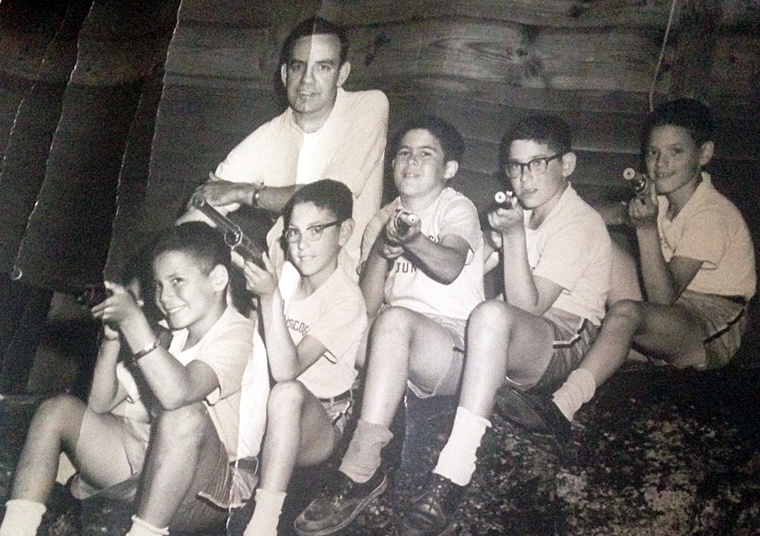
My first major exposure to the culture of the hero was at summer camp in Maine. Like many suburban New York boys, I was shipped off for eight weeks each summer, beginning at the age of eight.
 
Camp Androscoggin of 1956 (a mere eleven years after the end of World War II) was a military-style camp, located in the Adirondacks beside a large lake of the same name. We wore caps and uniforms of gray, and lived in “bunks.” Each morning began with a bugle, followed by saluting the flag and hand inspection before breakfast in the “mess hall.” Breakfast was followed by a brief period of cleaning each bunk in preparation for inspection. Cubbies and beds were reviewed, and if unsatisfactory, everything would be thrown in a pile on the floor. In this way each day proceeded, until the bugle sounded “taps” at night.

I learned early on that failing or passing bunk inspection was entirely unpredictable. The process was arbitrary and clearly designed to provoke fear. One never knew when he would be the designated victim, would humiliate himself and the entire bunk. Tears made things worse, an almost guarantee that one again would be the victim. And identifying the weak and vulnerable, of course, was the whole point.

In short order both victim and hero would emerge. By week two, leading roles were fixed for the entire summer. For the majority who escaped either fate, there was the job as supporting cast of adoring or taunting mob. Having been identified, the chosen weakling was a daily object lesson of the misfortune which might befall us, and a ready target of anger and blame. The hero, and there was only one per bunk, was inevitably the best athlete, receiving endless praise, and privilege.

The entire summer was an ongoing lesson about heroes and victims. Tests of courage and the ability to endure and inflict pain, gaining acceptance by the strong and rejecting the weak, hiding feelings of insecurity and promoting demonstrations of valor were our daily fare, enforced by college-age counselors too caught-up in a culture of competition to understand the damage they were doing. My talents were two; I hid when I could, and when I couldn’t I was funny. Neither hero nor victim, I was mostly an observer, though at times I was forced to take sides; I regret those moments of non-virtue, even now.

For millennia young boys with pliable hearts and minds have been taught cruel games, couched in language about honor, bravery and loyalty. And for these same millennia, male violence, aggression and the role of hero and victim have been tragically played out, dominating social narrative. It is an ancient Neolithic tale writ large, and you can hear it plainly in today’s nasty presidential campaign, underlying comments about weakness and strength and reactions of the press and the public.

I came away from four years of camp sufficiently capable of mixing with the mob, but my sympathies were with the victim. No doubt I too would have been a victim had I been less funny, agile and clever. I met all the qualifications; overweight, lousy athlete, too sensitive.

It took but a few childhood years to build my protective shell, and sadly, most of my adult life to remove it.