Archive for October, 2008

The economy of my secret self

Monday, October 27th, 2008

As the world economy continues its tailspin, like many, I am wondering how we got into this mess. While it’s easy to point fingers and demonize politicians and government, target deregulation and find fault in the global capitalist system, assigning blame is always easy when we look outside ourselves. To really understand what has happened, I’ve concluded, I need to start with myself.

Only I know the absolute truth of how I feel, think and act. No one else can ever truly know what I know about my inner self, the secret self I cannot deceive. It is this secret self that feels greed and envy, jealously, lust, resentment and fear, and it is within the dark and hidden territory of these feelings that my self exploration must begin if I have any hope of understanding the powerful economic forces that have been unleashed in larger society.

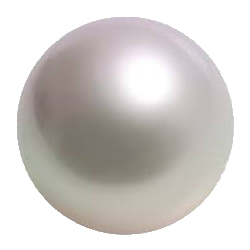
My secret self leads a secret life of guilt and shame, and despite the gnawing irritation they produce, it is rarely, if ever, exposed to others. Just as a pearl forms around an irritating grain of sand within an oyster, I have smoothed out the irritating knowledge of my own personal imperfections and failings by forming a pearl of personality designed to hide the uncomfortable feelings that only I know well. Sometimes, I lose track of the grain of sand and even begin to believe that the pearl I have constructed to seal off my secret self is real. In stressful moments, though, I discover the uncomfortable irritation remains.

Like me, society builds a pearl around its irritating truths, and hides them beneath a glossy narrative of hopes, dreams and happy endings. Accepting the conventional wisdom, I too often go about my daily business half asleep, seeing what I want to see and not seeing what I don’t. I like what I agree with, and what agrees with me – all else is pushed aside or ignored. Thus, the world becomes my oyster, a self-fulfilling expression of my own pearly point of view.
In moments of stress or crisis, though, the pearl cracks, and my false constructs are revealed as are those of society at large.

Interestingly, while the economy collapses the avalanche of commercial advertising continues unabated, the inertia of the business world continuing in relentless motion despite the fact that the money train has come to a screeching halt. The powerful inertia of my secret self continues as well; I still want to soothe the irritation of life. I overeat, buy more stuff, start arguments, zone out in front of the TV, and blame others for what is going wrong, but of course none of this solves the basic problem that I face. My irritating secret life refuses to disappear no matter how hard I try to make that happen.

The present global economic situation is very serious, and I am afraid. I think we are all afraid. I’ll also admit that I have been greedy and self-absorbed and feeling entitled for a long time, and I suspect in some ways we all have been. With that understanding then, what’s caused this mess seems a bit clearer. And perhaps, if as individuals we can be honest about our secret self, the dire global economic situation might actually begin to improve.

The aging of Aquarius

Saturday, October 18th, 2008

The recent Broadway revival of the 60’s musical Hair, along with my increasingly barren pate, prompts reflection on our contemporary obsession with matters hirsute. Americans spend billions of dollars each year to increase hair, and billions yet again on products to decrease it. We style it, shave it, cut it, color it, stick things in it, on it and through it. Of all our vanities, hair may well be our greatest.

Genetics and sex hormones determine where we have hair and at what length and density, what’s called a secondary sexual characteristic. The human body is covered with fine hairs emerging from countless pores that along with hair exude oils, pheromones and other substances onto the skin. Direct contact with body hair plays an important role in our highly sensitive perception of touch. Our lips are notable for their complete absence of hair; the palms of the hand are generally hairless too, as are the bottom of the feet. These locations are significant due to their extremely high concentration of nerve endings. Of course, there are a few other sensitive hairless spots as well, but modesty demands I leave those to your imagination.

That I am not immune to the great cultural obsession with hair is made obvious by the meaningful part it plays in my personal narrative (no pun intended). When I was but a boy, I was required to have a crew cut at my father’s insistence. A World War II vet, his own military hairstyle seemed to dictate mine. I would go to Al the Italian barber once a month or so, grab an Archie comic, and slide into his leather chair. “Don’t cut it quite so short this time,” I’d tell him, “leave it longer on the top, ok Al?” “Sure,” he’d say, wrapping a white sheet around my neck and closing some snaps. When he was done, my hair was always short. I’d say the same thing at every visit, and yet he’d always cut it short. I thought maybe he didn’t understand English. Perhaps, I surmised, Al the Italian barber only understood the word “short.” Years later, my mother confessed that she’d call him in advance and tell him to ignore me.

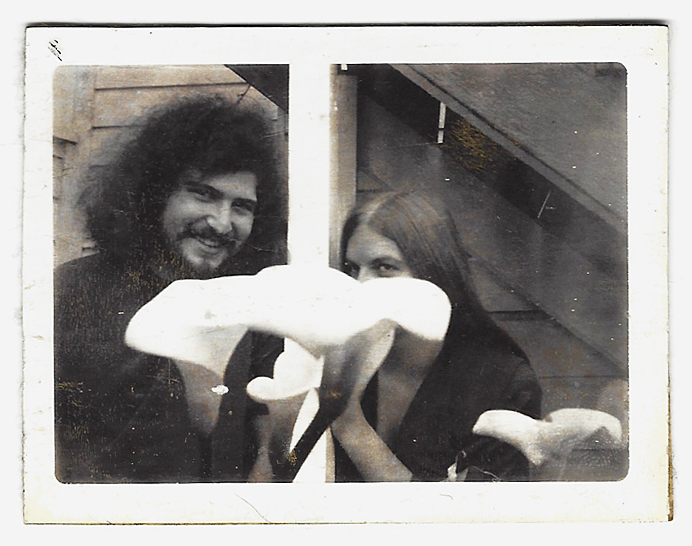
Thus it was in 1966 upon leaving home at 18 years of age, I left the era of crew cuts behind. In fact, I left it so far behind that by the time I turned 21, my hair had grown past my shoulders Beatle style, and it remained that way for the next decade. You’d be hard pressed to guess it now, but back then my hair was thick and curly. On a humid day it would puff up into a ball-like form, what I used to call a “Hebrew Natural.” Sometimes I would pull it back into a pony tail, but most of the time, like Lennon & McCartney, I just let it be.

And then, when I became 30, my hair began to thin and disappear. Not long thereafter, I cut it shorter, and by 50, having lost most of the hair on the top of my head, I returned to the humble crew cut. Today I use a “number two” electric clipper setting and each month I take ten minutes to cut my own hair. “Leave it longer on the top,” I tell myself, but it comes out short every time.

Wall Street’s Dow of Physics

Friday, October 10th, 2008

When water becomes hot and agitated enough, it becomes a gas. When solid iron is heated to 2,800 degrees, it becomes a liquid. These are examples of what physicists call a phase transition or shift, a radical restructuring of matter from one form into another.

While the actual transformation can be sudden, it is possible to observe the signals leading up to a phase shift. For example, when heat is applied to a pot of water, the first signs of change include small bubbles that form on the bottom of the pot. As the heat continues the water molecules become more excited, the bubbles increase in number and begin to rise quickly to the surface. Reaching 212 degrees, the entire of pot of water begins to boil, the contents assume a roiling chaotic nature, and the water becomes a gas in the form of steam. Comparable effects can be seen when melting iron; when heated it progressively changes color from black to red to white, and then turns into a liquid as the phase shift occurs.

Chaos in a fluid medium displays what is called turbulence. Turbulence is the spontaneous arising of distortions and deformations of liquid flows due to the effects of speed or heat. Given enough speed, a liquid will begin to exhibit turbulence, particularly if there are obstructions or deformations in its container, though speed and heat alone are enough to create turbulence. As turbulence increases, counter flows, feedback loops and visible signs of disorder emerge. So it is with America’s monetary system, which subjected to extraordinary volume, speed and pressure has undergone a radical phase shift borne of chaos.

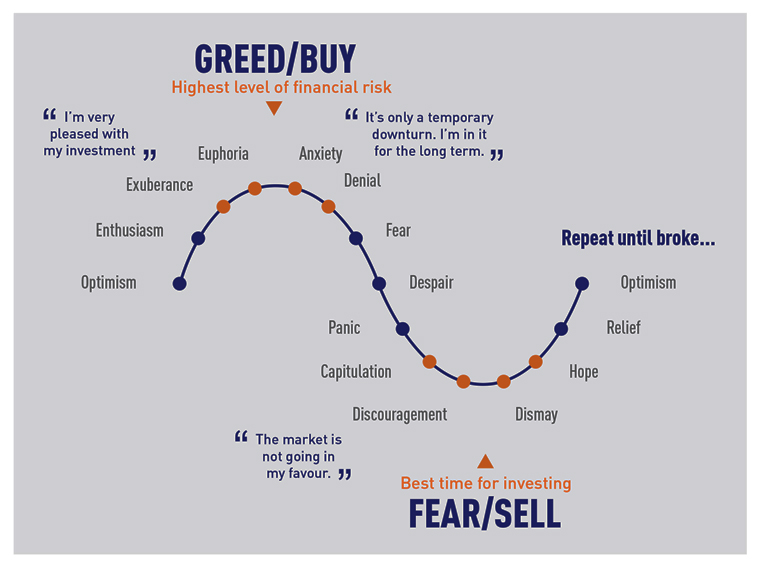
Turbulence in the nation’s monetary flow is analogous to the effects of speed and volume in the flow of water. A monetary system must flow (hence we call money currency), and its movement is essential. If money stops flowing, it does not generate investment, interest or profit. If money flows too quickly, however, or if the vehicle in which the money flows is leaky or distorted, turbulence arises. Its signs are frothiness in the markets, what Alan Greenspan once called “irrational exuberance,” and increased monetary inflation pressure. In a “hot market,” stock values begin to swing wildly upward, and the volume and speed of trading and transactions increases rapidly. Without controls on the speed of the flow – “cooling” the market – the system becomes vulnerable to the formation of distortion, investment “bubbles” which tend to burst, and a heightened risk of complete chaos.

For the past 25 years, stock market regulation has been considered evil because it slows down the currency of money. This cooling effect has been viewed as a constraint on quick profits, which it undoubtedly is. Under decades of deregulation, those who stood to gain from removing moderating regulations have made uncountable billions, presiding over the greatest transfer of wealth from many hands to few in the 200-year-plus history of this nation.

In the case of Wall Street’s recent crisis, the unregulated heat of greed propelled markets to the point of chaos; this turbulence has led to a monetary phase transition in which the underlying financial assets have changed from something solid into a gas. Having assumed this gaseous state, hundreds of billions of dollars of value have now disappeared into thin air.

Emergence, confusion and wisdom

Saturday, October 4th, 2008

The world is the sum total of its parts, a constantly emerging manifestation of all that has come before. The actions of causes and conditions – natural forces such as weather and human behaviors such as technology – naturally produce effects, and these effects become the causes and conditions for effects that follow. Thus, while we generally anticipate the future, none of us really knows what is to come. The sum total of all causes conditions is simply too enormous and complex to predict the future with absolute certainty.

The tools we use to anticipate the future are based upon our memory of the past. As we receive present moment information through our sense perceptions, we rapidly correlate this data with stored memories and associations and project outcomes into the future. This massive computational operation is done in milliseconds and within day-to-day events requires little conscious direction. When we are crossing the street, we observe the flow of traffic, and based upon our experience, evaluate whether or not we can cross in time to avoid being hit by a car. Should the car quickly accelerate, we must adjust our computations accordingly; failure to do so results in catastrophe.

Planning for the longer-term future requires directed mental activity, wherein we use our conscious thought and problem-solving capacities, rather than the instantaneous computational tools of direct awareness. We consider a myriad of factors outside of our direct control and experience, relying on the opinions of others in addition to our own judgment. Depending upon the decisions to be made, we frequently find ourselves trying to plan for outcomes which are the product of inconceivable complexity. Most often, this is where the greatest confusion sets in.

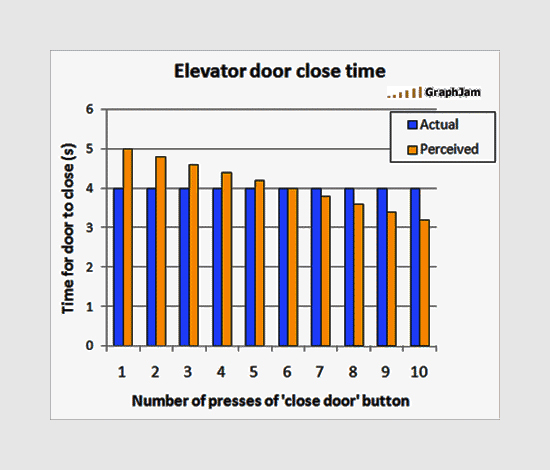
If our decisions were simply based on the ways of the natural world, things would be uncertain, but natural patterns and cycles do make prediction a bit easier. Trying to predict the outcome of human activity is infinitely more difficult. Human actions are far too unpredictable and erratic for tight assumptions to be made successfully. We are inventors and experts in transformation, and rarely patient. The effects of our decisions occur rapidly and generate new causes just as fast. Our memories recollect a world that no longer exists, so basing our future assumptions on past experience is of ever less efficacy. Not knowing what causes and conditions will emerge next, we constantly witness the failure of our assumptions to correctly predict effects and outcomes.

It has always been this way for human beings, but this experience has accelerated due to technology. The motor car, the telephone, the internet – the emergence of world-changing causes has always forced us to adapt. We continuously find ourselves in confusion; as Bob Dylan wrote, “Something is happening here but you don’t know what it is.” This is not because we are stupid, but because the emerging complexity is simply too great for us to fully comprehend in a hurry.

We want to be comfortable with our assumptions, feeling that doing so will make us less confused, but this inevitably leads to disappointment. Like constantly shifting ocean currents and waves, affected by weather halfway across the globe, reality continuously emerges beyond our view and grasp. With full acceptance of this fact, we can choose to rely upon the possibility that if we are patient, confusion may dawn as wisdom.