Archive for September, 2008

Wheels, wheels and more wheels

Thursday, September 25th, 2008

My wife and I just bought a new set of wheels. Our dandy little Prius gets nearly 50 miles to the gallon, and we are already saving considerable money on gas.

We Americans love our wheels. Cars were one of the 20th century’s first complex technologies available to ordinary folk, in large part because they mesh so nicely with our sense of personal freedom. We give them cute names like we do our pets, keep ‘em clean and get frustrated when an injury occurs, like a scratch or dent. In some ways, our wheels are like a member of the family.

Perhaps, though, we love our wheels too much. Cars account for the lion’s share of greenhouse gas emissions, the roads we build for them use enormous amounts of real estate and cost bundles to maintain, they account for 40,000 deaths each year including 15,000 teenagers, and gobble up money for fuel and repairs like hungry lions. To the detriment of public transport and other modes of travel, America is devoted to the automobile, and our wheels have dragged us into massive foreign debt and dependence on others to prop up our economy.

The wheel, and in this case I mean the simple wheel attached to an axel, is human culture’s first machine, developed some 5,500 year ago in Mesopotamia (modern day Iraq). Used for the potter’s wheel, it was adapted for the chariot several hundred years later, and the rest, as they say, is history. Almost every form of technology begins and requires the action of the wheel, and without it the modern world as we know it would not exist.

Some cultures did not develop complex technologies, and at first glance, this would seem to include the wheel. Native North and South Americans, for example, did not employ the wheel before it was introduced as a transportation technology by Europeans. In Asia, Tibetans also did not use the wheel for transport, though it must be noted that wheeled transport does not work as well without flat ground on which to use it. One might suppose that cultures that did not use the wheel were too primitive, but this is not correct.

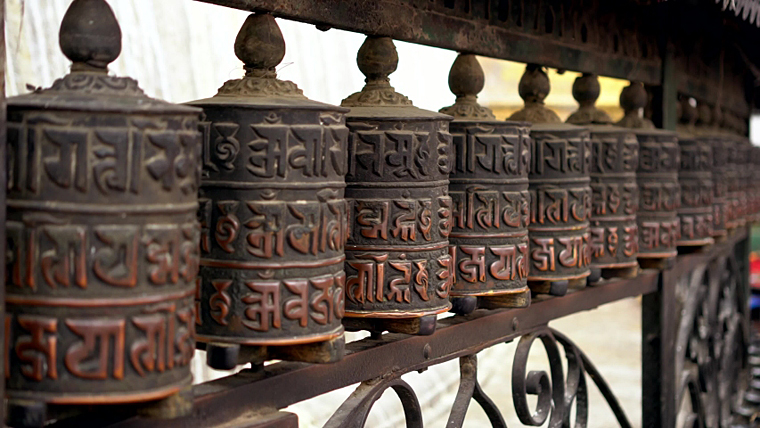
Native Americans knew of the wheel, and used its form in making hoops, religious instruments, baskets and ornaments. Their understanding of natural cycles easily led them to an understanding of the circle, and its relationship to the wheel. And the Tibetans, though horsemen and denizens of the highest mountain plateau on earth, also knew about the wheel, which they used for creating religious objects like prayer wheels, both stationary and hand-held. In both these cases, a decision was made about the wheel, and in what way it would be used, and in both cases it was the sacred symbolism of the wheel that guided the decision. For these cultures, to have used the wheel as an object to roll over Mother Earth would have been sacrilege and defilement, bringing disaster and misfortune to beings.

We must now make much more thoughtful choices about wheels. As an expression of culture and ego, wheeled vehicles provide a sense of freedom, but at a terrible price in lives and ecology. Perhaps Native Americans and Tibetans were not primitives after all; perhaps they understood the potential cost of wheels far better than the rest of us.

Don’t say I didn’t warn you

Friday, September 19th, 2008

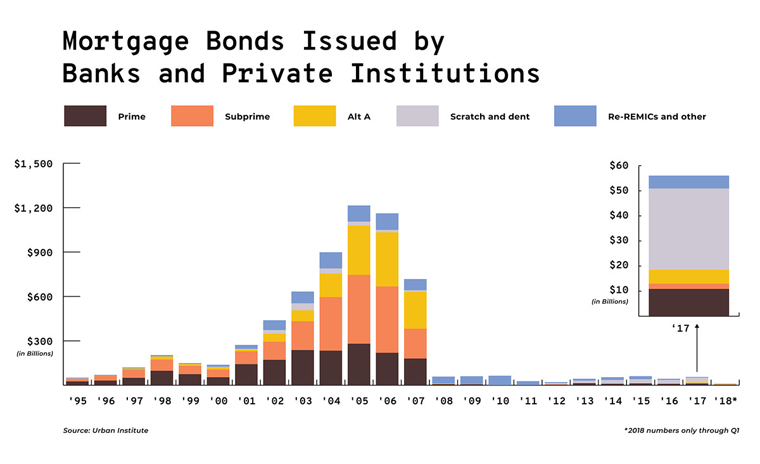
Several months ago I predicted that rescuing Fannie Mae and Freddie Mac would entail a massive taxpayer bailout, and I was correct. Keep in mind that I am not a financial analyst or stock broker and have no degree in economics, unlike many of the pundits. I can, however, add up two plus two.

For twenty years both Democratic and Republican administrations ballyhooed the benefits of unregulated financial markets. Alan Greenspan believed that if left to its own devices, an unregulated financial market would pass risk to those who could best afford it and not to the commercial banking system or taxpayer. Accordingly, Wall Street, mortgage companies and banks were unencumbered in the creation and sale of mortgages and mortgage securities that defied the laws of gravity and common sense. Mortgages were given to people who could not afford them, and offered without verification of income or ability to pay. Hence, property values skyrocketed and America underwent a decades’ long housing boom.

To make matters worse, the so-called sub-prime mortgages (actually “junk” mortgages) were bundled by Wall Street into investment vehicles and sold around the world. Meanwhile, Freddie Mac and Fannie Mae bought the overvalued paper issued by banks and mortgage companies without hesitation to the tune of $5.4 trillion, half the nation’s mortgage debt; backed by the U.S. government, neither company felt the need to be terribly careful or prudent. Now that the true phantom value of their loans and holdings have been calculated, the U.S. Government has taken control of both companies, for the sake of market “stability.”

Stability, in this case, means satisfying China, Arab states, Russia and other countries that purchase our government bonds, as well as bonds issued by Freddie and Fannie. While the taxpayer and the common stockholders foot the bill, the assets of bondholders in both companies will be protected by the Federal Government. We are told this is due to the need to keep them confident in our financial well-being so they do not begin to shift their foreign investment to other currencies. The $200 billion allocated to stabilize Freddie and Fannie will not be enough, I believe, and the bill may go as high as $500 billion. Nobody really knows.

America continues to borrow more than it can pay back, and the annual deficit has widened during the past eight years to a staggering $410 billion. Economists, sobered by the prospect of a deep world-wide recession, are now talking about a return to the era of regulated financial markets. When the taxpayer is asked to bail out Wall Street, after all, they expect to be protected from such risks in the future, say the pundits. Whether either political party is ready to embrace highly regulated markets, however, is uncertain. The free market neo-liberal economic theory has gained such widespread adoption that it is nearly inconceivable that a reverse course can be plotted, let alone followed.

As I have stated in previous columns, the emptiness of the monetary system eventually reveals itself. It has no absolute characteristics of its own, exists entirely in imaginary space, and is supported through common consent. When harnessed by greed money is destructive; when employed for the good of others, it is spreads blessings. Bereft of any inherent qualities, money is purely what we make it.

In contemplation of 9-11

Thursday, September 11th, 2008

When contemplating 9/11 many terrible things come to mind: the mind-numbing footage of two jets crashing into New York’s twin towers and the towers’ collapse mere hours later, the Pentagon on fire due to another attack, the crash of flight 93 in a field in Pennsylvania, the loss of life, the utter failure of our so-called intelligence agencies, the ineffectiveness of our multi-billion dollar military in intercepting any of four simultaneously hijacked commercial jets, and the shock and awe of all that has followed. I also think about myself, because 9/11 is my birthday.

For most of my life, my birthday was just an ordinary birthday on an ordinary day. Each 9/11 would approach and I would feel growing anticipation. I knew I would hear from my father who would sing an out-of-tune “Happy Birthday” embellished with an ornate flourish. My mother would call to tell me her “stomach ached” and she was thinking of me. My children, of course, might not call on the day itself, but I knew I’d hear from them soon enough. My wife, attentive and loving, would give me a card and gifts, though she’d know I have all I could ever want from her already. Friends would say congratulations, smile, shake my hand, give me a hug. Then, on September 11, 2001 everything about my birthday changed.

9/11 has eclipsed December 7th as the day that will live in infamy. When people ask me, “When’s your birthday?” and I tell them, their expression drops and they say “I’m sorry,” as if someone has died, which of course is true. The notion of a birthday party on 9/11 feels macabre, an unseemly celebration on a day of national mourning. For weeks ahead, the media trumpets 9/11 with retrospectives, flashbacks, and dramatic footage. People get depressed and anxious. My mother says she feels guilty, as if she in some strange way has done a terrible thing to me.

I am not alone, of course. If we simply divide the population of the world’s seven-billion by 365 days, over 19 million people were born on 9/11. None of us chose that day, it’s just something that happened. And, as the late Kurt Vonnegut observed and named a “grandfaloon,” we all too often make the mistake of conflating unrelated events and make too much of it, as if coincidence is evidence of some grand cosmic scheme.We tend to think of birthdays as the one day each year on which we can justifiably think about ourselves. We consider the passing of yet another year, perhaps look back or even think of birthdays yet to come. If lucky, we briefly become the center of attention – bask in the pleasure of party and cake, laughter and smiles all around.

Try as I may I don’t look forward to September 11th any more. The world has changed too much; war, fear and pain was born on my birthday and it will be this way for the rest of my life. I view it like this: For fifty-three years I had the self-centered luxury of claiming 9/11 for myself, but in 2001 all that ended. Instead, on my birthday I now join with others in contemplating suffering and compassion, which actually is not too bad. In fact, it’s not too bad at all.

Not so Mad Men

Monday, September 8th, 2008

Every once in a while something meaningful appears on television, and at present it is a series on AMC called Mad Men.  Taking place in the very early 60’s and set in New York, the fictional series written by Mathew Weiner of HBO’s The Sopranos explores the period’s social, moral, sexual and cultural change.

The program includes no overt violence, flaming explosions, or obscenity. What it does include is ubiquitous cigarette smoking, hard liquor, blatant sexism, bigotry, ethical lapses, rampant materialism, and a finely-honed script exposing the hidden lives and shifting relationships of those times, particularly between men and women.

I spent the 50s and 60s growing up in a wealthy suburb of New York City, the post-war son of a businessman. Like Weiner’s Mad Men, each day my father rode the train to work in Manhattan and entered the executive men’s club of work, money, sex and power. My mother remained at home, as did most wives of the suburban middle class – running the house, managing the kids and trying to stay busy. His was a life of action, hers a life of bored leisure. While he jetted from New York to London, ate expensive dinners in fine restaurants, worked and played late hours, had exotic dates and kept many secrets while pursuing his fortune, she played tennis with girlfriends, shopped for dinner, managed the housekeeper, picked up the kids from school and saw a psychiatrist for depression. What money she had was doled out by my father. Largely an extension of his Mad Men life, she enjoyed little identity of her own.

I knew my father was unhappy by the way he’d trudge up the stairs after coming home from work. After a long day kicking butt and jousting with men for dominance and treasure, he’d pour himself a Johnny Walker, plop down in a chair before dinner and be asleep by 8:30. Evening after evening, my mother found herself with no one to talk to. She’d bury herself in a book, and knock back a Vodka or two. There was frequent bickering, crying, and fighting; it was not a happy marriage, yet it lasted 23 years. In those times, marriage did not end lightly. When they finally divorced in ‘66, my mother became a non-person. Unable to get a credit card, with no work history, for years she was a fish out of water. My father, on the other hand, swiftly moved into his Playboy-style bachelor pad on Madison Avenue and pursued his continuing interests unencumbered by marriage.

The 60s slid into the 70s; his sideburns grew longer and he became wealthier, only to lose it all in a business deal gone terribly wrong. My mother, meantime, went on to become the first director of a corporately-funded non-profit arts organization in lower Manhattan, and hung-out with Mayor Lindsay, Jackie Onassis and Arthur Goldberg. For a while, as my father’s life went south, my mother’s went north. Go figure.

During the past 50 years my generation has surely developed its own special brand of madness. But my wife of 34 years has been my equal partner in every way, and our two grown daughters are strong, successful, independent women. Things have changed for the better. In 2048, perhaps Not So Mad Men will be featured on TV.

84,000 degrees of happiness

Monday, September 8th, 2008

It is commonly accepted that all beings wish to be happy, but what is happiness, exactly? The framers of the U.S. Declaration of Independence believed that along with life and liberty, the pursuit of happiness was a primordial right of all people, yet they made no mention of nor defined what constitutes the happiness pursued.

For some, happiness is laughter, while for others happiness is tears of joy. There is happiness felt for oneself or for others, happiness of good fortune and even happiness of revenge. There is that of satisfaction, that of desire, and so forth ad infinitum. In short, happiness is by degree and in the eye of the beholder. Satisfaction, sensual pleasure, sexual excitement, exhilaration, hysteria, pride – all such forms and more are happiness for one being or another. Yet for most of us, it seems, happiness does not last.

This brings us back to its pursuit and begs the question: can happiness in fact be pursued at all?  Pursuit implies that happiness is something to be caught; something separate from us that can be identified, and grasped. Such craving and desire leads to a world of distraction, an endless chase wherein happiness is sought in many forms of entertainment. It might be the entertainment of our own thoughts, wherein memory reaffirms value and we relive moments of past delight or protracted fantasies of future pleasures yet to come. Or, it might be entertainment provided by the thoughts and minds of others such as music, books, movies, plays, and even simple conversation. Yet, seemingly pursued and grasped, happiness always slips away like sand slides through our fingers; even if we clench our fists, over time our palms are empty.

Of the four basic emotions, happiness often is the lightest and most airy. As for mad, sad, and scared, the other three, they can turn heavy and thick and sometimes endure for hours, days or even entire lifetimes. Despite our efforts otherwise, happiness dissolves, and this flighty quality surely contributes to its pursuit. The other three emotions come upon us strongly and without chase; few seek after sadness, after all. If anything, we try to avoid the difficult three by pursuing the more favorable one, namely happiness. Might happiness be best defined as the absence of the other three emotions? Not likely, as life without the full range of feelings would be flat and characterless, would it not? Without emotional contrast, could we recognize happiness at all?

That which we conventionally call happiness may not be, in fact, true happiness. Perhaps true happiness is just pure awareness of being, and tearful joy, hysterical laughter, enjoyment, feelings of pleasure and so on – are just various mental elaborations, the side effects of simply being present and awake in the moment. By then mistaking these effects for the root cause, we habitually pursue our concepts and myriad elaborations of happiness as if through their replication happiness can be continuously sustained. Pursuing happiness is hard work; no wonder life is so exhausting.

In the eagerness of our pursuit the essential nature of happiness seems to elude us. Much as a confused dog vainly chases its own tail, we all too often spin through life not understanding that for true and lasting happiness we may choose to end pursuit itself.