Archive for August, 2008

Confessions of a recovering sarcastic

Wednesday, August 20th, 2008

Hi. My name is Larry, and I am a sarcastic. I don’t like being a sarcastic, and I’ve tried to change, but I am finding it, honestly, quite hard.

Both my parents were sarcastics, and I suspect their parents were sarcastics, too. My father was your classic closet sarcastic, outwardly funny and engaging, but inside – like all sarcastics – defensive. He grew up on the streets of Brooklyn, where being a sarcastic was an honest way of life. “Nice face ya got…I seen it at the zoo!” or “What size combat boots does ya mudda wear?” were as important as the first punch. No matter that all Brooklyn boys had to fight; not being a sarcastic with a fast mouth meant you were a sissy.

My mother was a sarcastic with high-brow pretentions. “Would you look at her hair!” she’d whisper. “Bronx renaissance,” she called my aunt’s living room décor. Naturally, my brother, sister and I all became sarcastics…research shows it runs in families. I was fat, so my older brother (an A+ Spanish student) called me “El Bloato.”

I suspect that as the human genome project continues, the gene predisposing people to being sarcastic will be isolated and lead to diagnostic tools. In the not too distant future they will introduce a new drug therapy for sarcastics. I can see the TV commercials now, a pair of loving sarcastics finding tenderness with a prescription for Kindiva (seek medical attention for gentleness lasting four hours or more!). Oops…there I go again. I’m so sorry.

For many sarcastics, certain activities are triggers. For me, it was driving across town in my car. “Okay, lady, you gonna sit there all day? It’s a STOP sign, not the end of life!” or “Fine, people, let’s all slow down to five miles an hour and search for a tic-tac!” I’ve learned, at least, to keep my thoughts to myself while driving and not subject my poor, long-suffering sweet wife to an endless stream of on-road comments. Nowadays, when my first sarcastic thought arrives, I see it for the raw aggression it is, and purposely take my foot off the gas. “Breathe,” I tell myself, “Relax, be gentle.” I connect with my inner nice person. Really…I’m not being sarcastic!

One of the problems experienced by a recovering sarcastic is that others so afflicted, accustomed as they are to quick repartee and double messages, mistake sincerity for sarcasm. Sarcastics seek out other sarcastics, and to them niceness is betrayal. Sarcastics, you see, are easily hurt, and becoming a sarcastic is about avoiding emotional pain. Ironically, it is through transferring pain to others that sarcastics find relief, and that’s what makes it so dangerous. One sarcastic comment leads to another, and before you know it, you’re a full-blown sarcastic. The wife, the kids, the neighbor, the butcher…to the sarcastic they are all pawns in the great transfer of pain. And, if one of them becomes a sarcastic? Great! Like misery, sarcastics love company.

The first step in recovery, they say, is to admit you have a problem. Do you mutter while in line at the bank? Does everyone else do everything wrong? Are you hiding behind being “ironic”? Learn the warning signs – pay attention. Really…I’m not being sarcastic!

Considering the universe within

Wednesday, August 13th, 2008

Biologists speculate that the adult human body is comprised of roughly 40 trillion human cells, give or take several trillion. Considering the rather remarkable fact that we begin life as a single cell containing enough information to organize 40 trillion anything (almost impossible to imagine) we are at minimum the by-product of an act of masterful coordination. Contemplate the difficulties of two individuals communicating well, and then think about 40 trillion individual cells communicating with each other. Remarkable!

We are more than just our 40 trillion individual cells, however; between viruses, bacteria, one-celled and multi-celled creatures, we are home to yet another 40 trillion living beings. For many of them, we are the entire universe itself. Amid our day-to-day distractions, it’s easy to forget the true scale of things.

The Hubble Telescope has confirmed the immensity of the external universe. It’s estimated our galaxy contains 100 billion stars, and is just one of 100 billion galaxies. Even at the furthest, seemingly emptiest tiny patches of space (43 billion light years away requiring a continuous eleven-day Hubble exposure) we find tens of thousands of galaxies.

Moving in the opposite direction, we ourselves are comprised of ever more miniscule structures; organs, cells, organelles within each cell, structures within each organelle, and so on, right on down to the very wave/particles of which all “matter” appears to be made. And despite our seemingly “solid” self, the space within us is so great that neutrinos (nearly massless sub-atomic elementary particles) pass right through us as if through empty space. On the order of scale, the universe within is yet deeper than the universe without.

The trillions of living beings within us are our partners, often forming a symbiotic relationship upon which our lives mutually depend. Though our health can be thrown out of balance, and some inhabitants can cause problems, our partnerships mostly work quite well.

Dwelling on the “yuck” factor for a moment, consider parasitic worms. Medicine has noted that in the past 100 years auto-immune diseases have shown a marked increase. Asthma, rheumatoid arthritis, heart disease, type-one diabetes and other ailments are distinguished by the body attacking its own cells as if they are unwanted invaders, hence being called auto-immune disease. This health issue coincides with the use of modern drugs that have killed off most varieties of parasitic microscopic worms, including worms which ironically exude substances that reduce the human body’s auto-immune response mechanism. Having made this connection, physicians are now reintroducing harmless species of microscopic worms into the bodies of some patients suffering from auto-immune disease, with remarkably positive results.

We tend to think in terms of self and other, but this distinction is due to our confusion. In fact, the dividing line between self and other is not particularly clear, and our unfortunate penchant to view other in negative terms often results in aggressive policies that hurt all. Disinfectant sprays that “kill 99.9% of household germs,” for example, may well prove to be harmful to the development of the immune system of children. This is not to say that basic sanitation is a bad thing, but it is worthwhile to remember that we co-evolved with myriad other beings over uncountable millennia in a world that is organized and balanced holistically and not simply for the benefit of the human ego.

Playing the confidence game

Thursday, August 7th, 2008

A few months ago I wrote a column entitled “The Sutra of the Heart of Financial Knowledge.” It was a satire about the emptiness of money, but at its center was a serious message. Based on the famous Heart Sutra, I may have reached too deeply into the Buddhist lexicon for many readers to fully appreciate, but my intended objective was to point out the dysfunctional nature of America’s financial system.

At that time, the Federal Reserve had just guaranteed the purchase of Wall Street’s Bear Sterns securities brokerage by securities broker Morgan Stanley, an unprecedented use of the Feds power to risk public money (they get it the old fashioned way…they print it!) to guarantee private debt. Some have described this approach as socializing loss and privatizing profit, and I think that is a fairly accurate description.

Today, Fannie Mae and Freddie Mac, the government-sponsored private mortgage companies which together control over 50% of the mortgages written in America, are in big trouble and may require a Fed bailout. The failure of these two major financial institutions would likely cause a cascading collapse of the entire economic system.

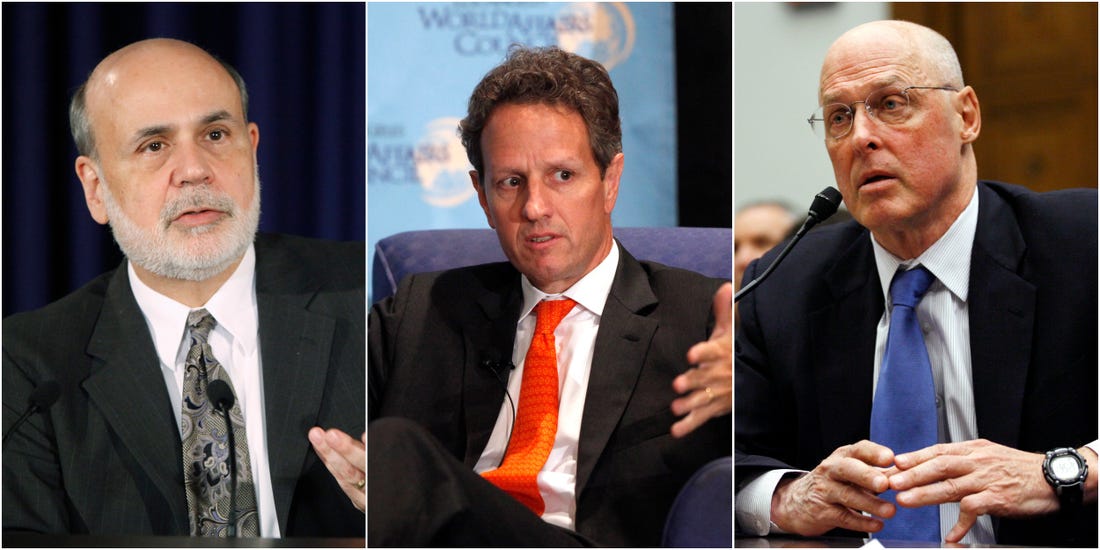
No one precisely knows how and where the trillions of dollars in America’s financial markets function. Unrestrained and unregulated Wall Street creativity over the past 20 years has made it all but impossible to understand our Gordian knot of interdependent economic relationships. Thus the impacts of the sub-prime mortgage crisis have migrated to the housing market in general, which has impacted varying financial institutions that became big players in mortgage “bundling” schemes so complicated and intricate that nobody actually understood what they were buying or the risks involved. Though entirely empty of any stable underlying value, these debt and security instruments nonetheless sold like hotcakes to national and international investment houses greedy for ever greater profits. All this while Treasury Secretary Henry Paulsen and the Chair of the Federal Reserve Bank Ben Bernanke continued and continue to this day to talk about “sound economic fundamentals.” In reality, they are as clueless as everyone else about what is going on and what to do about it. The system has become too big, complex and interdependent for anyone to fully understand or predict.

Our economic leaders know one thing for sure: economics is all about confidence. If the foreign holders of our dollars decide to stop buying them or begin to unload their dollar investments, America will have to quickly learn to live within its means. The Fed Chair and Treasury Secretary know this, and they understand that job #1 is to maintain confidence in the American economy so they will say anything that accomplishes that. In an era of unregulated, undisciplined and frankly sleazy investment strategies, this has become challenging, and appears to have evolved from a sincere effort to instill confidence to a dishonest confidence game intended to hide the truth.

This brings me back to emptiness and The Heart of Financial Knowledge. What are we to make of an economic system bereft of any underlying value other than confidence? Confidence is not something you can hold in your hand or eat for dinner. Confidence is simply an emotional construct of conceptual mind, and based upon the statements of Paulsen and Bernanke, we can clearly see the emptiness of that.