Archive for November, 2007

Women from Venus, Men from Wherever

Friday, November 23rd, 2007

My wife and some of her friends recently decided to start a women’s book club, and within a week or two had eleven members, already reading their first book. Each member has the opportunity to choose any book for the group to read. From what I gather, they are all enjoying the club and the opportunity to explore ideas together.

I enjoy reading too, and when a friend of mine suggested a book to me, I asked him if he’d like to start a men’s book club. I was encouraged by his ready acceptance and hoping my experience would parallel my wife’s. Sadly to say, this has not been the case. In broaching the subject to male friends who like to read, I immediately encountered reluctance, primarily based upon their being compelled to read a book chosen by someone else.

“I like to read escapist books,” said one, “My day-to-day world is too serious and the last thing I need is to read serious stuff.” Another said, “My time is too valuable to read things I don’t want to read. How about getting together just to talk?” Yet another replied “I only read non-fiction. I know what I like.” So, at this point my club has a membership of two.

I’ve thought about the difference in my and my wife’s experience. Her group was immediately magnetized by the book club idea, and quickly drawn together in common purpose. No doubt each woman has her own particular reading interests, but this did not pose a major problem. My male friends were as immediate in their repulsion from the idea, despite their intelligence and love of reading. The simple act of reading a book chosen by another man is too much to bear, it seems, for most men.

I’ve concluded that part of the answer lies in what is called “agency.” Agency in this case means that one’s attachment to one’s own ideas becomes the foremost critical feature in any decision or action. Being forced to read a book chosen by another person requires giving up one’s agency over the decision and accepting the commitment to abide by someone else’s rules. Such an event becomes an emotion-based territorial power struggle, couched in logical-sounding rationales about time and taste. Within this we can see reflected the entire quandary of world conflict, and how matters of agency are connected with defensiveness, feelings of attack, vulnerability, loss and aggression. This pattern of male agency is essentially a rigid, non-cooperative model, based on insecurity and fear. As such, it results in isolation from others and lack of intimacy. Men are lonely, but too often unwilling to take risks to change that fact. I have seen this mechanism at work all too often in myself.

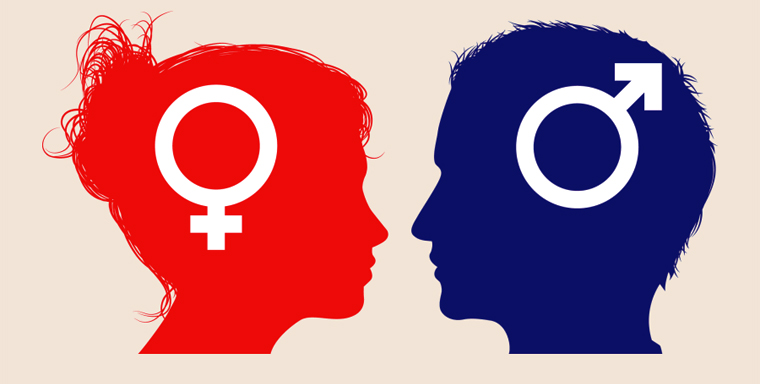
The world needs men to let go, stop struggling, and surrender. The receptive “feminine” qualities of openness, acceptance, intimacy and trust are the only workable path remaining in a world torn asunder by over-active male agency. This is not a matter or women vs. men, nor is it sexual. It is a matter of coming to terms with the truth of our common predicament, and using all of our best capacities to help the world find its way out of its man-made mess.

Decline and fall of the lovely pink shirt

Friday, November 16th, 2007

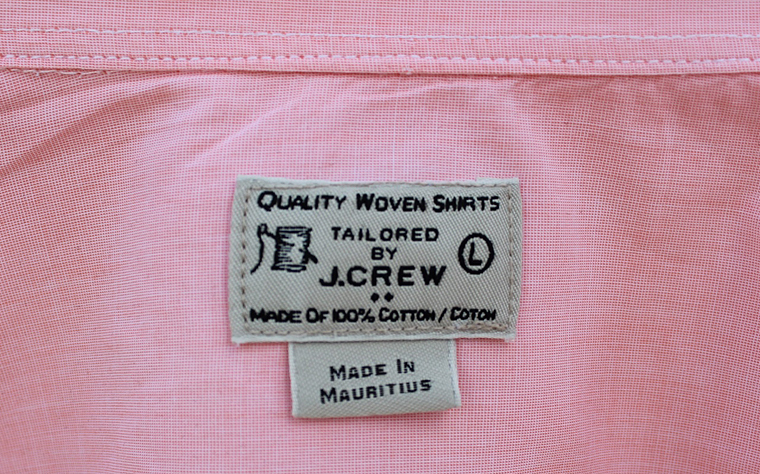
For my birthday a year ago September my mother sent me a 100% cotton lovely pink shirt. Unfortunately, she imagined I was 40 pounds heavier than I am, and the lovely pink shirt from J. Crew was the size of a small tent. I forgot to bring it with me when I visited New York in April, but threw it in my suitcase last week with grand plans to return it.

Admittedly, the shirt is now a year old, but it still has the original tags and is essentially new. The J. Crew store is but a few blocks from my mother’s apartment, located at Columbus Circle, so on Monday morning I strolled over shirt in hand. The person at the counter told me she would locate a “clientèle specialist” that could help me with the return or exchange, and a nice looking young man soon appeared. I’ve never been attended to by a clientèle specialist before, just sales clerks; things, I thought, were looking good. “Well! I haven’t seen this color in a while!” he brightly exclaimed, took the shirt and said he would check the price.

Returning quickly, he gazed into my eyes sympathetically, then demurely dropped his chin and gently said the shirt was now worth but $9.95. The lovely pink shirt, new, unworn and bearing its original tags had depreciated from its initial value of $69.95 to that of one pair of J. Crew plain cotton/nylon blend black socks.

“How,” I asked, “is it possible for a new, unworn, lovely pink shirt with its original tags to drop in value in twelve months by 85%? Is this a shirt or a wall street stock?” While in New York I tend toward sarcasm. He smiled sheepishly, “This style shirt was discontinued, placed on sale, discounted, moved to the sale rack and then marked down. We no longer have it in stock. Its present value is now $9.95.” I found myself lost for words. I stood there blinking, desperately trying to resolve the paradox of the lost value of the lovely pink shirt.

I weighed my options; I could (a) Ask for the manager and attempt to negotiate a better price, (b) Stand outside the store entrance and offer the shirt to very large men for a mere $30, (c) Meekly accept the offer made by the clientèle specialist and walk out with a pair of socks, (d) Accept a $9.95 gift card in exchange, or (e) Leave and take the shirt with me back to California where it could remain in my closet for 20 years, be left to my nephew in my will and eventually become so old that it would regain or exceed its original value as a lovely antique pink shirt circa 2006. I think a notice should be posted warning customers: “The value of a J. Crew shirt may quickly depreciate to near zero. Shopping is a speculative endeavor. Buyers should consult a financial advisor before purchase.”

I opted for the gift card. I will include it in a birthday box for my daughter this September. Ironically, because it is a worthless piece of printed flexible plastic with $9.95 in credit embedded in its magnetic strip, it will, unlike the 100% cotton lovely pink shirt, retain its original value forever.

Torture by Any Other Name

Friday, November 9th, 2007

Words have meaning rooted in social custom, usage and culture, therefore their meaning shifts and alters as culture evolves. Before the modern age this metamorphosis of language occurred organically as people traveled and interacted with others, bringing new concepts and words along with them.

Once the communication age began, the introduction of new words and meanings accelerated, and we are now in an age of such rapid globalization that through the internet and entertainment industry, language itself has become global. Whether this transformation may result in a newly unified humanity uniquely capable of cooperating to solve the world’s most difficult problems, time will tell.

Meanwhile new vocabulary words and phrases are added daily, and not all of them intended to illuminate or enlighten, but to obfuscate and confuse. Among the very worst of these new phrases is “waterboarding.” Despite the genial mental image of happy teens pulled by a swift motor boat and skimming joyfully along the smooth surface of a cool country lake, waterboarding has nothing whatsoever to do with pleasure or sport. Water boarding is a form of torture.

As if our government’s dissemblance surrounding its use of waterboarding is not cynical enough, when pressed to define it, officials call it “simulated” drowning. Drowning, as we all know, is choking and suffocation due to the inhalation of water instead of air. The use of the word “simulated” would seem to add some sort of benign quality, as if it’s just pretend and nothing at all to worry about, like simulated bullet wounds we watch explode on TV and in the movies. But in this case, “simulated” is not an accurate description.

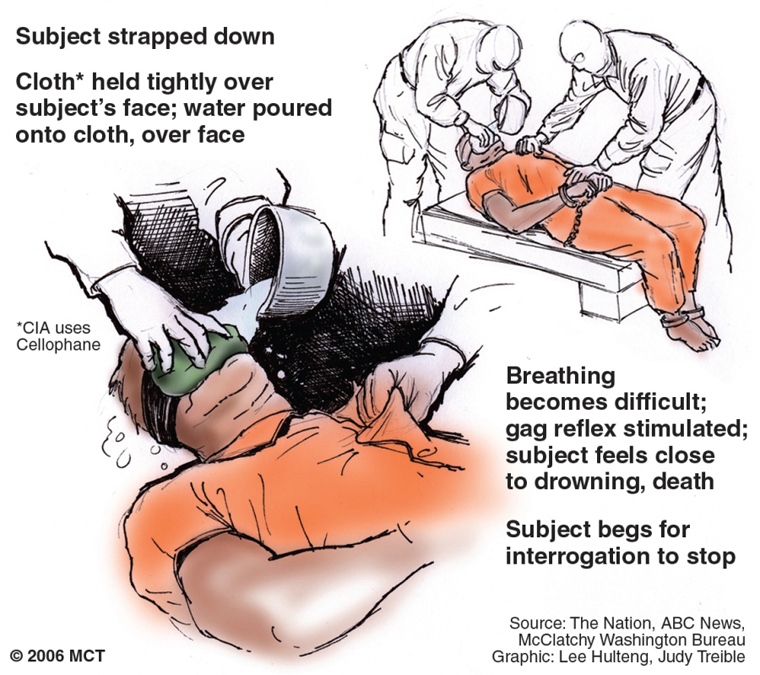
Waterboarding is a torture method used to choke and suffocate restrained suspects lying face-up on a wooden board by placing a cloth over their head and continuously soaking it with water during interrogation. Just before the suspect inhales too much water, cannot breathe and dies, the cloth is removed and the suspect is allowed to cough up whatever can be coughed up and “catch a breath.” Questions are asked, and if the answers are not sufficient, the waterboard torture begins anew. This procedure is repeated until the suspect “confesses.”

Imagine going through this. Think about the terror it instills: the constant struggle to breathe but finding no air available, the helpless restraint of arms and legs, the choking, coughing, gasping and panic. Now think about going through this for an hour or even two or more for days at a stretch, never knowing if the cloth will be removed in time. At some moment, death must seem a better choice. At that point, false confession is a mere trifle even the best of us would offer.

Those who oppose torture understand that confessions and information given under such treatment is often false and useless. The Geneva Convention language forbidding torture does not mention waterboarding – there is no need for details. Call it what you will, torture by any other name is torture, and condemns not only suspects, but also those who employ it. This particular evil of water boarding begins by employing words falsely to deflect our gaze from the truth of it. But we are not deceived; waterboarding is torture pure and simple.

Illness as a Fashion Statement

Thursday, November 1st, 2007

I must admit I was stunned when a commercial for One Touch Glucose Meters (used by diabetics to test their blood sugar level) featured sleek new “mini” versions sporting a choice of new designer colors, hot pink, lime green and lipstick red. The nature of the product was never clearly identified in the ad, and for all intents and purposes, appeared to be some sort of high-tech gadget like an ipod or flash memory stick designed to look cool and easily slip into a purse or pocket. Diabetics will recognize the product, but non-diabetics will never guess what it is. It’s so hip, I’ll bet some non-diabetics will want to buy one.

Such advertising is not only an indication of the enormous money to be made due to the type-2 diabetes epidemic striking America, where it is estimated that upwards of 40 million people are afflicted, including and increasing number of youngsters, but also signifies the ways in which illness itself gradually becomes socially acceptable, even one could say, fashionable. Such an approach relieves the anxiety such a life threatening illness would appropriately produce by portraying dread disease or illness as just another part of ordinary middle-class all-American life – everyday suffering in hot pink.

The current and emerging condition of our population’s health can be determined by observing ad campaigns. Unless there is sufficient economic potential, such campaigns do not happen. Accordingly, we can conclude that great numbers of Americans suffer from chronic sleep disorders, restless legs, elevated cholesterol and heart disease, depression and obesity. Taken as a whole, this catalog of ailments represents both enormous individual pain and hardship and equally enormous pharmaceutical industry profits. Combined with the health insurance industry (as if health is an “industrial” product one can purchase and take home), catering to the deteriorating health of America has become our fastest growing and most profitable economic sector.

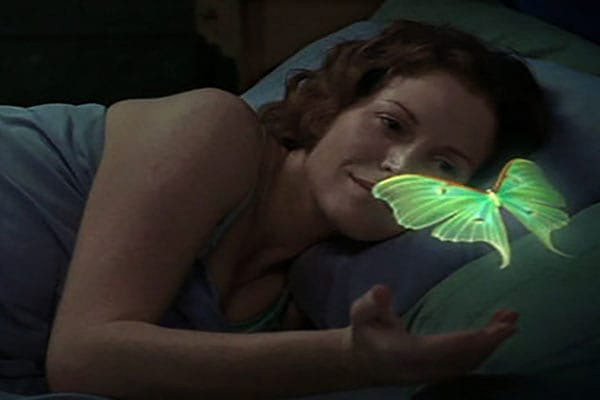
The Lunesta Luna Moth has replaced the tooth fairy in a touching adult version of wish fulfillment fantasy. I sleep well without drugs, but that alluring nocturnal apparition of fatigue makes me yearn for sleepless nights. I’m happy to report no erectile dysfunction…but the commercials feature sheepish men and happy good-looking women. So what’s the message? Is erectile dysfunction the secret to making women happy? It goes on…for every illness there is a wonderful personal, social or fashion benefit, a perverted symmetry of values that effectively masks the dreadful state of health care in America, where 40 million are uninsured and public hospitals are going bankrupt under the weight of mandated service and inadequate compensation rates.

There is a new cable series on TV called Mad Men, providing a view of Madison Avenue ad agencies, the executives and their wives in 1960. It’s shocking to hear the show’s characters so blatantly express cynicism about the public and engage in such bold manipulation of opinion to benefit clients like tobacco companies. Nowadays, the cynicism is hidden behind cleverly deceptive language or political correctness and the manipulation is highly sophisticated. It has reached tragic new heights in the promotion of pharmaceuticals and health-related products. It’s enough to make one lime-green sick.

First published 11/01/07