Archive for October, 2007

Paying the Piper

Tuesday, October 30th, 2007

In the fairy tale about the Pied Piper, the townsfolk of Hamelin find themselves paying dearly for their lack of foresight. In case you don’t remember, in order to rid the town of rats, the townsfolk hastily enlist the services of the Piper, who using a flute entices the rats to the river, where they drown. When the townsfolk renege on their promise to pay for his services, he secretly returns to the town and lures their children away, who are never seen again.

As we consider the quagmire of Iraq, we would do well to remember this tale. In attempting to rid ourselves of the terrorist rats, the Piper has lured away our children and far too many of them are now gone forever. Simple and expedient slogans are no substitute for thoughtful reasoning, and our penchant for quick feel-good solutions only makes more of a mess of things. It’s possible to script a nice and neat story line with a happy ending for TV, but the real world is neither neat nor always pretty.

America continues to promulgate the fantasy that like God, we can make the world in our own image. Unfortunately, we often don’t live up to our own image, and that creates tremendous confusion. When we spend $900 billion dollars in Iraq and won’t muster the votes to spend $35 billion for uninsured children, our image is sullied. When we call ourselves the land of freedom, law and order but authorize the detention and torture of people without resort to law or habeas corpus, our image is sullied. When we produce more greenhouse gasses than any other country on earth yet refuse to sign treaties with other nations intended to help prevent global warming, our image is sullied.

It’s easy to blame one political figure or another for our mistakes, but this too is a simplistic view. The American people wield enormous power through their collective economic strength, but are unable or unwilling to mobilize to make that strength felt. One week of purchasing no consumer products except life’s necessities would shake the established order. Two weeks of the same would force the powers that be to pay attention. A month would bring the entire system to its knees. Polls say that over 60% of the population wants the war in Iraq to end quickly, but that sentiment is not having much effect. Despite the death of our children and the countless deaths of Iraqis, nothing changes and our comfortable life goes on as normal. We make no sacrifices like our parents did during World War II, no rationing, no draft, no towns emptied of men gone off to war. We endure instead a slow trickle of death, accommodating ourselves to whatever the newest script from Washington contains, hoping for a happy ending.

If the townspeople of Hamelin had been more thoughtful, they would have first asked themselves why it was their town was plagued with rats. Addressing the conditions underlying the infestation might have rendered the services of the Pied Piper unnecessary. But the citizens wanted a simple and expedient solution, one that would not inconvenience them. They paid dearly for their selfishness, and as this awful war continues we Americans must acknowledge our own selfishness and the terrible price we are paying the Piper.

First published 10/21/07

Blaming It On the System

Tuesday, October 30th, 2007

When we examine human society and culture as whole, we see systems. We are inherently social creatures, and naturally organize ourselves into hierarchies and relationships, both simple (like the marriage of two people) and complex (like the Internal Revenue Service). These structures of social organization seem to assume a life of their own, and we talk about them as if they actually exist in material form, like rocks or trees or dunes.

When codified into laws and customs, our social structures do assume many of the characteristics of individuals. For example, the modern corporation, though entirely imaginary, is entitled to most of the rights and privileges as the individual, can own property, defend its reputation, and bring lawsuits. Government, a purely fictive system, nonetheless commands the life and death allegiance of individuals who enforce the law and carry out its dictates. Our social organization results in systems and structures as stable as honeycombs in a beehive.

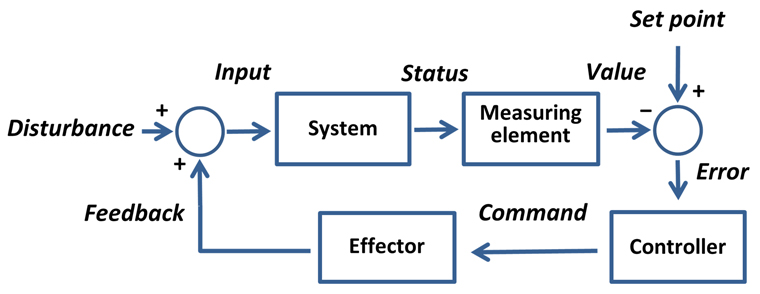
We talk about changing “the system” all the time. We complain about it, blame it for mistakes, call it corrupt and soulless. Yet the system does not exist apart from us as individuals. A sand dune, huge and slowly moving across the landscape burying all beneath it seems to operate as a single entity, but the dune itself is comprised of countless tiny grains of sand. What appears monolithic and unified is in fact composite, an assemblage of myriad particles gathered closely together and moving as a group.

Of course, grains of sand do not have intelligence or free will; they cannot decide to spontaneously ignore or defy the wind. We, on the other hand, do have intelligence and the freedom to make decisions for ourselves. Democracy, when it works, provides our political system with a mechanism for spontaneous change and adaptation. The expression of the individual, in theory, becomes the change agent within the system.

Unfortunately, our democracy has been thoroughly subverted by money, enabling the powerful and wealthy to skew and shift electoral outcomes. Roughly 50% of those of us who are eligible to vote do so, but we vote from obligation mostly, and too rarely with any enthusiasm. The individual impact we should have on our democratic system of government has been wholly marginalized by institutionalized corruption and greed. The two-party system has become calcified and unresponsive. Accordingly, change must arise within other spheres of influence. If we as individual grains of sand care to shift the direction of the dune, it will not come about in the voting booth alone.

In this materialistic society, one option is to vote with our wallet. If we do not like the way animals raised for food are treated, we can choose to give up meat. If we do not like gas-guzzling autos, we can choose to walk or bicycle. If we do not like plastic over-packaged products, we can choose not to buy them. Options like these and others may require sacrifice, discomfort or inconvenience, but unlike grains of sand we have the freedom to defy the wind of commerce should we choose.

There are no systems, per se; there are only individual people within systems, people like me and people like you. This understanding is where change begins, and blame comes to an end.

First published 10/15/07

The Sex Lives of Others

Tuesday, October 30th, 2007

Sex in America is endlessly entertaining. Our television programs, movies, books, magazines, internet and corner gossip are filled with it. Sexiness sells cars, perfumes, hair care products, fashions, motorcycles, fitness equipment, food, wine and song. It is the stuff of fiction, the source of endless fantasies, dirty jokes, silly cartoons and schoolyards.

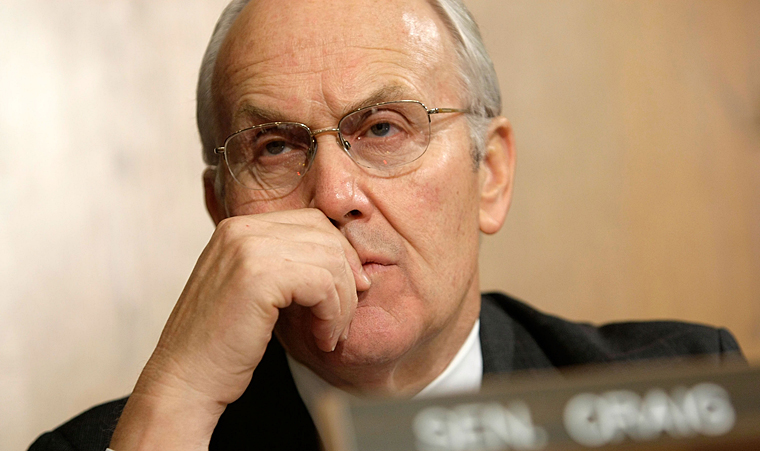
Ironically, when it comes to politics, sex is evil. Not all sex is evil, of course, just the sex that others have that might depart from “normal.” The problems of Senator Larry Craig were a direct result of disclosures of sexual advances made in a men’s room, not what most of us would consider a particularly lovely venue. Nonetheless, the variety and expressions of sexual behaviors between consenting adults are vast and far from normal, and descriptions of them have always been somewhat shocking. When Alfred Kinsey released his report on sexual habits in the 50’s, people were shocked, and when a U.S. senator pleads guilty to imprudent bathroom behavior in 2007, we are shocked as well.

I find more shocking, however, that Larry Craig was such a strident proponent of the sanctity of marriage, and so self-righteously refused to support any effort to legalize gay marriage or afford gays the same legal rights enjoyed by heterosexuals. If Larry Craig deserves great criticism, it is for this, not the fact of making a pass in a bathroom at an undercover cop.

Like Bill Clinton before him, Larry Craig showed abysmally poor judgment for an elected official, yet one must suppose that such consuming sexual drives are akin to a drug addiction that must be satisfied. As such, I feel compassion. Any addiction that leads to self-harm or the harm of others is a terrible trial. The shame of such addiction, like a stone in the heart, is a heavy load to bear. One hides, denies, pretends, lies, and betrays friends and loved ones. To be hounded out of office for financial misdeeds or pursued by special prosecutors must feel light by comparison.

The sex lives of others may be entertaining; however, when powerful policy makers compensate for their sexual drives and inclinations by attacking the sex lives of others, it becomes serious business. It seems that those who rail loudest against the sexual habits of others should be suspect, and with good cause. Such moral self-righteousness is often a mask, behind which shame and guilt reside. Better to be honest, like the openly gay representative Barney Frank, and then at least moral pronouncements can be taken at face value. As it is, in a circus atmosphere where the sex lives of the rich and powerful are paraded before the public through the media, such disclosures simply fuel the public’s own addiction to such stories. What is our attachment to the shame of others all about, I wonder?

If as a society, we but acknowledged the truth about the sex lives of others, that it is varied and that love in all its expression can be found between adults irrespective of gender, the likes of Larry Craig would not have to hide, feel shame and prowl public bathrooms. Ironically, the self-righteous pronouncements against gay sex and marriage that condemn the hopes and lives of others also condemn the hopes and lives of the self-righteous.

First published 9/25/07

Chocolate Buddha

Tuesday, October 30th, 2007

TAO of Las Vegas, according to the New York Times, is the highest grossing restaurant in America, with 2006 revenues exceeding $55 million. Featuring a restaurant, nightclub, and bar located within the Venetian casino, TAO, (generally translated as the “way”) also features an eighteen-foot-tall golden Buddha sitting in the Earth-Touching posture of wisdom, floating above an “infinity” koi pond. Smaller statues of the Buddha are scattered around the premises, and are available in bronze for sale in the gift shop at $39 each, along with six-packs of edible chocolate Buddhas (two milk, two white and two dark).

Is TAO Las Vegas an egregious example of insensitive exploitation of religious iconography or the manifestation of Buddhism’s widening influence in the West?

Exploring the first option, insensitive exploitation, please note that the Buddha remains an object of veneration and devotion to 376 million Buddhists worldwide. This 2,500 year-old religious tradition predates Christianity, and includes among its present adherents the Nobel Prize winning Dalai Lama of Tibet and revered Vietnamese teacher  and monk Tich Nacht Han. Buddhism is not some abandoned religious curiosity, akin to the Olympian gods of Greece and Rome, but is a vital, living tradition in our modern world. Using the image of the Buddha as Las Vegas restaurant décor seems demeaning, unseemly and inappropriate. Hot-concept Vegas night-club/casinos called “Salvation” featuring the outstretched arms of Jesus, or “Big Moe’s” boasting a sculpture of Moses smashing an eighteen-foot-high Golden Calf would seem equally crass; neither will happen, of course, because America is a primary home to Christians and Jews. I doubt we’ll see a chocolate Jesus, either.

Viewing TAO Las Vegas from the other side of the looking glass, however, raises interesting points. Is the widespread merchandising of the Buddha a sign of things to come in America? The proliferation of Buddha images as décor may ironically be the “way,” bringing us a wee bit closer to enlightened, compassionate society. Perhaps a restaurant patron, having enjoyed the ambiance, decides to purchase one of those $39 bronze Thai Buddha heads and having taken it home and placed it on the mantle, becomes curious about it and Buddhism in general. Sometimes the path begins this way. According to the Buddhist teachings, we all carry the seed of Buddha nature within us; how, when and what awakens it is not really important, it is the awakening that matters. From this view, TAO Las Vegas does not trivialize Buddhism, but exposes the masses to Buddhism, many for the first time. Seeds are planted, some take root.

We live in strange times in which everything becomes commodity. Our materialism ironically destroys the boundary between the mundane and the sacred, either of which can be grasped too tightly in our attempts to find comfort and relief from life’s challenges; we may slip into either a cynical nihilistic view of things as having no meaning whatsoever, or overly attach ourselves to an aggressive self-righteous piety about truth that we try to impose on others. In its own weird way, TAO Las Vegas points to the qualities of these two extremes, and leads those of us so inclined to contemplate what Buddhists wisely call The Middle Way.

First published 9/15/07

That Number is No Longer Available

Tuesday, October 30th, 2007

The communication revolution truly began with the introduction of universal telephone service in America. The telegraph had provided an international communication system, but it was slow, centralized in a few locations and depended upon messengers for the delivery of telegrams to customers. Telephone service brought a new democracy to communications, making it possible for average Americans to simply pick up the phone and say “hello.” The excitement and energy associated with the telephone sent shockwaves through the culture. Each home eventually had a phone number and phone operators could connect people in seconds. News that used to travel slowly suddenly moved quickly and isolation was quickly replaced with connectedness. Each home and business in America enjoyed two numbers, one for the street, and one for the phone.

Before long, directories of telephone numbers appeared combined with the ability to call the operator for information about someone’s phone number. The anonymity of the individual began to fade, replaced by the ease and comfort of ready contact.

As its technology improved and the price of phone service began to drop, the phone became fully integrated into society, personal communication and commerce seamlessly bound together. The long-term AT&T monopoly was removed and phone service de-regulated. With the advent of “industrial-strength” telemarketing, the boundary between anonymous personal space and public access disappeared, but soon the open access and availability of phone communication was to be transformed yet again, this time by the answering machine.

Commercial answering services had long been a fixture of the business world, but the personal answering machine returned a measure of privacy to the average citizen. No longer was every call answered; playing and deleting messages became the modus operandi. Then the phone companies began to offer message center services, and progressively added additional features to their phone service, call waiting, and caller ID, for example. Privacy and insulation from phone intrusion gained wider and wider popularity in the face of the relentless and constant pursuit of telemarketers, recorded announcements, poll-takers, and bill collectors.

The democratization of phone communication is now almost over. This week I received a notice from AT&T that my phone service now includes a call management system that requires callers to enter a 10-digit code for their call to be completed. Without the code, callers will hear a recorded message stating that they must have the code to complete their call. I have been provided with some preprinted cards showing the 10-digit code to provide to family and friends. While my phone number remains listed and available through information, callers unknown to me will not get through unless I allow them. Approved callers are assigned a special “ring,” while unknown callers get the “raspberry.”

The qualities that made the telephone so useful, namely its convenience and ubiquity in modern life, have overwhelmed us. All too often, the phone rudely intrudes upon what moments of serenity we can find in our hectic, over-stimulated lives. Ironically, these new privacy features have moved us from the innocent excitement of “hello” to the self-protective isolation of “don’t call me, I’ll call you.”

First published 9/01/07