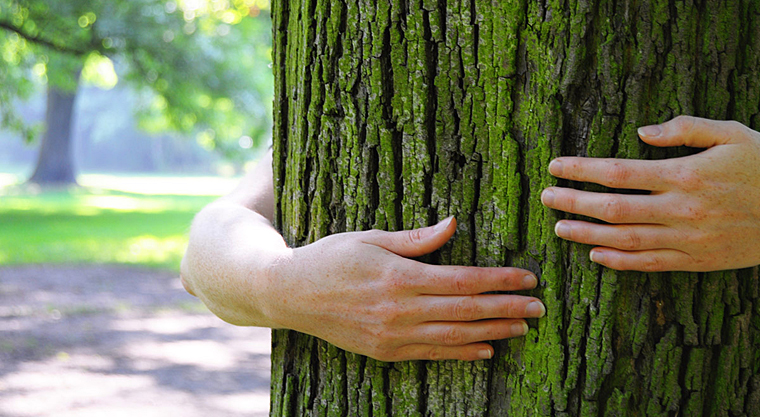
Relaxing anxiety
Saturday, August 28th, 2010We are all anxious about something from time to time, and spend moments worried about relationships, illness, money, jobs, and so on. If unfortunate enough to be anxious most of the time, our outlook on life, our health and how we treat others worsen; we suffer most of all.
To paraphrase the words of the 7th Century Zen Patriarch, Seng-Tsan, “The highest realization is to be without anxiety about imperfection.” Seng-Tsan was not speaking about perfection per se, but about our nagging dissatisfaction and anxiety about the events of ordinary life. He was talking about our inability to accept things as they are and to actually relax.

Relaxation today is thought of as plopping oneself down on the couch and watching TV, going to a movie, playing a video game or reading a magazine. But this is not relaxation; it is distraction from our anxiety, dissatisfaction, boredom or fatigue. For many of us, no sooner do we turn on the TV or begin reading then we fall asleep. We awaken no more relaxed than when we first plopped down.

I would like things to be the way I’d like them to be. When this happens I feel happy. Much of the time, however, things are either not quite the way I would like, or feel terribly wrong. This, of course, is the product of self-centered thoughts. When I fixate on an event or thought, particularly one about what’s wrong with me or others or life in general, a cascade of negative emotions that feed new thoughts with energy begin and in no time I feel anxious. Feeling anxious, I get aggressive or withdrawn, indulge in harmful and self-destructive activities, or move towards distraction. In this same way, many of us navigate from moment to moment, never really finding the emotional or psychic space to feel at peace. That space is always available, but we can’t see it though the fog and turmoil of our thoughts and feelings.

The key is that we can’t truly relax until we begin to be kind to ourselves. Kindness to ourselves does not mean repeatedly forgiving ourselves for our own foolish behavior or excusing the habitually hurtful ways we think and act, it means being reflective and honest about our anxiety-producing habits of mind, contemplating their effects and actively employing some discipline to alter them. Innately, we all know when we are hurting ourselves, but discarding harmful habits and changing the way we think and act is difficult. Intention is the first step, of course, then gently engaging in practices that support abandoning negative actions and thoughts helps to open the door to true self-kindness.


If we can be kind and gentle to ourselves we can then be kind and gentle with others and the world. I’ve come to understand that others are constantly struggling with anxiety, too. Seeing this, I’ve realized that spending time in blame and wanting others to be different just adds to everyone’s problems, including my own.
Fundamentally, people have not changed since the 7th Century or before. Letting go of trying to change others and working on ourselves is still the first step. When and if we can fully abandon fixation and anxiety about the faults of others and the ordinary events of the world, the highest realization of complete, perfect relaxation can be ours.