Archive for the ‘Philosophy’ Category

The great unseen

Thursday, September 2nd, 2010

Science reports that 50 trillion neutrinos pass through each person’s body every second of every minute of every day. We can’t see them or feel them for they have no mass and make no noise we can hear; they are so infinitesimal that they zip through the space between the sub-atomic particles of which we are made. To neutrinos, we are simply thin clouds of energy posing no more of an obstruction to them then a light fog poses for us.

There are other forces at work we cannot see, but that are constantly present. The most obvious is gravity, which acts upon all matter without discrimination. When we sit in a chair, feel our bottoms pressed against the seat because gravity is “pulling” us, it is also acting upon the chair with the same force. The floor upon which the chair sits is also “pulled,” as is the ground upon which our floor is built. Every grain of sand and every mountain, every leaf, every molecule of water in the ocean and every object in space is subject to gravity. It has no color, smell, shape, or sound; what we call “feeling gravity” is feeling its effects. Gravity itself cannot be felt. Science has yet to identify what gravity actually is and how it is propagated.

We inhabit the human realm simultaneously with others, including the quantum, the molecular, the microscopic, the electromagnetic, the thermodynamic, the physical, and the metaphysical realms. The metaphysical realm is the realm of thought, and thoughts are invisible as well.

What is thought? On a scientific level it can be described as a combination of chemical and electrical stimulation of living neurons, but this is simply a description of what has been observed. Clearly, though thoughts themselves, like gravity, have no inherent color, smell, shape or sound of their own, they appear to carry or transmit these types of information and we can experience their effects. The same can be said of consciousness itself, the invisible realm from which all thoughts emerge.

We assume the realm of consciousness exists entirely within ourselves, perhaps within our heads and brains. Because we associate thinking with our brains, we place consciousness in that same location. From a biological/physical standpoint, this is observable. Consciousness, of course, can be distinguished from self-awareness; a fish is conscious, but might not be self-aware. People are both.

Might consciousness exist as a force of its own, like gravity? If so, what is it, how is it propagated and how does it work? Does the force of consciousness require a body or a brain, or like gravity is it independent of all things?

There is the view that consciousness, including human consciousness, is the expression of a universal force, and that this force underlies what we observe as a self-organizing and replicating manifestation of existence. Thus all things, though in a constant state of change, express the primordial consciousness that pervades all of existence itself. Some call this force God, others have called it The Way, The Essence, or the Great Spirit. Others yet again call everything an accident.

What is undeniable is that beyond what we can see and hear are unseen realms of great power and expression. From our ordinary thoughts, in themselves nothing solid or material, our entire universe is born.

The contextual self

Thursday, August 12th, 2010

We live in a “me” world, where attention to self is a daily preoccupation. “I want this and you want that” is the basic functioning of contemporary society and we routinely go to sleep each night expecting to greet our “selves” the next morning.

Our sense of self is contingent, however. First there must be the mental stability and functionality that allows for “rational” thought. Lacking this, both personality and self essentially recede into obscurity, such as happens to Alzheimer patients. If mental stability and functionality are present, then sense of self is built upon frameworks of family, culture, society and all that comes with it. We identify ourselves by name and others by their names. We join people in forming networks of belief. We get jobs, have families and propagate society, all the while ignoring that apart from context, self does not exist.

The contextual self is defined and created by the continuity of environment. By environment I mean the entirety of space, the circumstances in which we live and function and the activities that take place within that space. Just as a fish is only suited to life within water, so people are only suited to life within air. This basic foundation for the contextual self is defined by the specific environment in which human life is possible. Beyond this basic foundation are the other myriad contexts in which we find ourselves and to which we respond. The narrative-self, built by ego while interacting within context, is purely fictive. It’s the interdependent contextual self that is real.

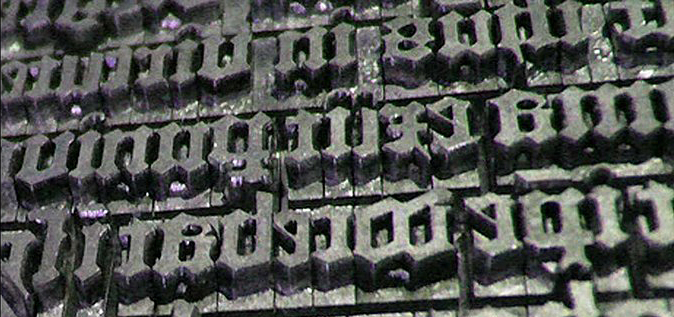
As situations change and we become a parent, friend, garden-lover, sports-lover, and so forth, the contextual self naturally evolves. Context is varied and limitless because cause and effect are constantly transforming everything. Consider people who called themselves “typesetters,” for example, a trade associated with a career and a livelihood. When computer technology replaced metal typography, those who identified themselves as typesetters lost one context of self and were established within the context of the unemployed.

Most of us spend our lives defining ourselves by attaching narrative to context, trying to transform it into a fixed reference point. Having established an illusory self-perpetuating reference point, we then cling to it tightly to affirm identity. Ego’s tight boundaries create constant anxiety, so great effort is made to sustain reference points. However, it is possible to reveal fixed reference points as ego’s false structural elements of self. Such insight allows for a glimpse of the realization of selflessness or egolessness, our true nature. When selflessness is realized, we don’t cease being, but our relationship to the world changes – one is no longer bound by ego’s fixation on illusory reference points.  Thus, though fundamentally selfless, we are awake, aware and able to engage fully and appropriately with the world. Context creation is never-ending and continuous so there is plenty to keep us occupied.

Materialistic society fuels ego-self, an attractive and convincing narrative that we are more than contextual and have a material, completely independent existence. As we age, grow old and finally die, the truth is told and our false reference points dissolve. Through glimpses of selflessness, however, life is revealed as open and workable. Instead of the artificial structure of ego’s fixed reference points, the fluid continuity of contextual self becomes the playground of joyful action.

The whole in part

Thursday, March 25th, 2010
Separating an object into component parts and then ascribing that object’s existence to the coming together of those parts is reflected in the way most of us conceptualize the world. We call this reductionism, and from one perspective it is correct. For example, taking an automobile as object, we typically view its various components as the parts necessary for the automobile’s existence. If the wheels are missing, the auto won’t be able function as an auto, and in a certain sense is no longer an automobile; if it can’t move, we call it junk.
Although an auto can be disassembled piece by piece into parts, if even one single part is missing the remaining parts do not add up to a complete auto. If the auto is incomplete, we might even say that each individual part then is junk because it is the whole that allows each part to fulfill its function.
Using this metaphor, what emerges is an intriguing situation in which each part is functionally absent without the presence of the whole, a reversal of our usual view. Rather than the parts powering the whole, it is the whole which bestows power to each part. If wholeness is lacking, the parts themselves have no actual power, only potential power.
Seeing our world from the perspective of wholeness can feel quite strange, as if the reality of parts is an illusion. In one sense, it is, for the world is at once complete and always whole, all “parts” participating equally in a unified simultaneous spontaneous expression. Our inclination to identify parts, discriminate, divide, find difference, and make judgment is the product of ordinary mind, and ordinary mind is notoriously subject to confusion. By relying on our habitual frames of reference, we repeatedly fail to see the wholeness of totality, and this then leads to further confusion.
Similar confusion pervades the understanding of cause and effect. Once again, our tendency is to see outcomes (effects) as the result of the coming together of separate parts (causes), and we readily find ways to support that conclusion. However, from the perspective of totality, effect generates its cause. This is more difficult to see; although cause is simultaneous with effect, this reality is not always immediately apparent. For example, only once the mortgage crisis suddenly became visible did the reasons for it become obvious. Thus we can say the event generated the cause, for if the crisis event had not arisen, the cause would have remained invisible. Seeing things in this way – events generating causes – is not of our usual way of understanding.
Is there a practical application of these principles in everyday life? In totality we observe the complete inter-penetration and mutual interdependence of whole and part, cause and effect; they are inseparable, simultaneous, spontaneous and continuously self-generating. Resting in this complete and inclusive quality of wholeness opens up the possibility for us to let go of our habitual labeling and blaming in favor of a more grateful and generous experience of becoming.
We are simultaneously part and whole, interconnected to all other parts and the whole. We are both cause and effect, inextricably woven into the fabric of all events. This, Buddhist nun and author Pema Chodren says, is “the wisdom of no escape.” I say, relax and enjoy the show.

Separating an object into component parts and then ascribing that object’s existence to the coming together of those parts is reflected in the way most of us conceptualize the world. We call this reductionism, and from one perspective it is correct. For example, taking an automobile as object, we typically view its various components as the parts necessary for the automobile’s existence. If the wheels are missing, the auto won’t be able function as an auto, and in a certain sense is no longer an automobile; if it can’t move, we call it junk.

Although an auto can be disassembled piece by piece into parts, if even one single part is missing the remaining parts do not add up to a complete auto. If the auto is incomplete, we might even say that each individual part then is junk because it is the whole that allows each part to fulfill its function.

Using this metaphor, what emerges is an intriguing situation in which each part is functionally absent without the presence of the whole, a reversal of our usual view. Rather than the parts powering the whole, it is the whole which bestows power to each part. If wholeness is lacking, the parts themselves have no actual power, only potential power.

Seeing our world from the perspective of wholeness can feel quite strange, as if the reality of parts is an illusion. In one sense, it is, for the world is at once complete and always whole, all “parts” participating equally in a unified simultaneous spontaneous expression. Our inclination to identify parts, discriminate, divide, find difference, and make judgment is the product of ordinary mind, and ordinary mind is notoriously subject to confusion. By relying on our habitual frames of reference, we repeatedly fail to see the wholeness of totality, and this then leads to further confusion.

Similar confusion pervades the understanding of cause and effect. Once again, our tendency is to see outcomes (effects) as the result of the coming together of separate parts (causes), and we readily find ways to support that conclusion. However, from the perspective of totality, effect generates its cause. This is more difficult to see; although cause is simultaneous with effect, this reality is not always immediately apparent. For example, only once the mortgage crisis suddenly became visible did the reasons for it become obvious. Thus we can say the event generated the cause, for if the crisis event had not arisen, the cause would have remained invisible. Seeing things in this way – events generating causes – is not of our usual way of understanding.

Is there a practical application of these principles in everyday life? In totality we observe the complete inter-penetration and mutual interdependence of whole and part, cause and effect; they are inseparable, simultaneous, spontaneous and continuously self-generating. Resting in this complete and inclusive quality of wholeness opens up the possibility for us to let go of our habitual labeling and blaming in favor of a more grateful and generous experience of becoming.

We are simultaneously part and whole, interconnected to all other parts and the whole. We are both cause and effect, inextricably woven into the fabric of all events. This, Buddhist nun and author Pema Chodren says, is “the wisdom of no escape.” I say, relax and enjoy the show.

A guide to difficult times

Thursday, March 4th, 2010
We tend to classify events into those that are good and those that are bad, the reference point being our own well-being. When things happen that we don’t like, when the world seems terribly unfair, we wonder why bad things happen to good people, good people like us. In the midst of terrible hardship such as earthquake, flood, serious illness or the death of a loved one, it’s often challenging to make sense of things.
There are those who believe in fate: what occurs is predestined and unavoidable. While this view offers the comfort of surrendering to external forces greater than ourselves, if we’re lazy-minded` it robs us of our will and provides a handy self-justifying excuse for everything we and others do. The good and bad of the world remain beyond our personal responsibility. Considering ourselves in God’s hands is not unlike belief in fate. God’s will is unfathomable and beyond understanding. Ah, well.
Others believe in cause and effect: what happens is the consequence of other things that happen. Seeing things in this way provides us the opportunity to participate in outcomes with confidence and playfulness, but also tends to promote the simplistic belief that we can fully control events. The good and bad actions of other people and natural forces, however, are simultaneous with our own, making reality an infinitely complex web of probabilities.
Yet another view is that each moment is completely fresh: the world is recreated anew in each and every moment. This view offers the powerful experience of letting go – seeing what has happened as totally gone, what may happen next as fantasy and the present moment as all we have to work with. Paradoxically, the present moment is ungraspable. While liberating, taken to extremes this view can lead to wildly hedonistic behavior if responsibility is discarded and intention becomes purely self-centered.
A totalistic perspective accommodates all and everything: good and bad are simply two sides of the same coin, as are birth and death. The arising of each and every moment simultaneously engenders its own demise and this is the basic nature of the unfolding spontaneity of life, an immutably impermanent moment-to-moment continuity of change. If confused, this view can veer towards nihilism, the certainty that nothing actually matters and that there is no right or wrong.
When great misfortune strikes and the world tilts on its axis, philosophy takes a back seat to actual experience and each of us must cope in our own particular way. We do not live a philosophy, we live a life, and whatever our views may be at any one point or another, highly dramatic events can always reach beyond the limits of conceptual belief. It’s at life’s most terrible moments that we come face to face with being human, plain and simple: grief, shock, a broken heart.
Yet difficult times may potentially lead us to deeper truth and understanding. Such moments have great power, and it’s possible to harness their energy to transformative wisdom. Jungian analyst Florida Scott-Maxwell, a writer whose most important work was written while she was in her mid-80s, expressed this brilliantly: “Life does not accommodate you;” she said, “it shatters you. Every seed destroys its container, or else there would be no fruition.”

We tend to classify events into those that are good and those that are bad, the reference point being our own well-being. When things happen that we don’t like, when the world seems terribly unfair, we wonder why bad things happen to good people, good people like us. In the midst of terrible hardship such as earthquake, flood, serious illness or the death of a loved one, it’s often challenging to make sense of things.

There are those who believe in fate: what occurs is predestined and unavoidable. While this view offers the comfort of surrendering to external forces greater than ourselves, if we’re lazy-minded it robs us of our will and provides a handy self-justifying excuse for everything we and others do. The good and bad of the world remain beyond our personal responsibility. Considering ourselves in God’s hands is not unlike belief in fate. God’s will is unfathomable and beyond understanding. Ah, well.

Others believe in cause and effect: what happens is the consequence of other things that happen. Seeing things in this way provides us the opportunity to participate in outcomes with confidence and playfulness, but also tends to promote the simplistic belief that we can fully control events. The good and bad actions of other people and natural forces, however, are simultaneous with our own, making reality an infinitely complex web of probabilities.

Yet another view is that each moment is completely fresh: the world is recreated anew in each and every moment. This view offers the powerful experience of letting go – seeing what has happened as totally gone, what may happen next as fantasy and the present moment as all we have to work with. Paradoxically, the present moment is ungraspable. While liberating, taken to extremes this view can lead to wildly hedonistic behavior if responsibility is discarded and intention becomes purely self-centered.

A totalistic perspective accommodates all and everything: good and bad are simply two sides of the same coin, as are birth and death. The arising of each and every moment simultaneously engenders its own demise and this is the basic nature of the unfolding spontaneity of life, an immutably impermanent moment-to-moment continuity of change. If confused, this view can veer towards nihilism, the certainty that nothing actually matters and that there is no right or wrong.

When great misfortune strikes and the world tilts on its axis, philosophy takes a back seat to actual experience and each of us must cope in our own particular way. We do not live a philosophy, we live a life, and whatever our views may be at any one point or another, highly dramatic events can always reach beyond the limits of conceptual belief. It’s at life’s most terrible moments that we come face to face with being human, plain and simple: grief, shock, a broken heart.

Yet difficult times may potentially lead us to deeper truth and understanding. Such moments contain great power, and it’s possible to transmute their energy to transformative wisdom. Jungian analyst Florida Scott-Maxwell, a writer whose most important work was written while she was in her mid-80s, expressed this brilliantly: “Life does not accommodate you;” she said, “it shatters you. Every seed destroys its container, or else there would be no fruition.”

An Irresistible Memory of Oneness

Thursday, January 28th, 2010

Love: a deceptively simple word we use to describe a stunningly complex phenomenon. Compassion, caring, comfort, support, desire, attachment, attraction, and appeal – empathy, affection, tenderness, infatuation, intimacy and ardor; these feelings and more are at work within love’s bind.  Humanity as we know it is all but unthinkable without love.

Our experience of love, however, is limited by our altogether human frame of reference; our feelings, thoughts and physical sensations. When we observe that which exists beyond our human realm, one might conclude that all space, physical matter and the atom itself are bound together by the strong force of love (that which physicists call “gluons”?). Cosmologists say all and everything once was One, a dimensionless absolute singularity of perfect symmetry. Then one timeless day the Big Bang popped and the symmetry was broken. Perhaps the strong force of love is an irresistible memory of that oneness.

There surely is a force that binds: an all-pervasive, unobstructed, invisible, unconditional and indestructible essence without which the observable and apparently infinite universe – including Diet Pepsi – would not exist.

What is the mysterious force that underlies the replication of crystals, for example? Quartz crystals are solid arrangements of ordinary molecules of matter in a highly precise geometric self-replicating chain of rotated tetrahedrons. Quartz crystals are not alive, not living organisms like an amoeba or a squirrel. Such crystals have no DNA, no cells, no genes, and no membranes – yet under proper conditions, they reliably replicate in a precisely ordered crystalline matrix. That is what they do – but why?

A feedback system or innate essence of awareness that cannot be detected underlies the replication of quartz crystal, otherwise the perfection that is quartz would not exist. The same is true for all non-living things – thus water is not ammonia, granite is not iron and gold is not lead. An ever-present, powerful unseen force is keeping things on track. Survival of the living absolutely requires real-time feedback systems; in people and other animals, for example, when a cell is imperfect or damaged, the body usually detects and replaces it. What is this force that relentlessly propels all and everything towards continuous self-perfection? Perhaps nature’s feedback loop is an aspect of the force of love.

There are those who would call the force I’ve described as sacred, and I suppose that designation is as fine as any other. But here’s the kicker – if this force is within of all things – then all is sacred, even the profane. Bound together in this way, essential unity is revealed: the force of love is all good.

The force of love binds the entire universe, and operates far beyond our human control. This is excellent, since people are terribly confused. Yet no matter how confused we become – scared, angry, violent, depressed, delusional, exhilarated or ecstatic – we cannot disturb the primordial force of love. This is the bind that ties: the inexorable, incorruptible expression of love operating within and around everything that exists. Beyond description, ineffable, ultimately unknowable except through observation and engagement with its spontaneous and brilliant manifestations, love is, and we and all and everything are simply and forever love itself.

This, dear one, is the secret knowledge of the sages. Now you know; please pass it on.

Reprinted from The Sonoma Sun Newspaper