Archive for the ‘The Sexes’ Category

Gender Blowback: Part Two

Thursday, May 27th, 2010

I ended last week’s column with a question: “What is it about the feminine that so frightens patriarchy?” In this column I will provide some possible answers. To summarize the hypothesis: persistent patriarchal silencing and domination of the feminine is the product of fear. Fear is not limited to men, of course, but the transformation of fear into aggression seems to be highly activated in men.

Male fear arises both from our biological inheritance and the psycho-physical effects of cultural and social frameworks. In another words, the fear behind patriarchal suppression of the feminine is most likely a result of both nature and nurture.

On the side of nature, we can place matters biological and genetic. These would include a range of factors, including physical and emotional responses of the autonomic nervous system, genetic and epigenetic predispositions, and neurological development. Physical and emotional responses include hormonal glandular secretions such as testosterone and adrenaline, linked respectively to sexuality/aggression and responses of fight or flight triggered within the brain’s amygdala. Genetic and epigenetic predispositions pertain to factors of instinct, inherited physical characteristics, epigenetics and the effects of stress found in strong emotions that effect gene expression. Finally, neurological development includes elements of body/brain mapping, sexual orientation, and intellectual capacity. These natural factors constitute a powerful and organic developmental ground of male behavior. Accordingly, male aggression directed at women may be attributable in part to a primitive hard-wired fear of impregnation of a preferred mate by other males, thereby threatening the genetic succession of offspring.

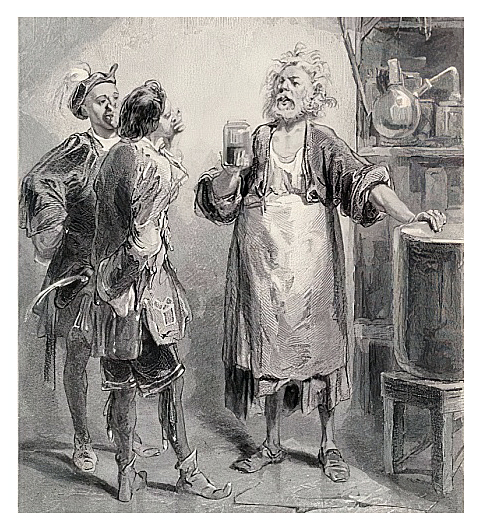
On the side of nurture we find the influence of our cultural beliefs and narratives, styles of childrearing, the effects of social organization and peer pressure, and the imposition of economic and power-based hierarchies as drivers of behavior. During the reign of Roman Emperors, for example, adulterers were punished by being thrown into deep water after being sewn into a bag along with a monkey, a rooster, an asp and a dog. The interpenetration of “nature and nurture” is codified in patriarchal society in the form of strict laws and rigid dogma; competition and aggression are elevated above cooperation and empathy. This self-reinforcing organizational system serves to preserve established patriarchal hierarchy within power relationships. Thus world-wide patriarchal systems have forced the silencing of women for thousands of years. In many cultures, such silencing is punishment-based and nearly absolute, in others it is expressed with more subtlety.

As noted in my previous column, and in the research of psychologist/author Carol Gilligan, those who are silenced often repress the memory of the act of silencing, and take on the voice of the oppressor instead. Even within male society, patriarchy reveals this imperative through male political figures who make self-righteous statements in opposition to gay rights legislation while simultaneously hiding their own homosexuality. Thus we see that fear of “feminization” of any type inclines patriarchy to revile any effort to undermine its hegemonic “manhood.”

The two forces of nature and nurture have over time produced a highly intractable patriarchy prepared to strenuously defend itself. Given the violence, predatory behavior, competition and fighting over possessions and territory it embodies, determining its precise cause and effect is important, but nearly impossible; nature cannot be separated from nurture. However, it is abundantly clear that the future of humanity rests in coming to grips with a pattern that is now many thousands of years old.

Gender Blowback: Fear of feminine

Thursday, May 20th, 2010

Over the past 100 years gender equality in the western world has improved dramatically. This is not to say that complete parity exists between the sexes. There are still significant economic differences (women are paid less than men for comparable work), discrimination issues (sexism in the workplace and military), domestic lopsidedness (women do the lion’s share of housework and child rearing in addition to often working full time outside of the home), and cultural attitudes (men are given more latitude in sexual behavior than women). But in comparison to 100 years ago, equity between the sexes in the west is better. Overall, these changes may be viewed as symptomatic of the west’s continuing shift to liberal democracy.

As the overall influence of the western world has spread through media and technology to the non-western world, the impact of gender equality has spread also. For a while this resulted in the emulation of liberal western values in non-western countries. For example, during the regime of Saddam Hussein in Iraq (a brutal and iron-fisted dictator) women were granted a degree of gender equality rarely seen today in the Middle East. Over a twenty-five year period, women entered the professional class as doctors, university professors and other high-level positions. The same was true in Iran during the Shah (another terrible dictator, to be sure). These changes corresponded chronologically to the women’s rights movements in the west.

But it was reported recently that Malaysia condemned four women to public caning for the crime of adultery, the first time this punishment has been used in modern Malaysia. Caning is essentially whipping using a stick instead of bound and braided animal hide, a painful and humiliating punishment. Throughout the non-western world, we see a resurgence of cultural fundamentalism that relegates women to the status of second or third-class citizens. As such, this is an explicit demonstration of patriarchy, the imposition of undemocratic forms of male-patterned dominance and aggression directed against women and the disenfranchised through harsh laws and brute force.


Intersecting cultural forces often produce friction. In the case of gender and sexuality, the advocacy of democratic equal rights by liberals has stimulated correspondingly harsh conservative cultural forces in America. A black President, gay rights advocates and powerful liberal women such as Speaker of the House of Representatives Nancy Pelosi have provoked intense “blow-back,” a systemic patriarchal reaction prompting political movements that support a correspondingly rigid set of rules, laws and attitudes.

Blow-back reveals the deeply embedded persistence of patriarchy as a world-wide cultural phenomenon. Here in the west, where we like to think we embody modern democratic ideals, patriarchal imperatives of domination are aggressively supported by men and women alike; hence potential presidential candidate Sarah Palin uses violence-laden imagery of rifle-sight cross-hairs on her Facebook page to target liberal politicians. Psychologist and author Carol Gilligan observes that within patriarchy the oppressed survive psychologically by silencing their own authentic voice and adopting the mantle and methods of the oppressor.

Despite the image of “real” men as powerful (and the same can said of nations), the harshness of patriarchy reveals deep fear of the feminine and loss of “manhood.” No other explanation explains the persistent historical and world-wide patterns of subjugation, dominance, discrimination, and gender inequality.

This begs the question: what is it about the feminine that so frightens patriarchy?

Survival of the most cooperative

Friday, January 22nd, 2010

We tend to prefer points of view that reinforce our own. This is curious, of course, because we develop our own cherished points of view through our exposure to the points of views of others, such as our parents. In short, no points of view arise or exist in isolation; they are inextricably bound to prevailing and counter opinion of others.

One widely held opinion is that evolution is based upon the survival of the fittest. In the mirror of modern culture “fittest” has come to mean “most successfully able to compete and dominate others.” America prides itself on idealized notions of the “self-made” man, “independence,” “freedom,” “the value of competition,” and the harsh reality of a “dog eat dog” world. Viewing Darwin’s theory of evolution in this particular way feels natural for us and it is a point of view that reinforces our widely accepted social narrative about the nature of success. Tantamount to cultural dogma, such belief ultimately becomes a self-fulfilling prophesy.

Yet survival of the fittest does not necessarily mean survival of the most competitive. In fact, nature is replete with myriad examples of the survival of the most cooperative. Rather than aggression and competition, the fittest survive by forging alliances, finding safety in mutual support, establishing symbiotic relationships, and exploring synergy. Moreover, such cooperation is found not only between members of one single species, but members of differing species and even between species of plants and animals.

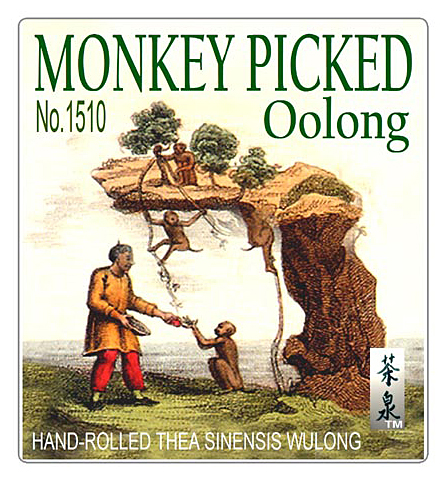
For example, a thorny African species of the plant Cassia provides home, food and protection to a particular species of ant. The bases of the leaves exude a nutritious sap for the ants, and the plant’s thorns provide protection. The ants, in exchange, defend the plant from leaf-eating caterpillars and other herbivores. This cooperative symbiotic relationship is at the heart of both species’ fitness to survive.

Cooperative animal altruism, the sacrifice of one’s life or well-being for the common good or welfare of others also defies the purely competitive view of survival. Numerous reports are available of such behavior in the animal kingdom as a whole. Some birds have been observed feigning injury to distract predators; ants and bees regularly sacrifice themselves for the good of the hive. Both people and dogs enjoy our mutually supportive relationships. Those who believe that a Cartesian explanation – that animals are mere unfeeling automatons driven solely by genes, survival instinct and automatic responses – must by necessity ignore such compelling evidence.

Despite comforting cooperative relationships with family members, co-workers and close friends, we are nonetheless “trained” to view strangers as suspicious, dangerous, or threatening. Accordingly we rely on aggression and competition to “solve” problems (culminating in the assertion of power through brute force); the social narrative that reinforces such behavior is so powerfully established as to be virtually accepted as absolute truth. However, this “truth” is inseparable from the established fear-based ideological patriarchy of a male-dominated society and its beliefs. Cooperation and its associated “feelings” is relegated to the feminine, associated with weakness, denigrated as capitulation, and considered ineffective and dangerous. Thus it is that world-wide, those deemed the “fittest” are almost universally men.

Unless cooperation and its associated feelings can assume their proper place in world society, escalating male violence, war and aggression will in the end insure destruction, not survival.

Boys, men, victims and heroes

Saturday, December 6th, 2008

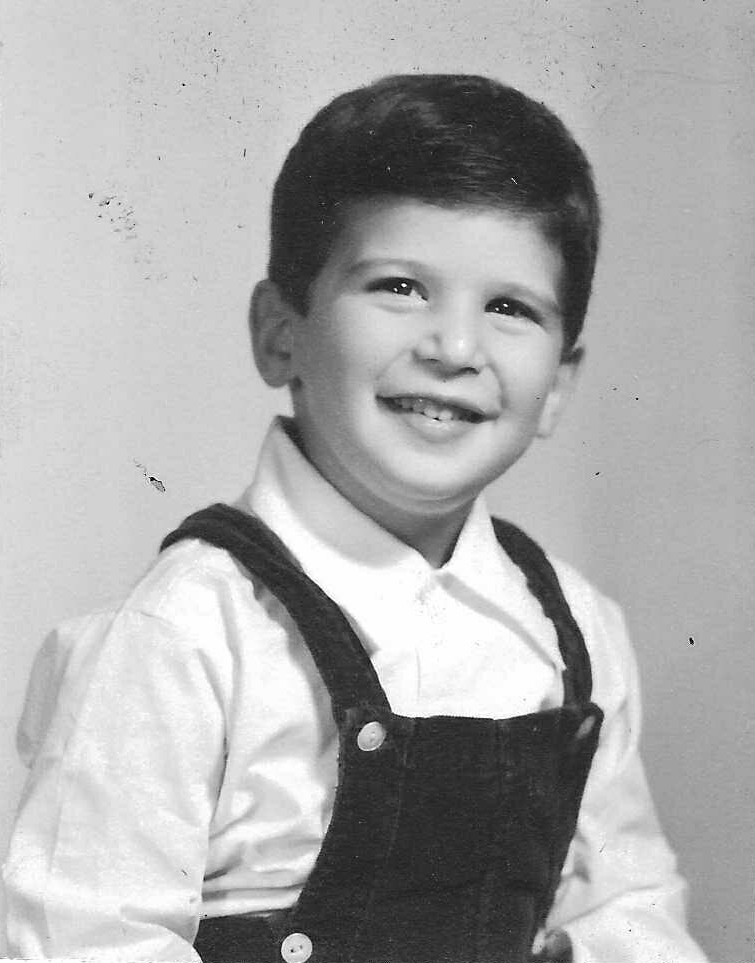
My first major exposure to the culture of the hero was at summer camp in Maine. Like many suburban New York boys, I was shipped off for eight weeks each summer, beginning at the age of eight.
 
Camp Androscoggin of 1956 (a mere eleven years after the end of World War II) was a military-style camp, located in the Adirondacks beside a large lake of the same name. We wore caps and uniforms of gray, and lived in “bunks.” Each morning began with a bugle, followed by saluting the flag and hand inspection before breakfast in the “mess hall.” Breakfast was followed by a brief period of cleaning each bunk in preparation for inspection. Cubbies and beds were reviewed, and if unsatisfactory, everything would be thrown in a pile on the floor. In this way each day proceeded, until the bugle sounded “taps” at night.

I learned early on that failing or passing bunk inspection was entirely unpredictable. The process was arbitrary and clearly designed to provoke fear. One never knew when he would be the designated victim, would humiliate himself and the entire bunk. Tears made things worse, an almost guarantee that one again would be the victim. And identifying the weak and vulnerable, of course, was the whole point.

In short order both victim and hero would emerge. By week two, leading roles were fixed for the entire summer. For the majority who escaped either fate, there was the job as supporting cast of adoring or taunting mob. Having been identified, the chosen weakling was a daily object lesson of the misfortune which might befall us, and a ready target of anger and blame. The hero, and there was only one per bunk, was inevitably the best athlete, receiving endless praise, and privilege.

The entire summer was an ongoing lesson about heroes and victims. Tests of courage and the ability to endure and inflict pain, gaining acceptance by the strong and rejecting the weak, hiding feelings of insecurity and promoting demonstrations of valor were our daily fare, enforced by college-age counselors too caught-up in a culture of competition to understand the damage they were doing. My talents were two; I hid when I could, and when I couldn’t I was funny. Neither hero nor victim, I was mostly an observer, though at times I was forced to take sides; I regret those moments of non-virtue, even now.

For millennia young boys with pliable hearts and minds have been taught cruel games, couched in language about honor, bravery and loyalty. And for these same millennia, male violence, aggression and the role of hero and victim have been tragically played out, dominating social narrative. It is an ancient Neolithic tale writ large, and you can hear it plainly in today’s nasty presidential campaign, underlying comments about weakness and strength and reactions of the press and the public.

I came away from four years of camp sufficiently capable of mixing with the mob, but my sympathies were with the victim. No doubt I too would have been a victim had I been less funny, agile and clever. I met all the qualifications; overweight, lousy athlete, too sensitive.

It took but a few childhood years to build my protective shell, and sadly, most of my adult life to remove it.

Not so Mad Men

Monday, September 8th, 2008

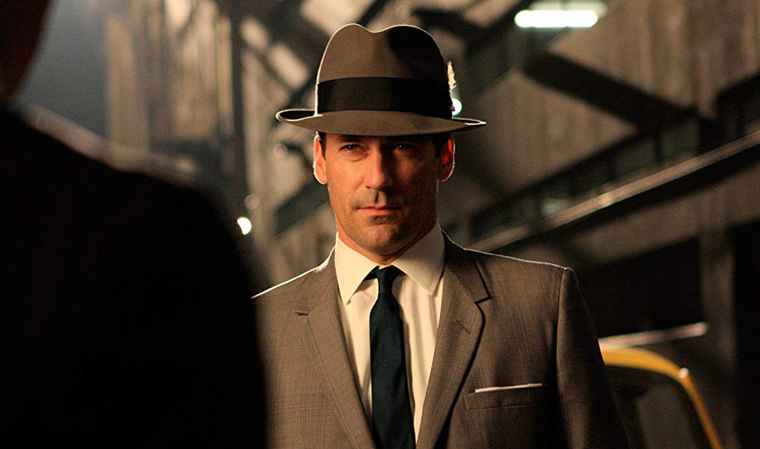
Every once in a while something meaningful appears on television, and at present it is a series on AMC called Mad Men.  Taking place in the very early 60’s and set in New York, the fictional series written by Mathew Weiner of HBO’s The Sopranos explores the period’s social, moral, sexual and cultural change.

The program includes no overt violence, flaming explosions, or obscenity. What it does include is ubiquitous cigarette smoking, hard liquor, blatant sexism, bigotry, ethical lapses, rampant materialism, and a finely-honed script exposing the hidden lives and shifting relationships of those times, particularly between men and women.

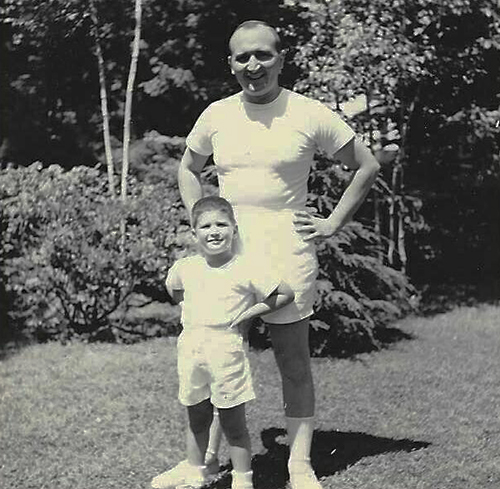
I spent the 50s and 60s growing up in a wealthy suburb of New York City, the post-war son of a businessman. Like Weiner’s Mad Men, each day my father rode the train to work in Manhattan and entered the executive men’s club of work, money, sex and power. My mother remained at home, as did most wives of the suburban middle class – running the house, managing the kids and trying to stay busy. His was a life of action, hers a life of bored leisure. While he jetted from New York to London, ate expensive dinners in fine restaurants, worked and played late hours, had exotic dates and kept many secrets while pursuing his fortune, she played tennis with girlfriends, shopped for dinner, managed the housekeeper, picked up the kids from school and saw a psychiatrist for depression. What money she had was doled out by my father. Largely an extension of his Mad Men life, she enjoyed little identity of her own.

I knew my father was unhappy by the way he’d trudge up the stairs after coming home from work. After a long day kicking butt and jousting with men for dominance and treasure, he’d pour himself a Johnny Walker, plop down in a chair before dinner and be asleep by 8:30. Evening after evening, my mother found herself with no one to talk to. She’d bury herself in a book, and knock back a Vodka or two. There was frequent bickering, crying, and fighting; it was not a happy marriage, yet it lasted 23 years. In those times, marriage did not end lightly. When they finally divorced in ‘66, my mother became a non-person. Unable to get a credit card, with no work history, for years she was a fish out of water. My father, on the other hand, swiftly moved into his Playboy-style bachelor pad on Madison Avenue and pursued his continuing interests unencumbered by marriage.

The 60s slid into the 70s; his sideburns grew longer and he became wealthier, only to lose it all in a business deal gone terribly wrong. My mother, meantime, went on to become the first director of a corporately-funded non-profit arts organization in lower Manhattan, and hung-out with Mayor Lindsay, Jackie Onassis and Arthur Goldberg. For a while, as my father’s life went south, my mother’s went north. Go figure.

During the past 50 years my generation has surely developed its own special brand of madness. But my wife of 34 years has been my equal partner in every way, and our two grown daughters are strong, successful, independent women. Things have changed for the better. In 2048, perhaps Not So Mad Men will be featured on TV.